Phirni
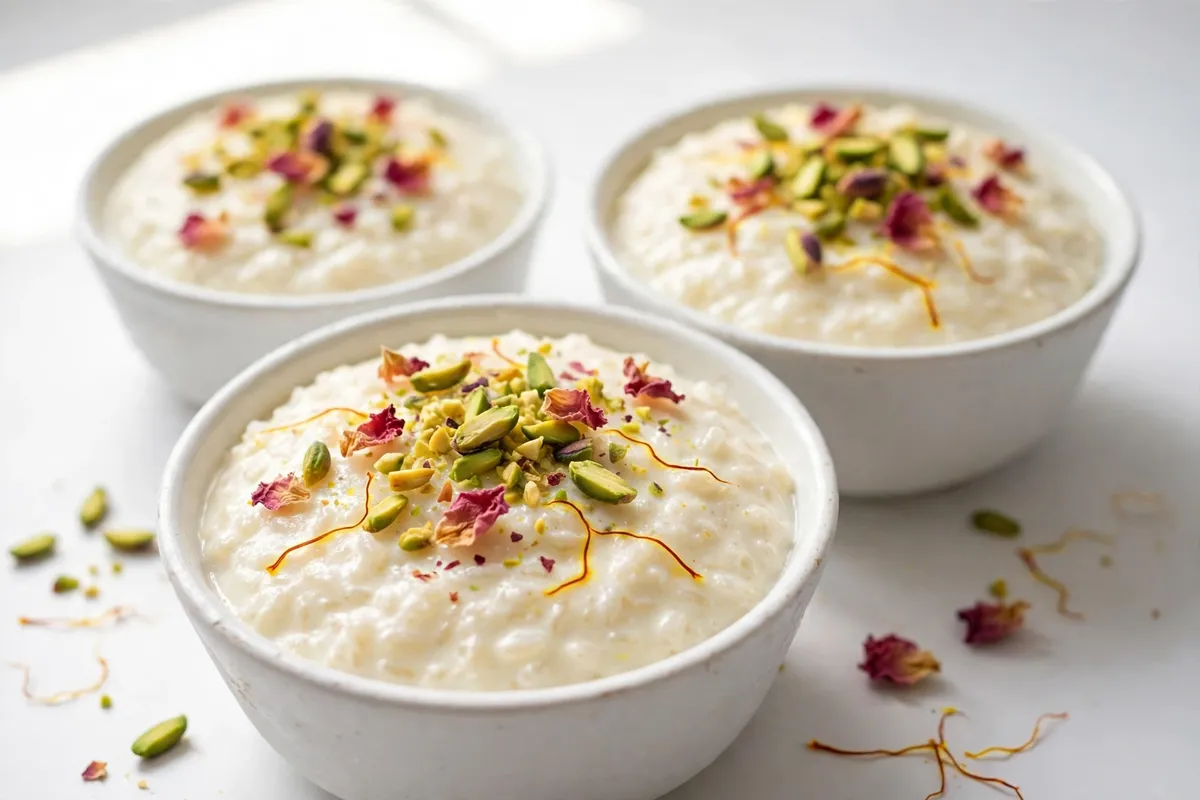
Phirni is the silky chilled rice pudding that ends every great Eid feast: ground basmati rice cooked slowly into milk with saffron and cardamom until it thickens like custard, then set in small bowls and served cold under a scatter of pistachios. Unlike kheer, there are no whole grains — just a smooth, fragrant cream that holds its shape on the spoon.
Ingredients
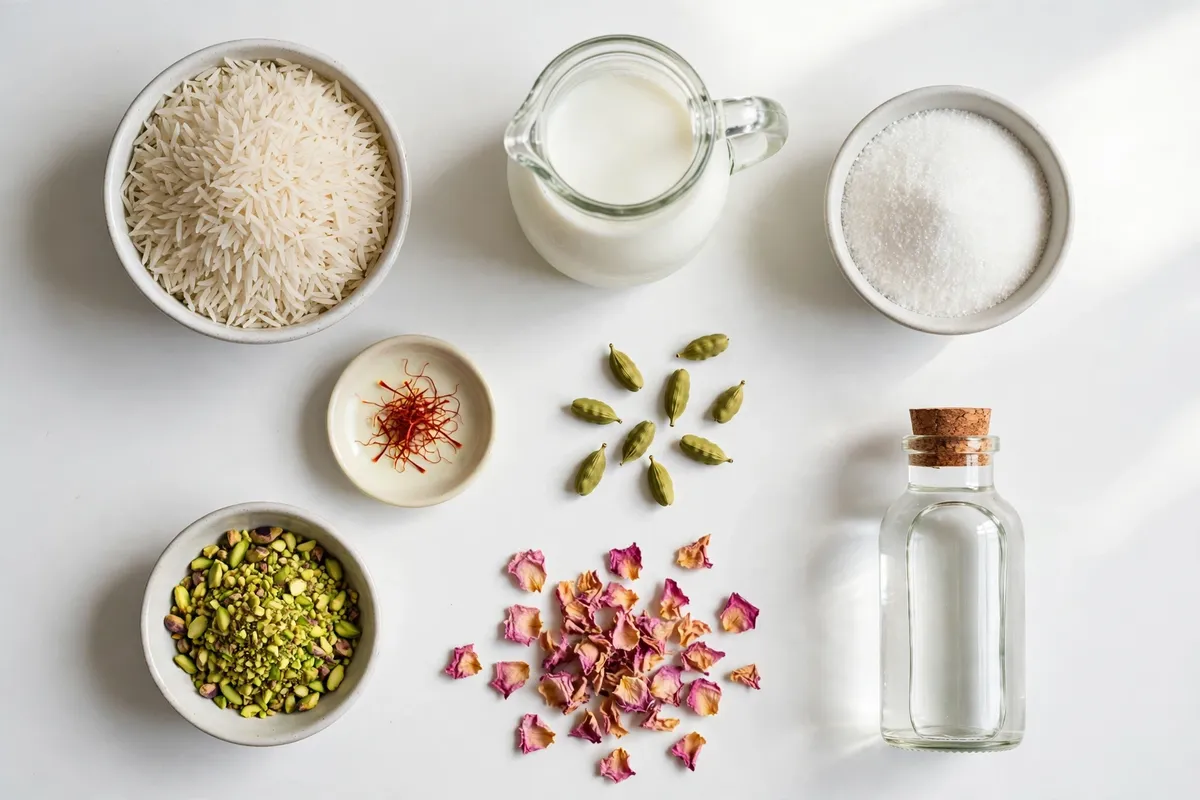
- ¼ cup (50g) basmati rice
- 4 cups (1 litre) whole milk
- ⅓ cup (70g) sugar, or to taste
- A pinch of saffron strands (about 15–20)
- ½ tsp ground cardamom
- 1 tsp rose water
- 2 tbsp chopped pistachios, to garnish
- 1 tsp dried rose petals, to garnish (optional)
How to make phirni
Soak and grind the rice
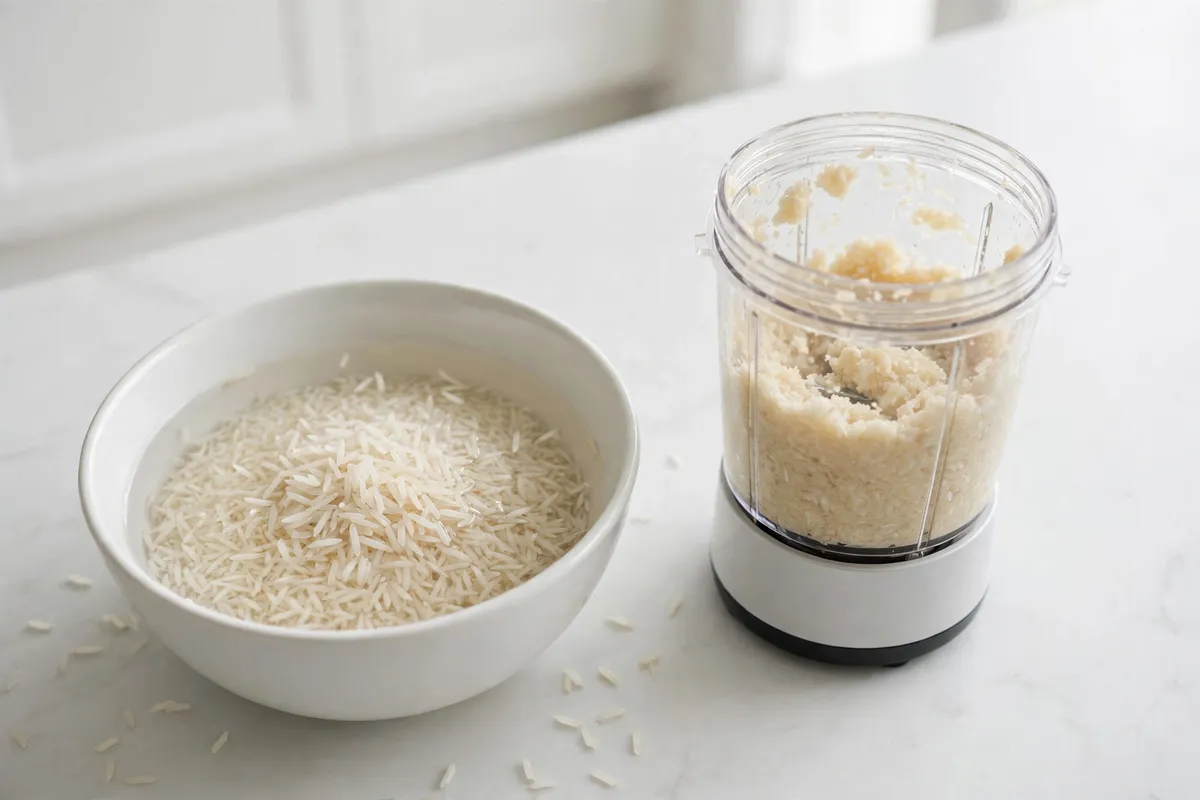
Rinse the basmati rice and soak in water for 30 minutes. Drain and grind in a small blender with 2–3 tablespoons of milk to a coarse, grainy paste — not completely smooth; a little texture is what makes phirni phirni.
Heat the milk and bloom the saffron
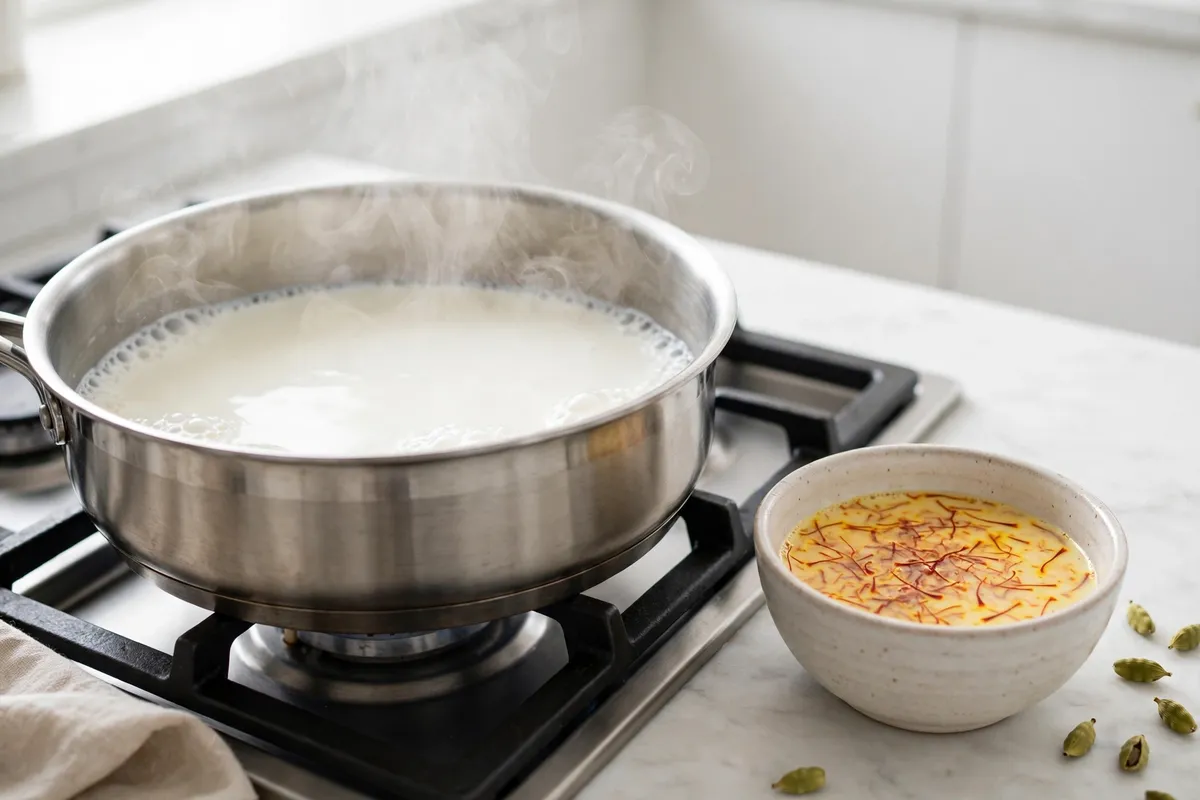
Pour the milk into a heavy-bottomed pan and bring to a gentle boil over medium heat, stirring often so it does not catch. Meanwhile, soak the saffron strands in 2 tablespoons of warm milk and set aside.
Cook the rice into the milk
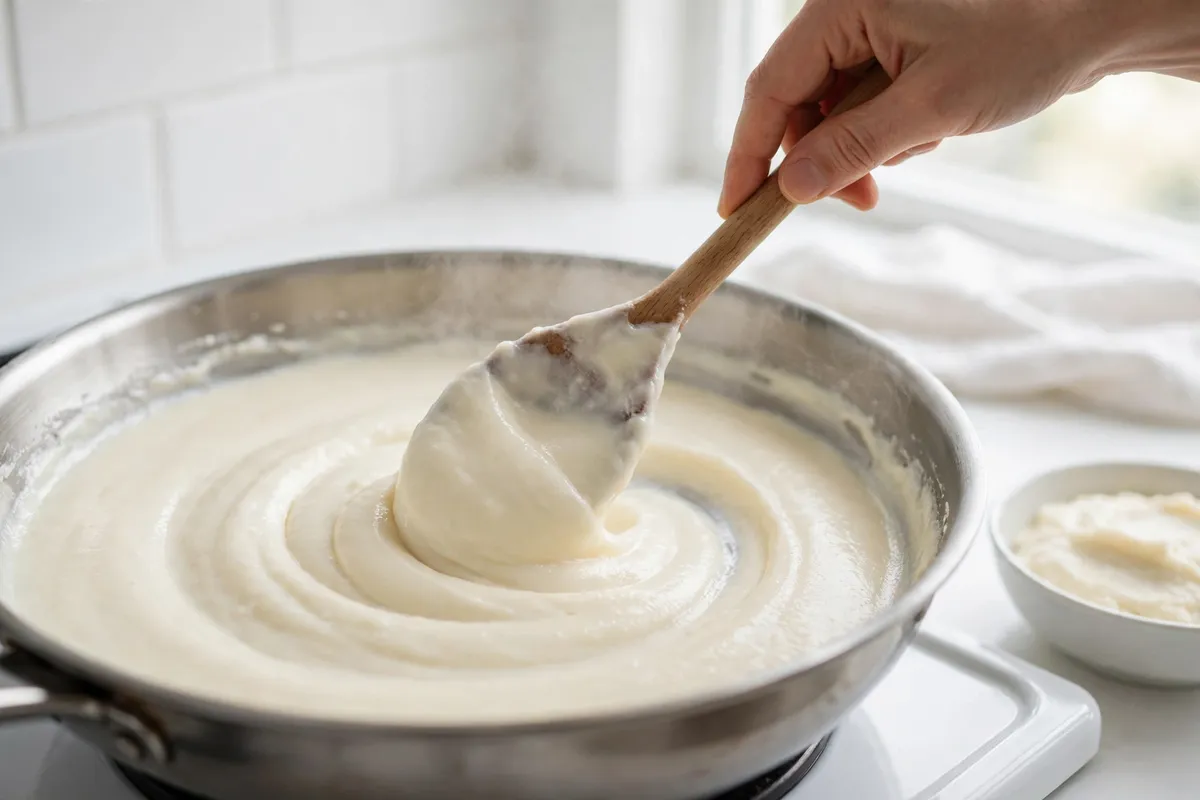
Take the pan off the heat and whisk in the ground rice paste — mixing it off the heat is the secret to a lump-free phirni. Return to low heat and cook for 15–20 minutes, stirring constantly, until the mixture thickens to a creamy, custard-like consistency that coats the spoon.
Sweeten and flavour
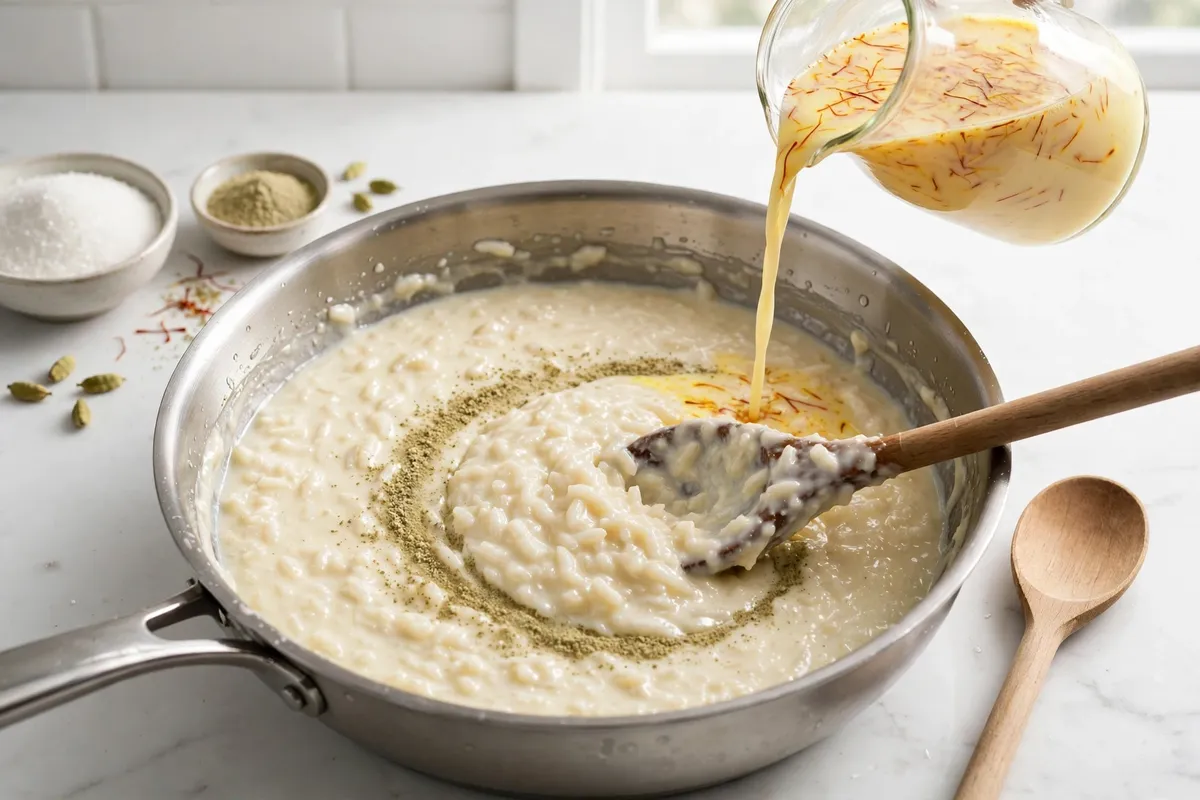
Stir in the sugar, ground cardamom, saffron milk and rose water. Cook for 2 more minutes until the sugar dissolves, then taste — the phirni should be fragrant and sweet, but not cloying. It thickens further as it cools, so take it off the heat while it is still pourable.
Chill and garnish
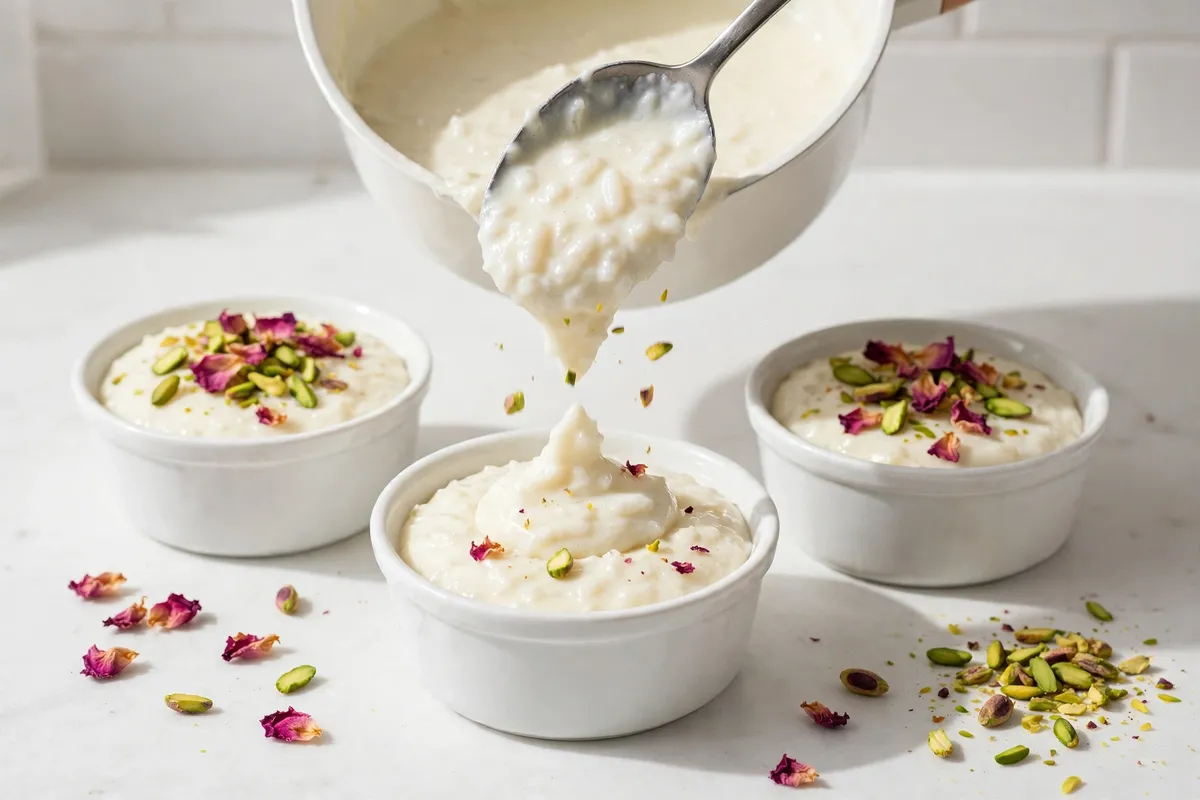
Spoon into 6 small bowls or ramekins, cover and chill for at least 4 hours, or overnight, until set. Serve cold, topped with chopped pistachios and dried rose petals.
Tips for the best phirni
- Mix the rice paste in off the heat. Adding ground rice to boiling milk is how lumps happen. Off-heat whisking, then gentle cooking, gives a silky finish.
- Stir constantly while it cooks. The rice settles and catches on the bottom of the pan fast. A heavy-bottomed pan and a wooden spoon are your friends.
- Do not over-thicken. Phirni sets like custard as it chills. Take it off the heat when it coats the spoon and still pours; if it firms up too much, stir in a splash of cold milk.
- Serve it properly cold. Phirni is a chilled dessert. Four hours is the minimum chill; overnight is best, and the saffron and cardamom deepen as it rests.
How to store phirni
Refrigerate phirni in covered bowls for up to 3 days. Do not freeze it — the texture turns grainy when thawed. Garnish just before serving so the pistachios stay crisp.
Phirni FAQs
What is the difference between phirni and kheer?
Phirni is made with ground rice and sets like a soft custard in small bowls, served chilled. Kheer is made with whole rice grains simmered in milk until soft, and is served warm or cold with a looser, spoonable texture.
Can I use rice flour instead of ground rice?
Yes — use 3 tablespoons of fine rice flour whisked into a little cold milk first, then stir it into the hot milk. Freshly ground basmati gives a slightly better texture and aroma, but rice flour works well in a pinch.
How long does phirni need to chill?
At least 4 hours in the fridge to set properly. Overnight is ideal — the saffron and cardamom flavours deepen and the texture firms up to a perfect soft set.
Can I make phirni ahead of time?
Yes — phirni is made for making ahead. Cook it the day before, spoon into bowls, cover and chill overnight. It keeps for up to 3 days in the fridge; garnish just before serving.
Your week of dinners, planned.
Build a free 7-day meal plan and download it as a beautiful image.