Sambar
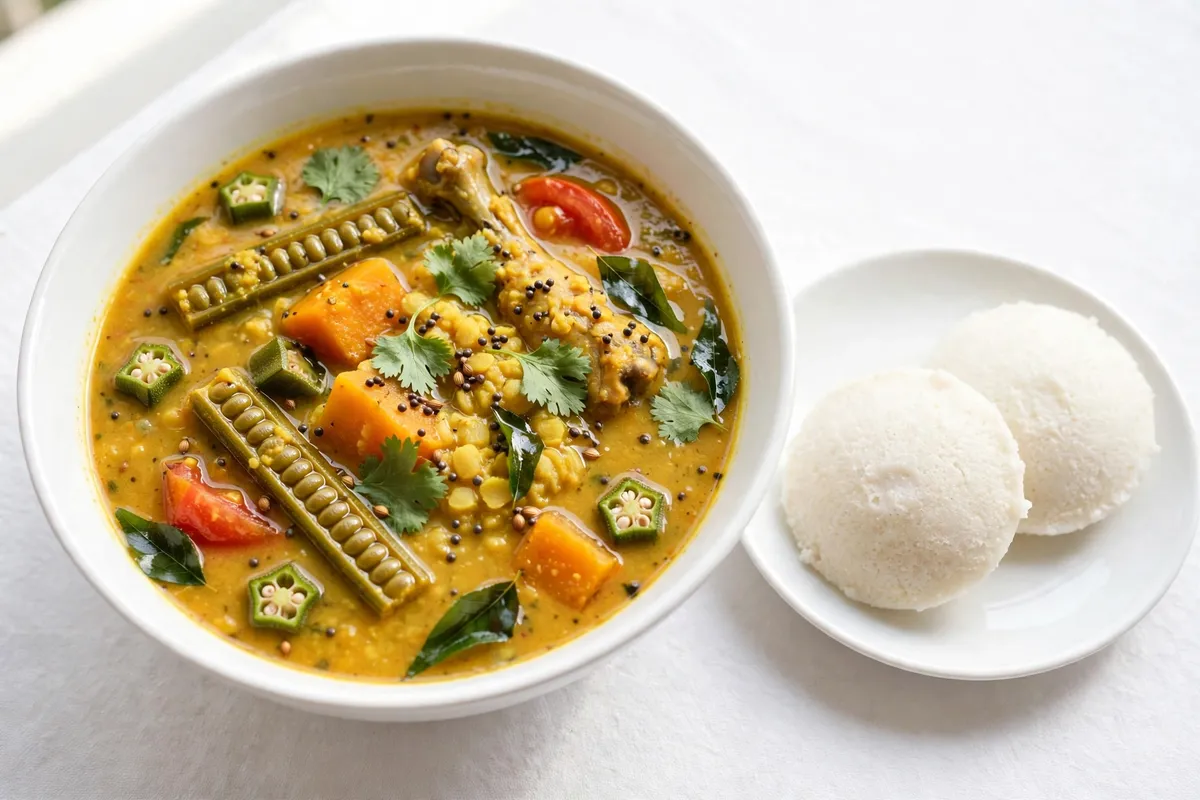
Sambar is the cornerstone of South Indian cooking: a tangy lentil and vegetable stew, soured with tamarind and perfumed with a mustard and curry leaf tadka. It is the bowl that idli and dosa are dunked in, the gravy poured over rice — and unlike the thick dals of the north, it is brothy, bright and vegetable-forward. Every household makes it a little differently; this is the classic Tamil version.
Ingredients
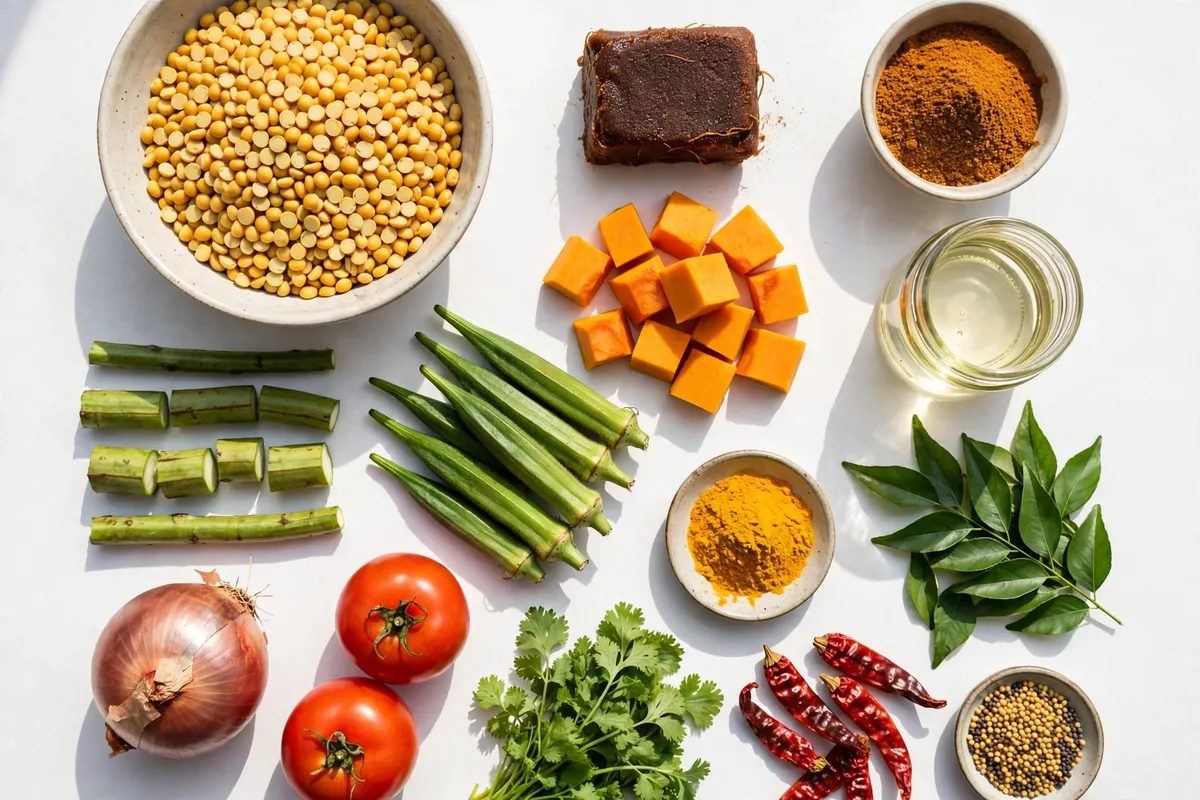
- 1 cup (200g) toor dal (split pigeon peas), rinsed
- ½ tsp turmeric powder
- 1 tsp salt, plus more to taste
- 1 lemon-sized ball of tamarind (about 30g)
- 1 cup (240ml) hot water, for soaking the tamarind
- 3 tbsp sambar powder
- 1 drumstick, cut into 2-inch pieces
- 1 cup pumpkin, cut into 1-inch cubes
- 1 cup okra, cut into 1-inch pieces
- 2 tomatoes, chopped
- 1 onion, quartered
- 1 tbsp coconut oil or ghee, for the tadka
- 1 tsp mustard seeds
- 2 dried red chillies
- 1 sprig fresh curry leaves (about 15 leaves)
- 1 pinch asafoetida (hing)
- Chopped coriander leaves, to serve
How to make sambar
Cook the toor dal
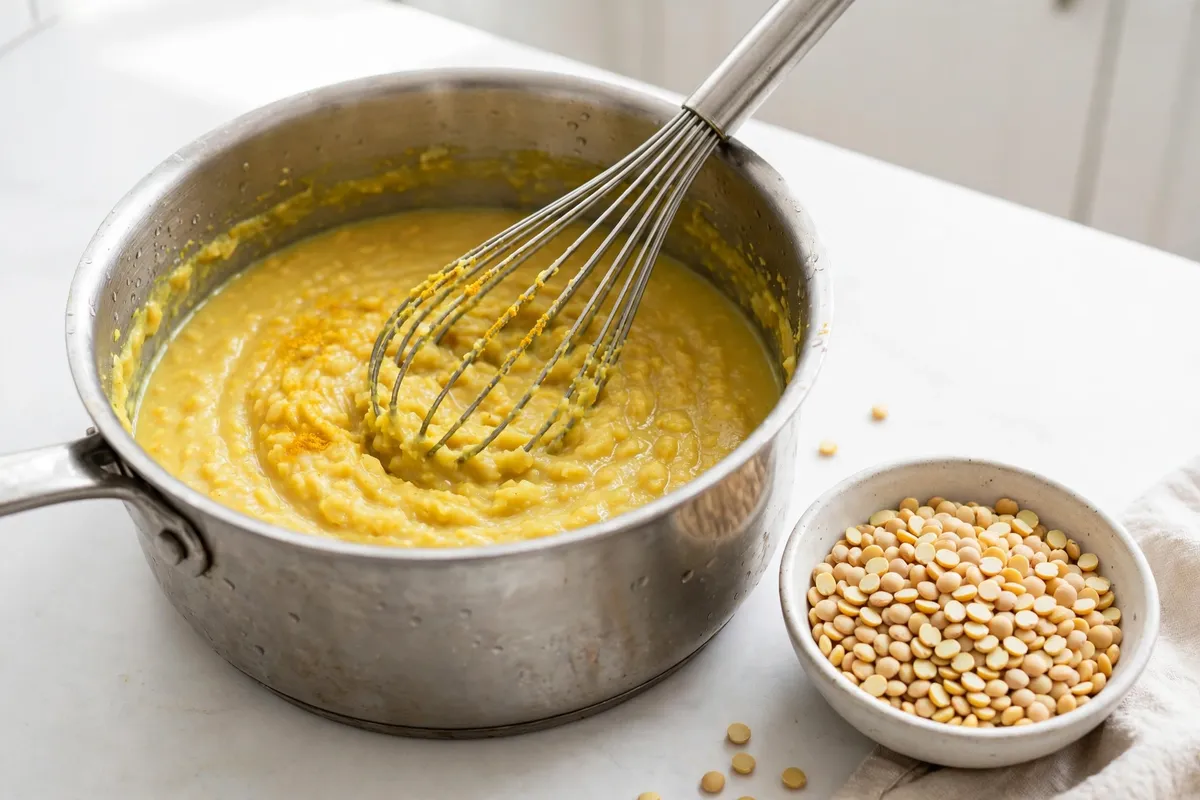
Rinse the toor dal until the water runs clear, then pressure-cook it with 2½ cups of water, the turmeric and a pinch of salt for 4–5 whistles, or about 5 minutes at high pressure, until completely soft and mashable. No pressure cooker? Simmer in a covered pot for 35–40 minutes, topping up the water as needed. Mash well with a whisk or spoon — the dal should be creamy, with no whole grains left.
Soak the tamarind
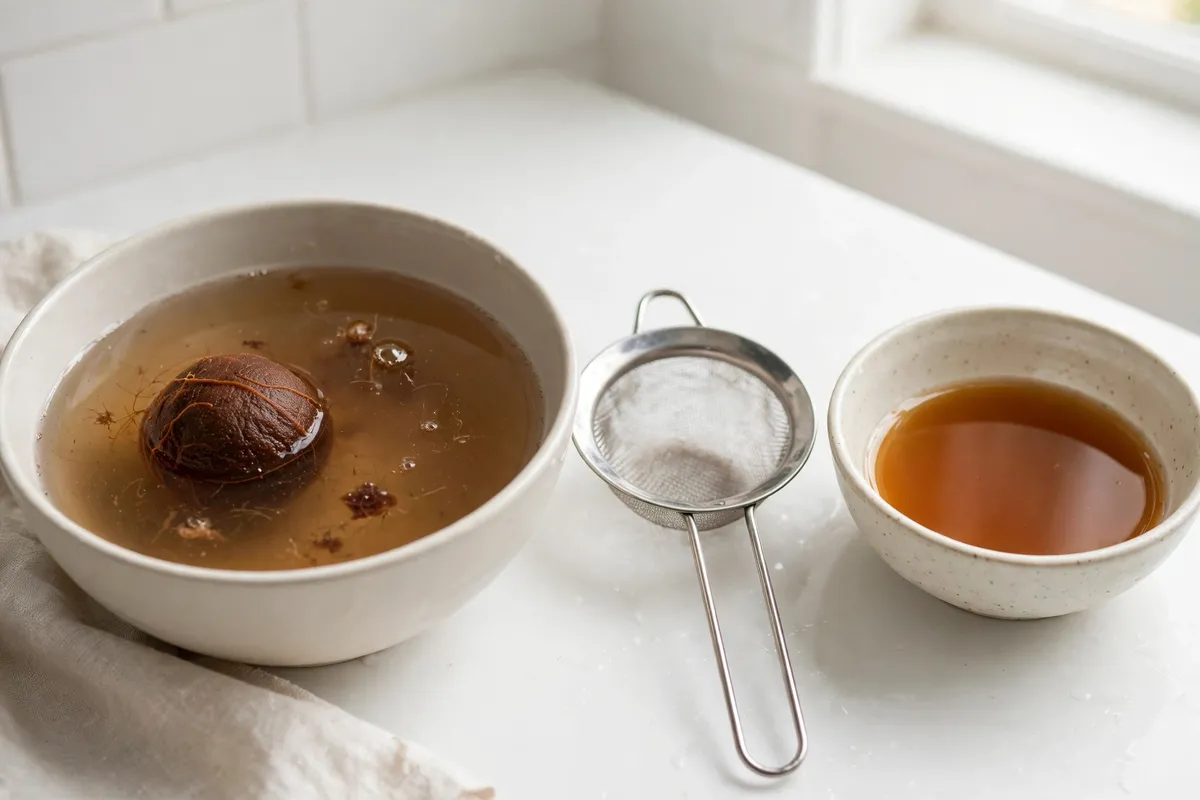
While the dal cooks, soak the tamarind in the hot water for at least 20 minutes. Squeeze it thoroughly with your fingers to release the pulp, then strain through a fine sieve, pressing to extract all the juice. Discard the fibrous pulp and seeds. You should have about ¼ cup of tamarind extract. In a hurry, 1½ teaspoons of tamarind paste stirred into ¼ cup of warm water works too.
Cook the vegetables in tamarind
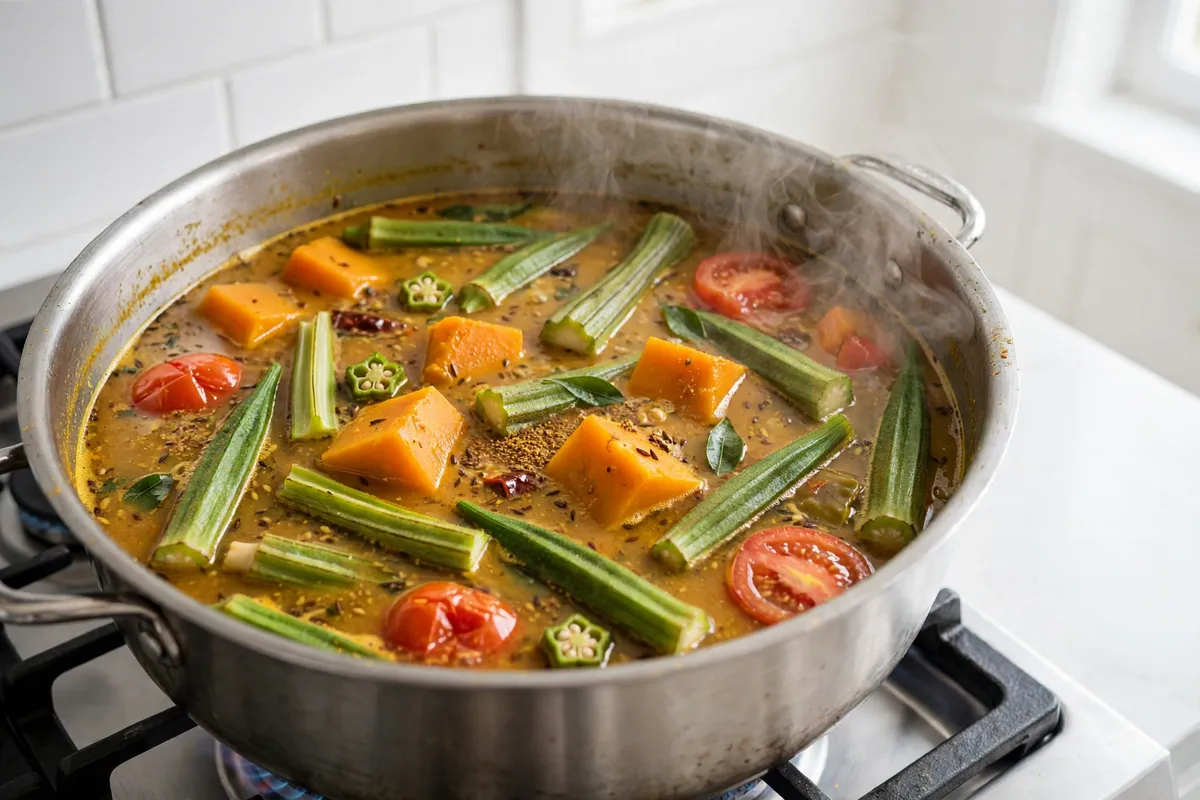
In a large heavy pot, bring 2 cups of water to a boil with the tamarind extract, the sambar powder and the salt. Add the drumstick, pumpkin, okra, tomatoes and onion and cook on medium heat for 10–15 minutes, until the vegetables are tender but still hold their shape. Cooking the vegetables in the tamarind water first lets them soak up the tang — adding the dal too early dulls it.
Combine dal and vegetables
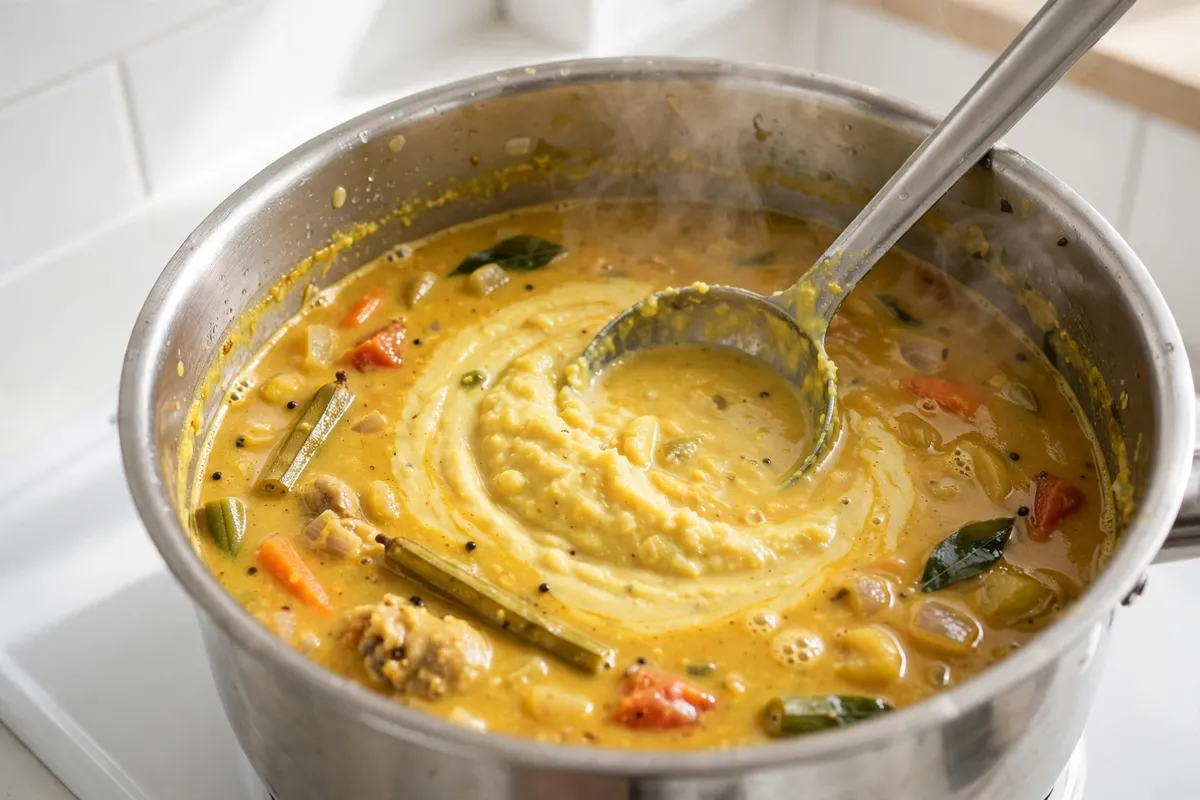
Pour the mashed dal into the pot with the vegetables and stir well. Simmer for 5 minutes, adjusting the consistency with a little hot water if it is too thick — sambar should be brothy, thinner than a North Indian dal, and pourable over rice. Taste and adjust the salt; a pinch of sugar balances the tamarind if it is very sharp.
Tadka and serve
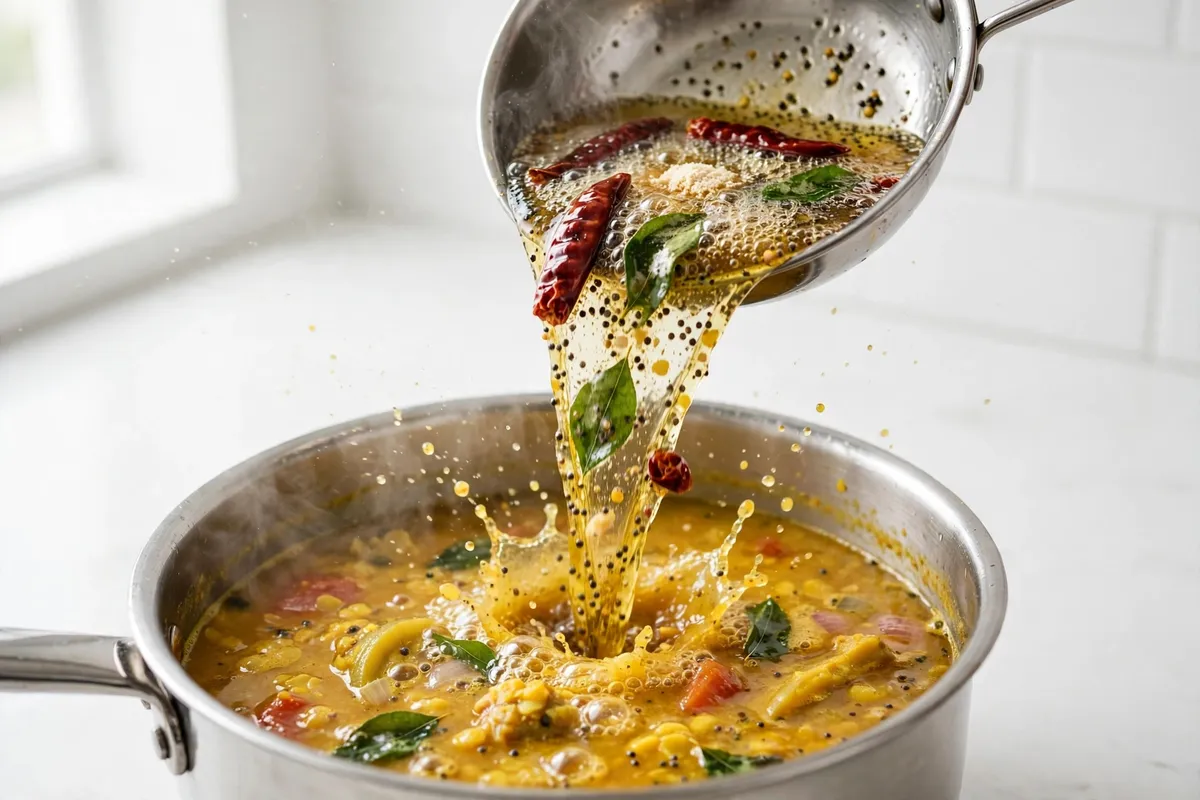
Heat the coconut oil or ghee in a small pan over medium heat. Add the mustard seeds and let them crackle, then add the dried red chillies, asafoetida and curry leaves and fry for 10 seconds — the leaves should turn crisp and bright green. Pour the sizzling tadka over the simmering sambar, cover for 2 minutes to trap the aromas, garnish with coriander and serve hot with idli, dosa or steamed rice.
Tips for the best sambar
- Mash the dal until it is creamy. Sambar's body comes from fully cooked, well-mashed toor dal. If the dal is undercooked or left grainy, the sambar stays thin and watery no matter how long you simmer it.
- Do not overcook the vegetables. Ten to fifteen minutes is enough — the pumpkin should be tender, the okra still green, the drumstick soft but intact. Mushy vegetables make a muddy sambar.
- Let the tadka crackle properly. The mustard seeds must pop in properly hot oil before the curry leaves go in, or the tempering tastes flat. Ten seconds is all the leaves need — any longer and they burn.
- Balance the tang. Tamarind varies in sourness. Taste before serving: too sharp, add a pinch of sugar; too flat, add a little more tamarind extract or a squeeze of lemon.
How to store sambar
Refrigerate leftover sambar within two hours of serving — it keeps for 3–4 days in an airtight container and tastes even better the next day as the flavours deepen. Reheat gently with a splash of water to loosen it, since it thickens as it cools. Sambar also freezes well for up to 3 months; thaw overnight in the fridge before reheating.
Sambar FAQs
What dal is best for sambar?
Toor dal (split pigeon peas, also called arhar dal) is the classic choice — it cooks down into a creamy, golden purée that gives sambar its body. Masoor dal works in a pinch and cooks faster, but it makes a thinner, paler sambar. Moong dal is used in some Karnataka-style sambars. Whatever you use, cook it until it is completely soft and mashable.
What vegetables go in sambar?
The classics are drumstick, pumpkin, okra, tomato and onion, but sambar is endlessly adaptable — aubergine, carrots, green beans, cauliflower, sweet potato and zucchini all work. Use a mix of one starchy vegetable (pumpkin, sweet potato), one green (okra, beans) and tomato for body. Cut everything into similar-sized pieces so it cooks evenly.
Can I make sambar without sambar powder?
Yes. Sambar powder is a blend of roasted lentils, coriander, cumin, fenugreek, dried chillies and asafoetida — you can approximate it with 2 tablespoons of ground coriander, 1 teaspoon of cumin, ½ teaspoon of fenugreek, ½ teaspoon of chilli powder and a pinch of asafoetida. It will not taste exactly like the real blend, but it makes a good sambar. Shop-bought sambar powder from any Indian grocer is the easiest route.
How long does sambar keep?
Sambar keeps for 3–4 days in the fridge in an airtight container, and many cooks say it tastes better the next day as the flavours deepen. Reheat gently with a splash of water to loosen it — it thickens as it cools. It also freezes well for up to 3 months; thaw overnight in the fridge and reheat the same way.
Your week of dinners, planned.
Build a free 7-day meal plan and download it as a beautiful image.