Soft Idli
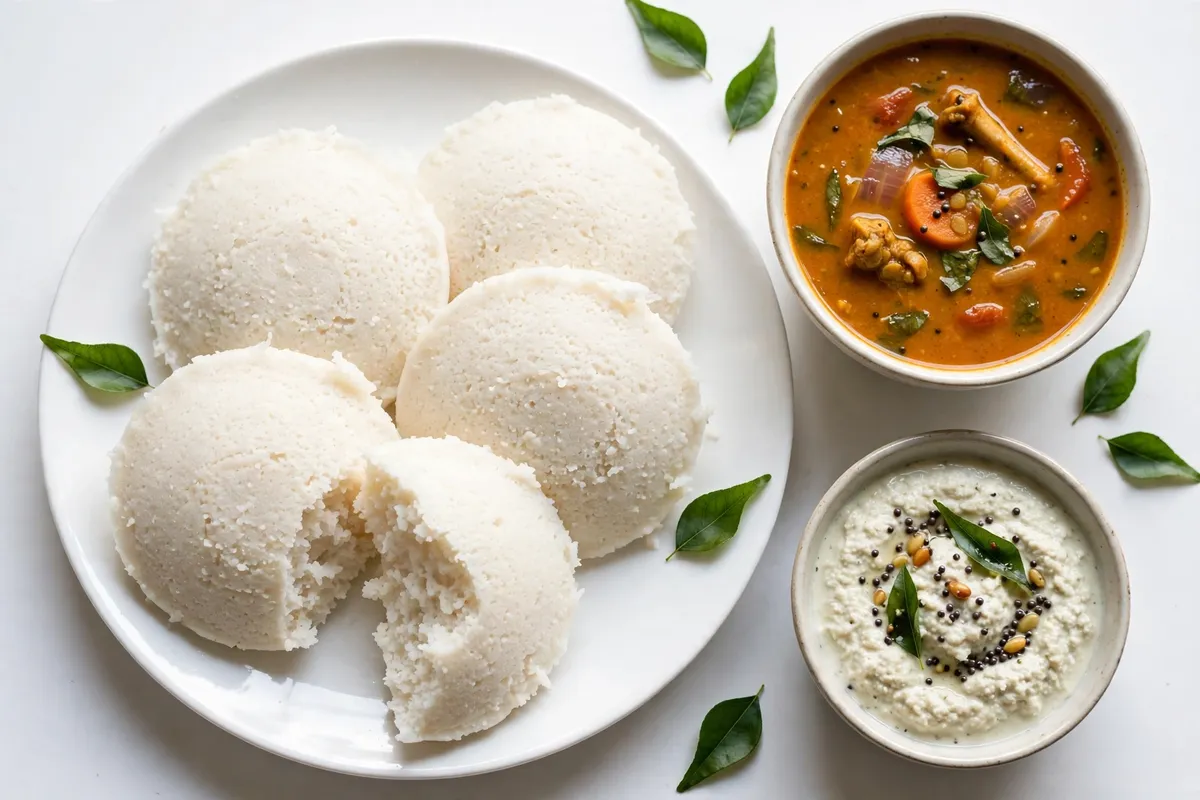
Idli is South India's beloved breakfast: soft, fluffy steamed rice cakes made from a naturally fermented batter of rice and urad dal. Just four ingredients, no oil, no frying — and when the batter is right, the idlis are pillowy enough to melt in the mouth, especially with hot sambar and coconut chutney.
Ingredients
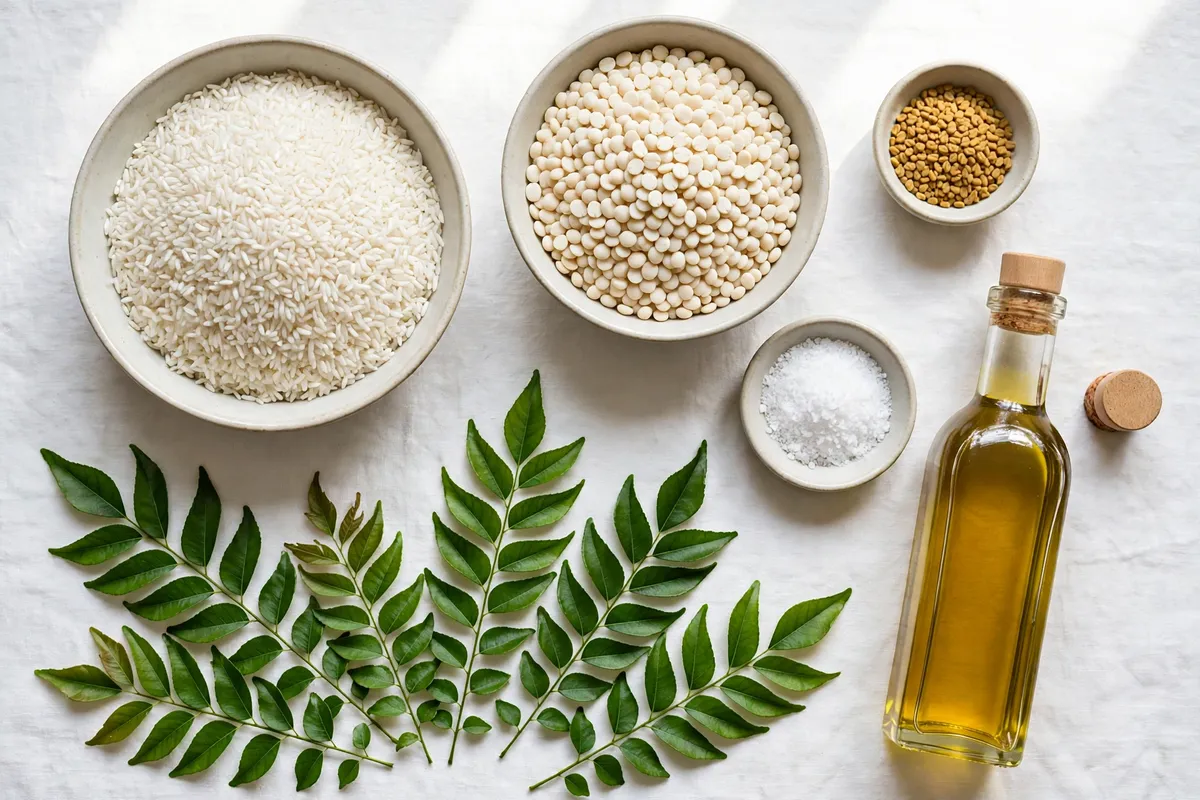
- 2 cups (400g) idli rice or parboiled rice
- 1 cup (200g) urad dal (split black gram)
- ½ tsp fenugreek seeds
- 1 tsp salt
- Water, for soaking and grinding
- Sesame oil or vegetable oil, for greasing
- Sambar and coconut chutney, to serve
How to make soft idli
Soak the rice and dal
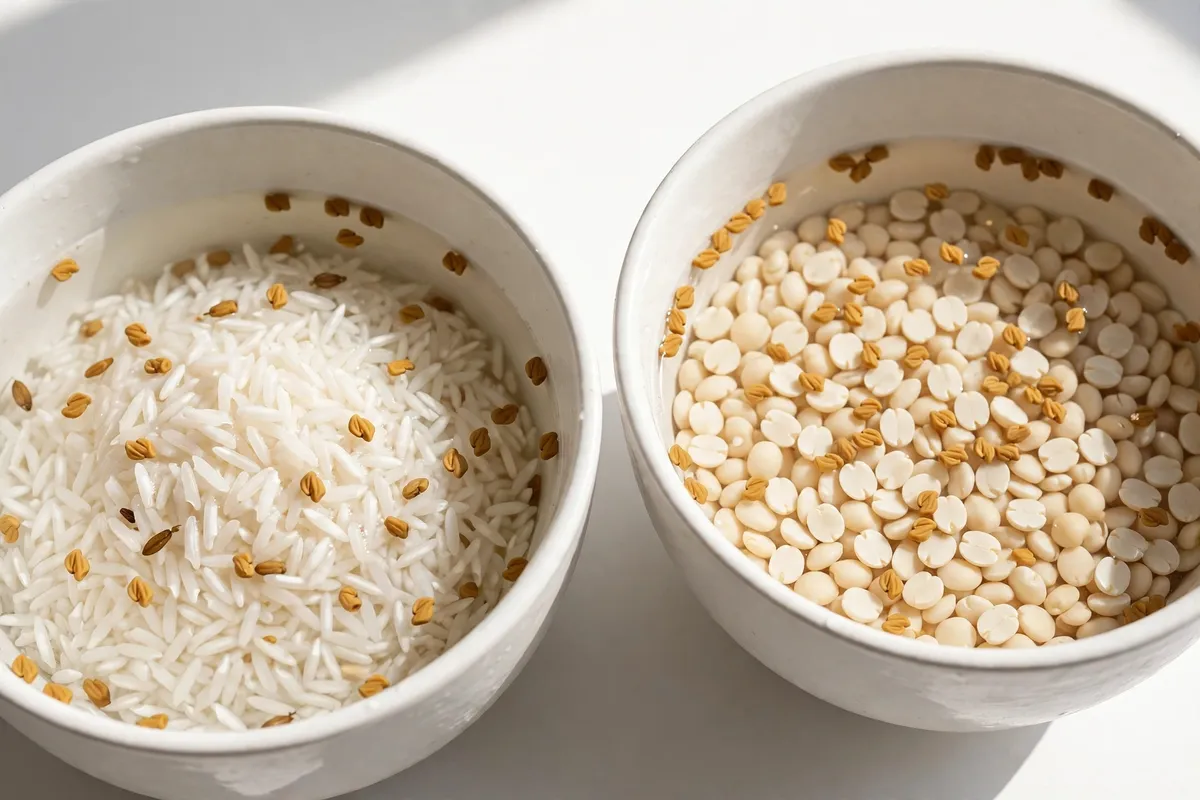
Rinse the rice and the urad dal separately under cold running water until the water runs clear. Soak the rice with the fenugreek seeds in plenty of water, and the dal in a separate bowl, for 4–6 hours at room temperature. The fenugreek helps the batter ferment and adds a subtle flavour.
Grind the batter
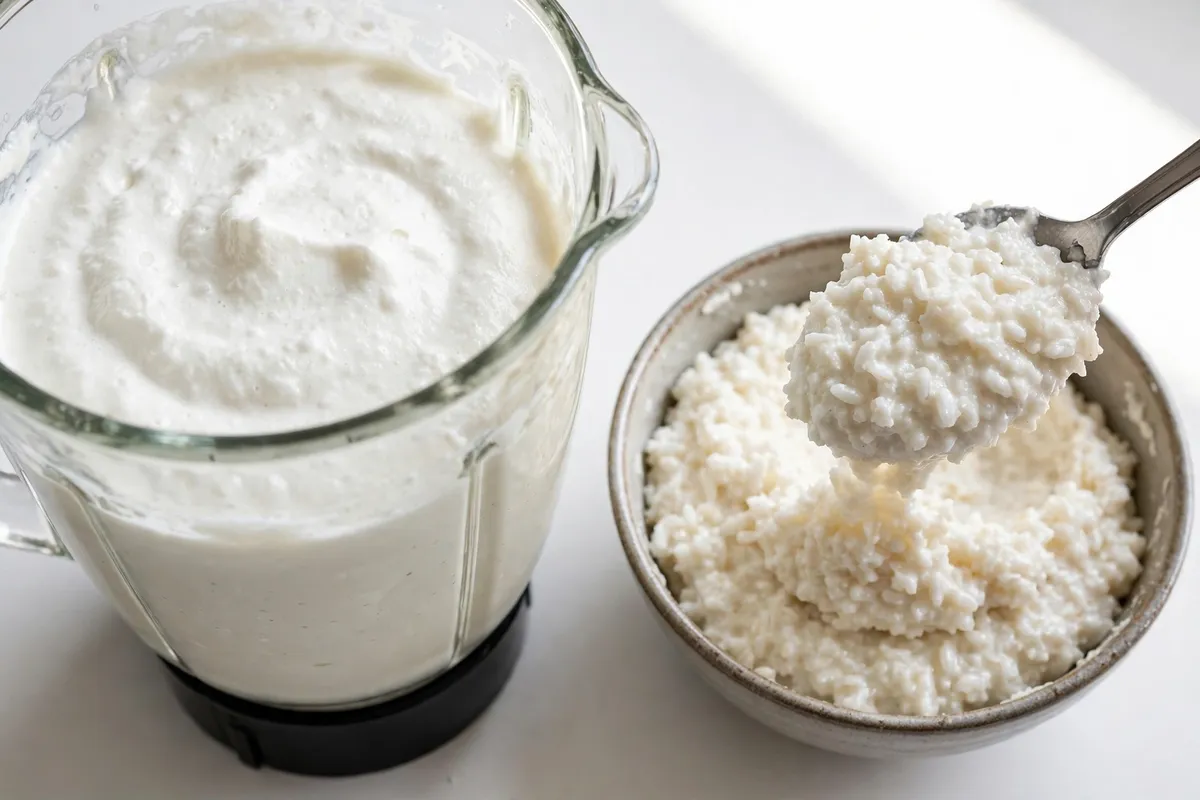
Drain the dal, reserving the soaking water, and grind it in a blender or wet grinder with a little of the water at a time until it is smooth, fluffy and light, almost like whipped cream. Drain the rice and grind it to a slightly coarse batter, like semolina. Mix both batters in a large bowl and beat well with your hand to incorporate air.
Ferment overnight
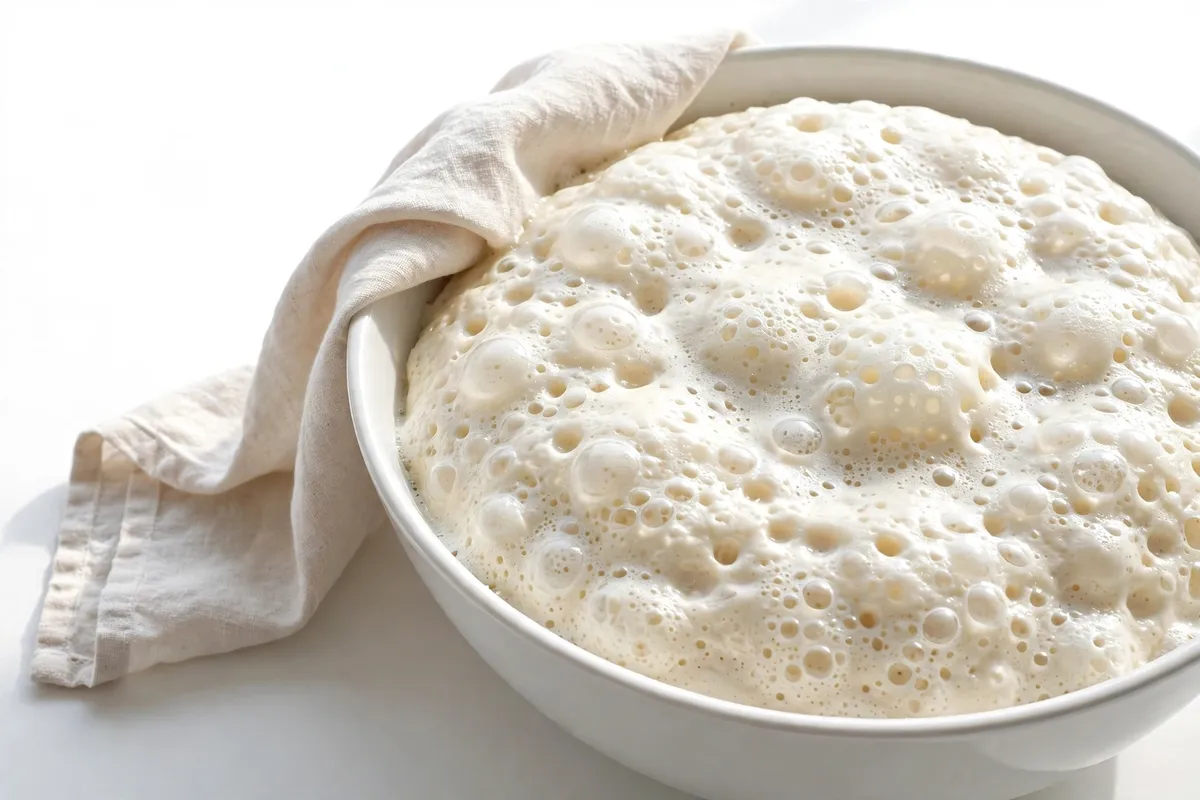
Cover the bowl loosely and leave in a warm place for 8–12 hours, or overnight, until the batter has doubled in volume and smells pleasantly sour. The ideal temperature is 75–85°F (24–29°C). In a cold kitchen, put the bowl in the oven with just the light on. Stir in the salt gently — do not deflate the batter.
Pour into the moulds
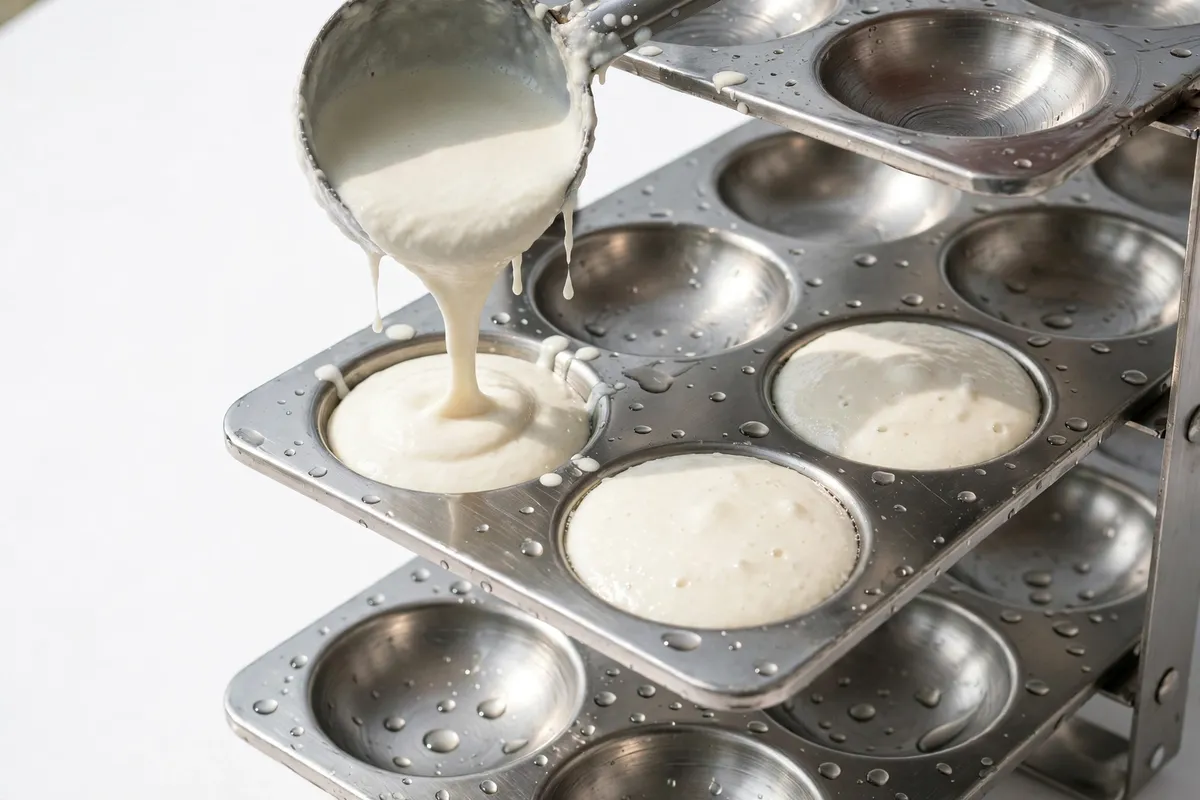
Bring water to a rolling boil in an idli steamer or a large pot fitted with an idli stand, keeping the water level below the plates. Grease the idli moulds generously with sesame oil and pour in the batter with a ladle, filling each mould about three-quarters full.
Steam and serve
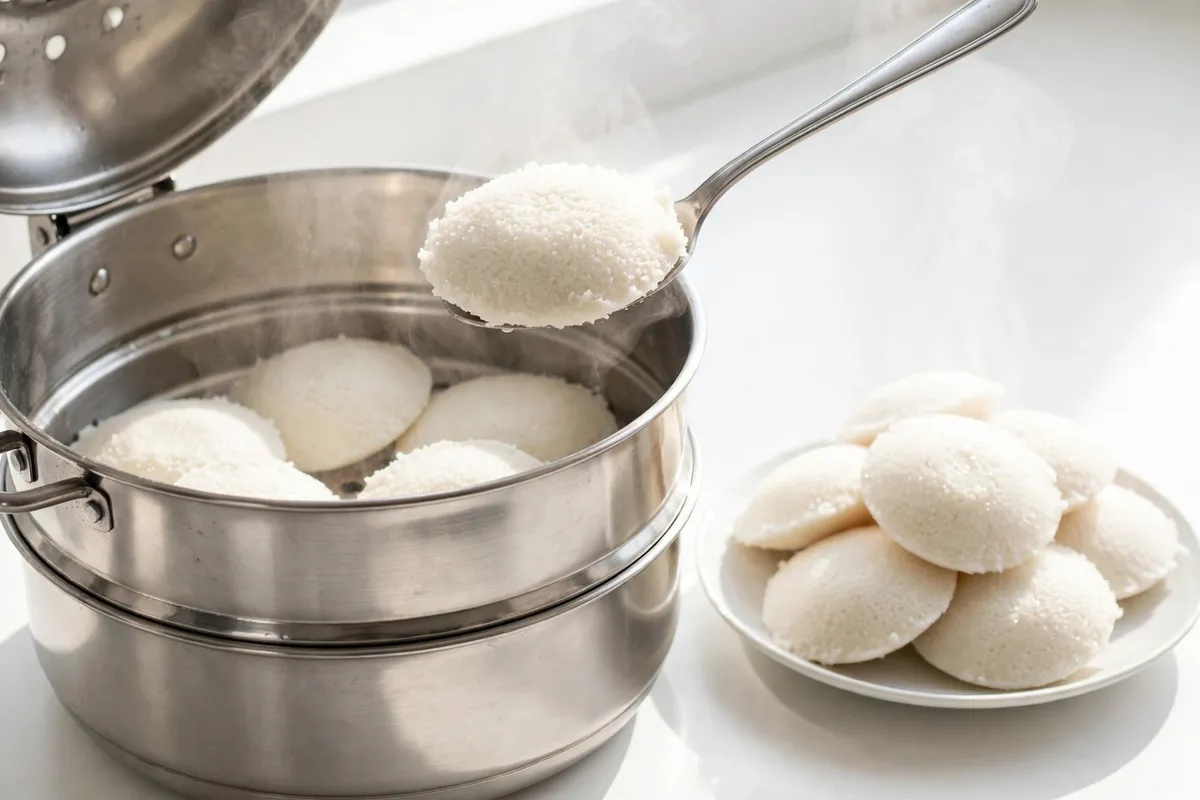
Place the moulds in the steamer, cover tightly and steam over medium heat for 10–12 minutes — a knife inserted in the centre should come out clean. Let the idlis rest in the steamer for 2–3 minutes, then scoop them out with a spoon dipped in cold water. Serve hot with sambar and coconut chutney.
Tips for the best soft idli
- Grind the dal until fluffy. This is the single most important step. The dal batter should be light, airy and almost like whipped cream — those tiny air bubbles are what make the idlis soft. Add water a little at a time; a runny batter makes flat, dense idlis.
- Use idli rice, not basmati. Idli rice is a short-grained, parboiled rice that grinds to the right texture and ferments properly. Basmati makes a sticky batter and dense idlis. Idli rice is sold in every Indian grocery store.
- Do not rush the ferment. The batter must double and smell pleasantly sour — that is the fermentation doing its work. Under-fermented batter gives hard, flat idlis no matter how well you steam them. In winter, allow up to 16 hours.
- Do not over-steam. Ten to twelve minutes is enough; longer and the idlis dry out and toughen. A knife should come out clean, and the idlis should spring back when pressed gently.
How to store idli
Cooked idlis keep for 2 days in the fridge in an airtight container — sprinkle a little water over them and steam for 2–3 minutes to revive them, or microwave covered for 30 seconds. They also freeze well for up to 2 months. The fermented batter keeps in the fridge for 3–4 days and can be used for idlis or dosas; stir gently before using and add a little water if it has thickened.
Soft Idli FAQs
Why are my idlis hard and dense?
The usual causes are under-fermented batter, too little dal, or over-steaming. The batter must double in volume and smell pleasantly sour before you steam it — if it has not risen, give it more time in a warm spot. Use the 2:1 rice-to-dal ratio, grind the dal until fluffy, and steam for no more than 12 minutes.
What is the best rice-to-dal ratio for idli?
The classic ratio is 2 parts idli rice to 1 part urad dal — 2 cups of rice to 1 cup of dal. Some cooks use 3:1 or 4:1, but the 2:1 ratio gives softer, more nutritious idlis with more protein from the dal. Always use idli rice or parboiled rice, not basmati, which will not give the same spongy texture.
Can I make idli without an idli steamer?
Yes — small greased ramekins, steel bowls or katoris set on a trivet inside any large lidded pot work well. Add an inch of water, bring it to a boil, set the bowls in, cover and steam for 10–12 minutes. A pressure cooker without the weight (vent) works the same way.
How do I ferment idli batter in a cold kitchen?
Fermentation needs warmth, ideally 75–85°F (24–29°C). In a cold kitchen, put the covered bowl in the oven with just the light on, near (not on) a radiator, or in a microwave switched off with a cup of hot water beside it. In winter the batter may need 14–16 hours instead of 8–12 — wait until it has doubled and smells sour.
Your week of dinners, planned.
Build a free 7-day meal plan and download it as a beautiful image.