Masala Dosa
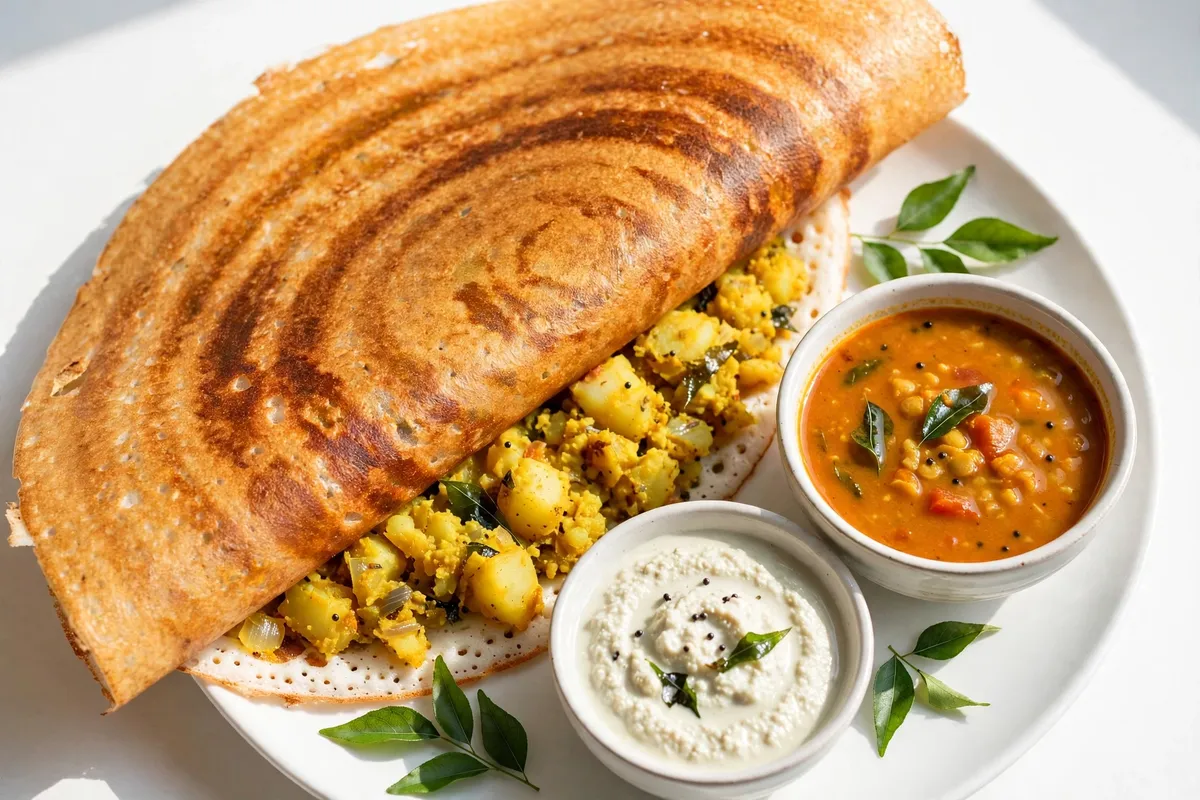
Masala dosa is South India's most famous dish: a thin, golden, shatteringly crisp crepe of fermented rice and lentil batter, folded around a soft, spiced potato masala. It takes planning — the batter soaks and ferments overnight — but the payoff is a breakfast that beats any restaurant version.
Ingredients
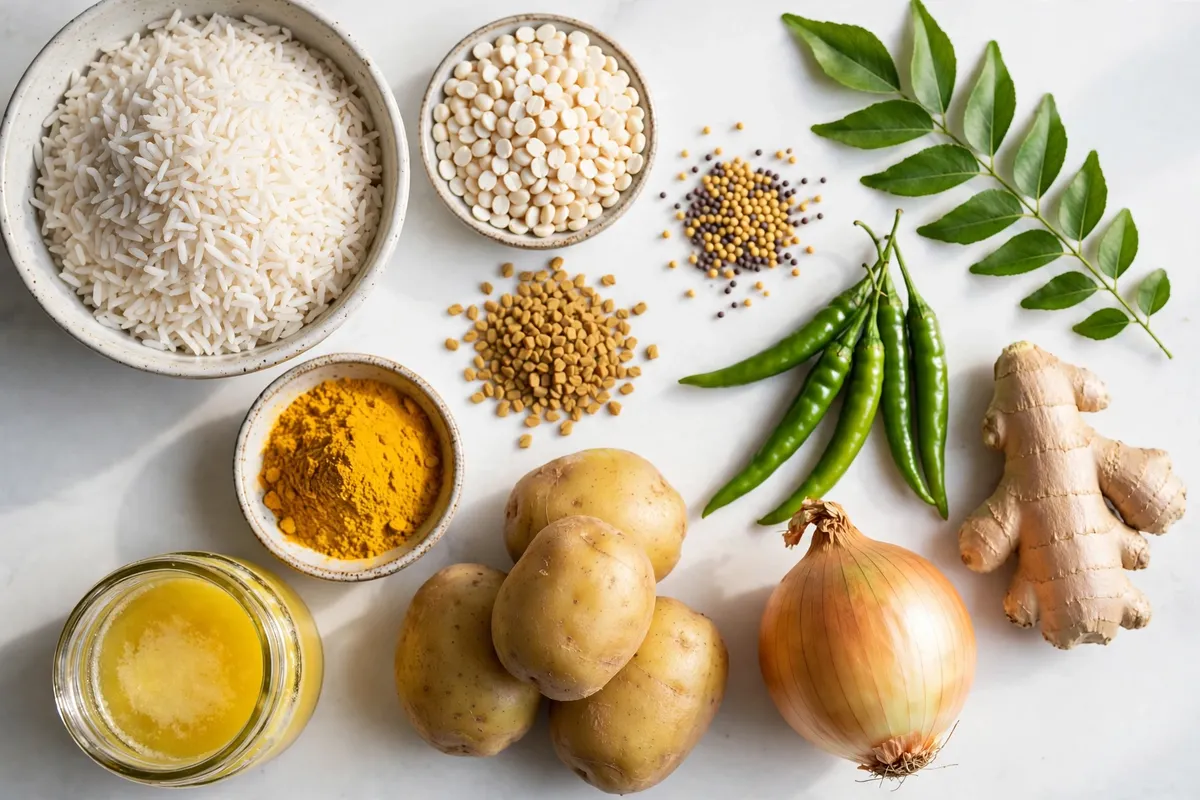
- 3 cups (600g) dosa rice or idli rice
- 1 cup (200g) urad dal (split black gram)
- 1 tsp fenugreek seeds
- 1 tsp salt
- Water, for soaking and grinding
- Oil or ghee, for cooking
- 4 large potatoes, boiled, peeled and roughly mashed
- 2 tbsp oil or ghee
- 1 tsp mustard seeds
- 1 tbsp chana dal
- 10–12 curry leaves
- 2 green chillies, chopped
- 1 tbsp grated fresh ginger
- 2 medium onions, thinly sliced
- ½ tsp ground turmeric
- Salt, to taste
- 2 tbsp chopped fresh coriander
- Juice of ½ lemon
- Sambar and coconut chutney, to serve
How to make masala dosa
Soak and grind the batter
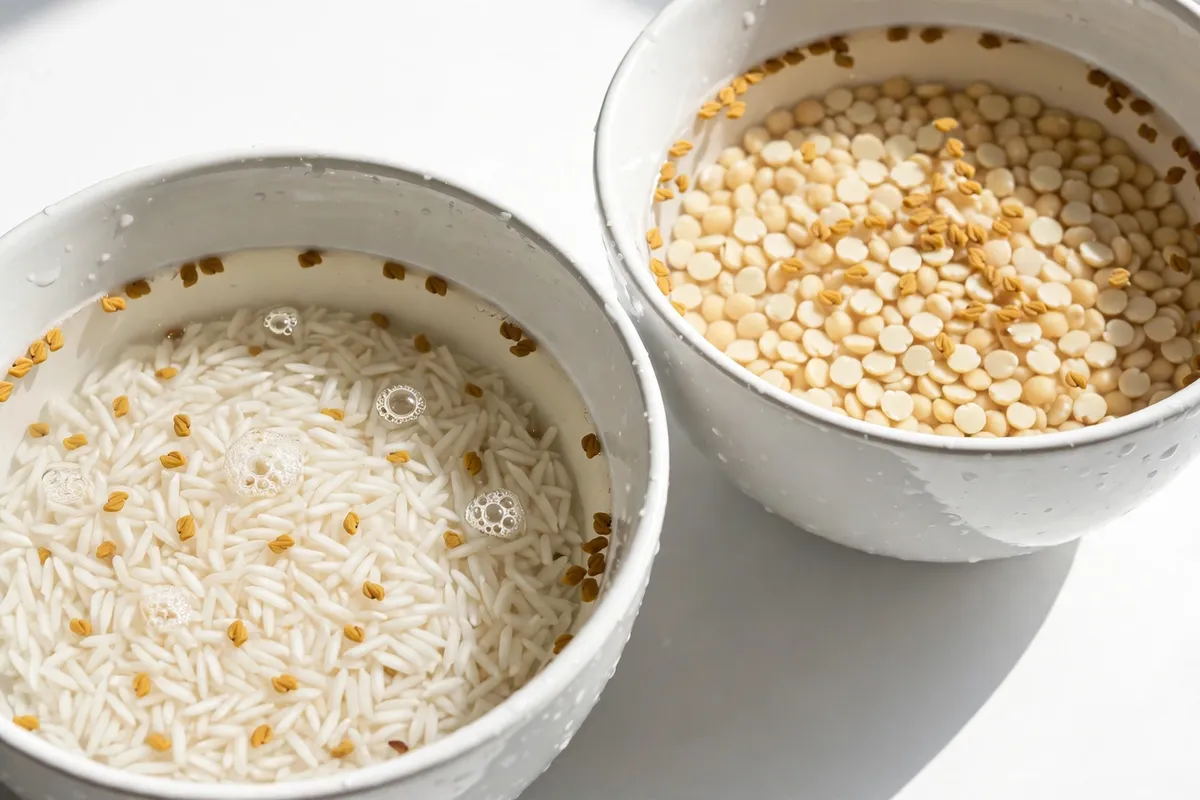
Rinse the rice and the urad dal separately until the water runs clear. Soak the rice with the fenugreek seeds and the dal separately for 4–6 hours. Drain and grind the dal with a little water until smooth and fluffy, then grind the rice to a slightly coarse batter. Mix both in a large bowl with the salt.
Ferment the batter
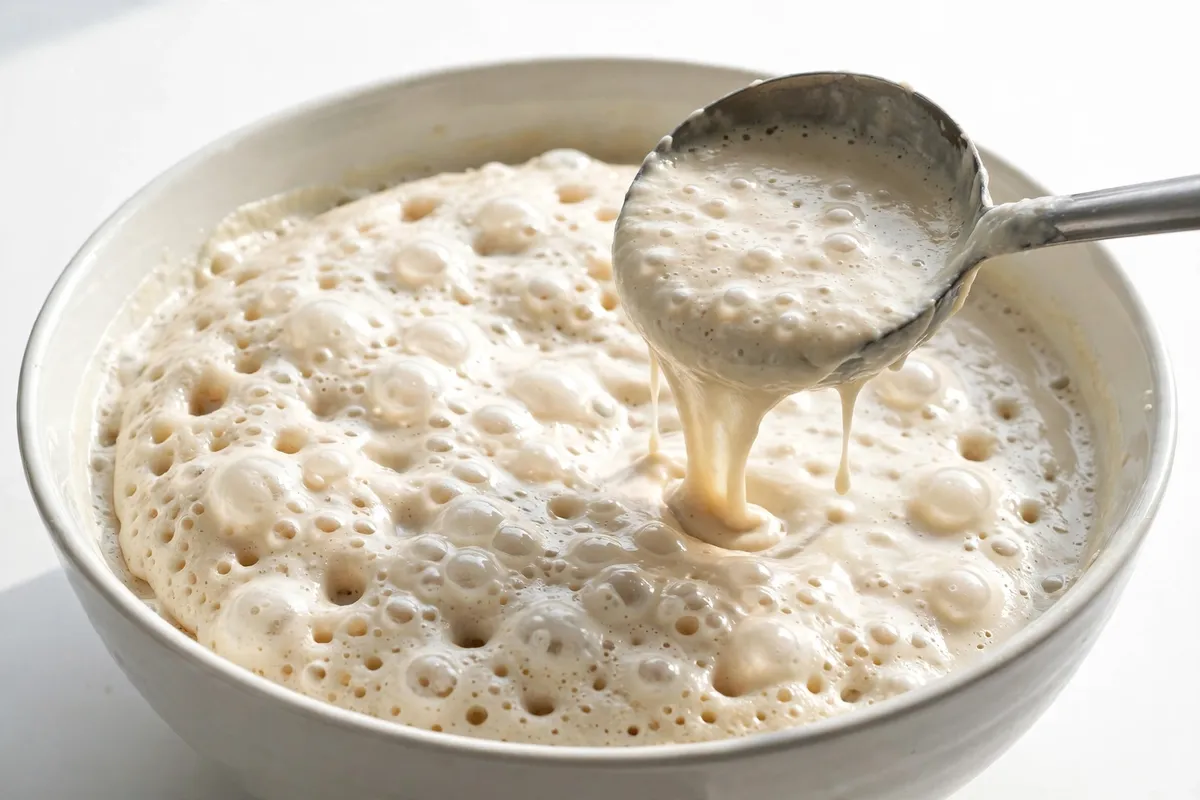
Cover the bowl loosely and leave in a warm place for 8–12 hours, until the batter has risen by about half and smells pleasantly sour. In a cold kitchen, use the oven with just the light on. Stir gently before using — the batter should be at pouring consistency, like thin pancake batter. Add a splash of water if it is too thick.
Make the potato masala
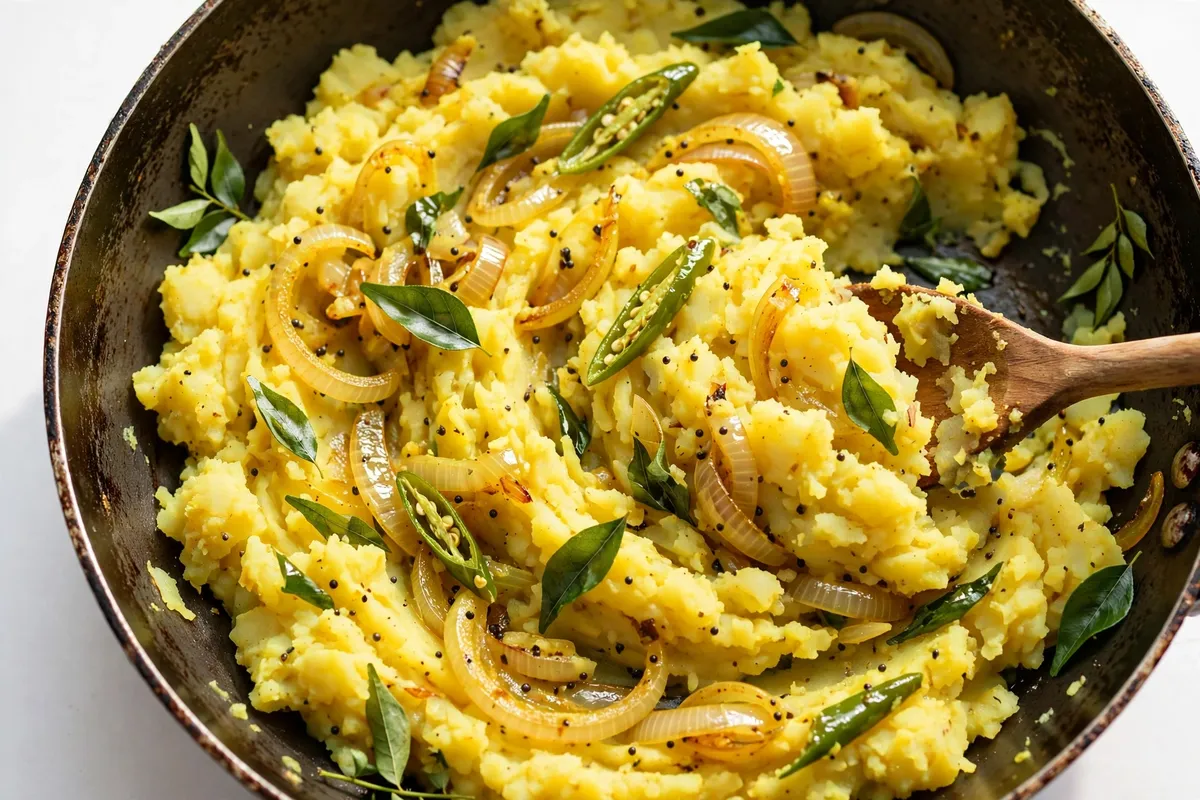
Heat the oil in a pan over medium heat. Add the mustard seeds and let them splutter, then add the chana dal and fry until golden. Add the curry leaves, chillies and ginger, then the onions and cook until soft. Stir in the turmeric and salt, add the mashed potatoes and cook for 2–3 minutes. Finish with the coriander and lemon juice. The masala should be dry — wet filling softens the dosa.
Spread the dosa
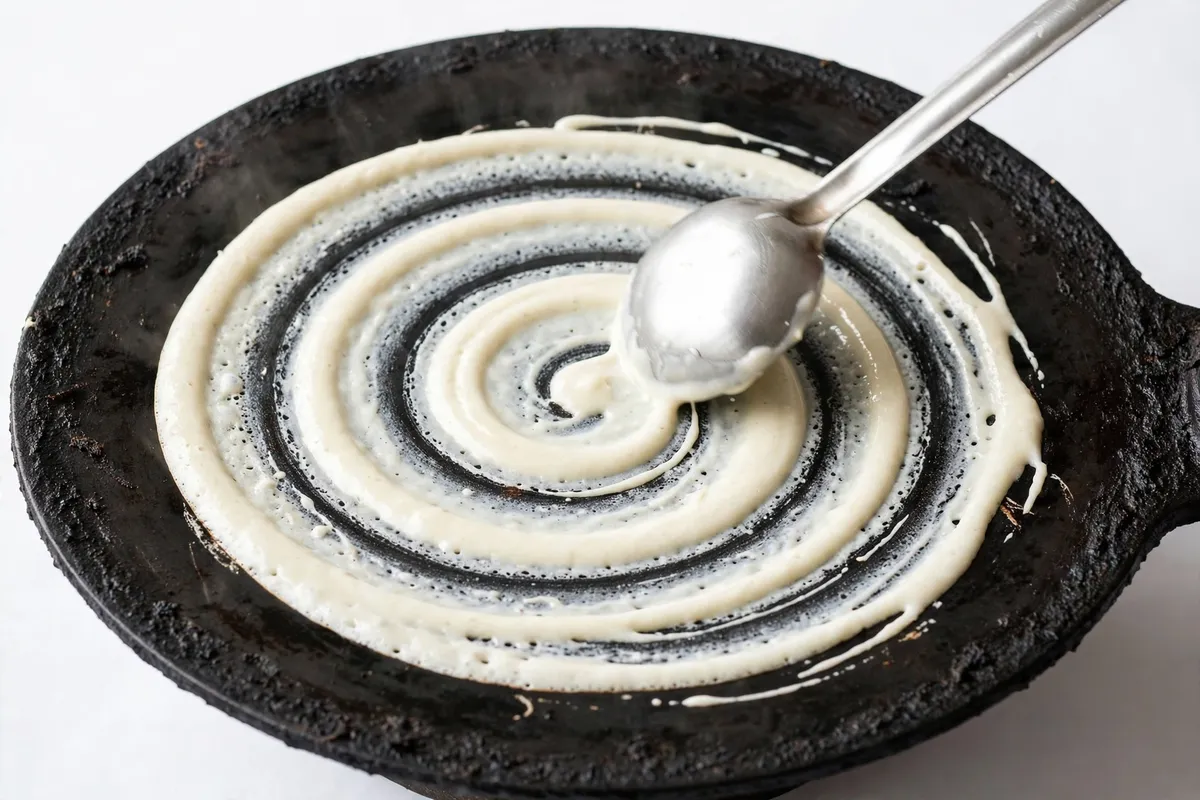
Heat a well-seasoned cast-iron tawa or non-stick pan over medium-high heat. Rub a cast-iron pan with a little oil; leave a non-stick pan dry or the batter will not spread. Pour a ladle of batter in the centre and spread it outward in one quick circular motion with the back of the ladle, as thin as you can. Drizzle 1–2 teaspoons of oil or ghee around the edges.
Fill, fold and serve
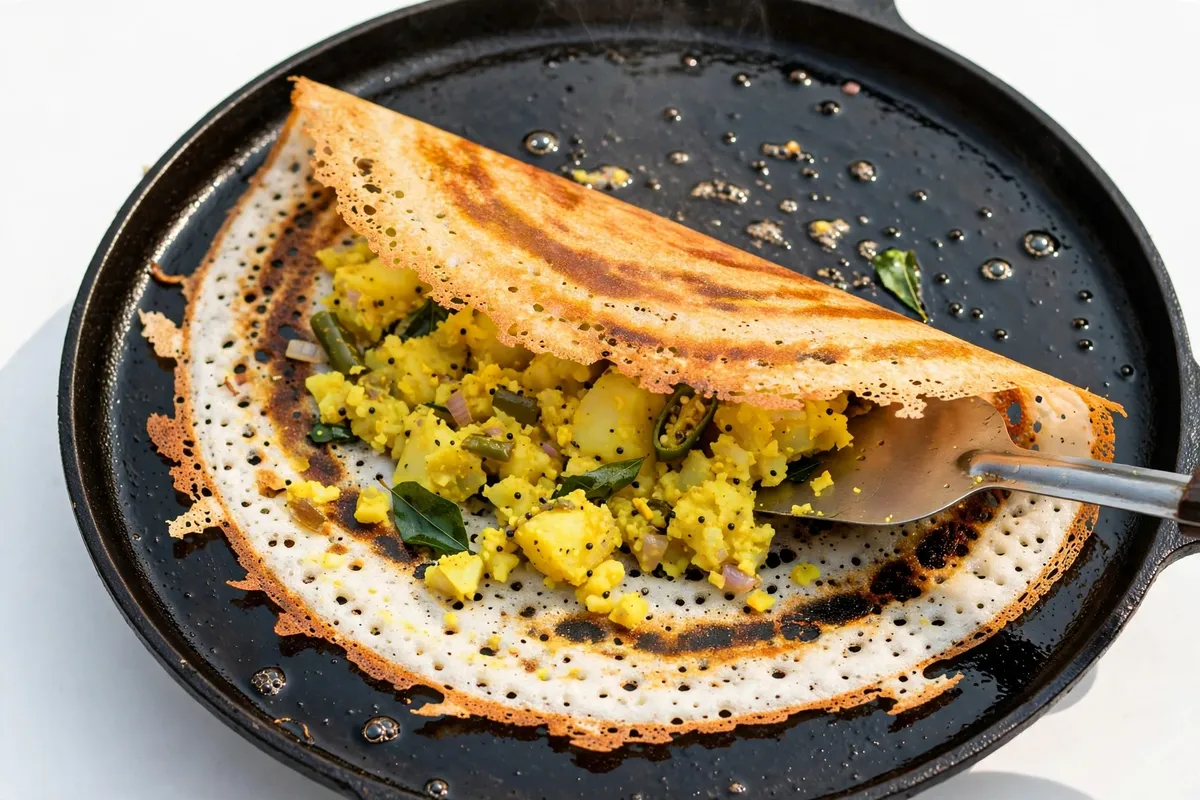
Cook for 2–3 minutes until the bottom is golden brown and crisp and the top looks dry — dosas are cooked on one side only. Place a generous scoop of potato masala in the centre, fold the dosa over it in half (or roll it into a cone) and slide onto a plate. Serve immediately with sambar and coconut chutney — dosas wait for no one.
Tips for the best masala dosa
- Ferment properly — there is no shortcut. A well-fermented batter is the difference between a crisp, tangy dosa and a pale, floppy one. It should rise, bubble and smell pleasantly sour. In winter, give it up to 24 hours rather than cooking too soon.
- Spread in one motion. Pour the batter in the centre and spiral outward in a single confident sweep. Going over a spot twice tears the dosa, and hesitating lets the batter set before you can spread it thin.
- Keep the masala dry. A wet potato filling steams the dosa from the inside and kills the crispness in minutes. Cook the masala until it is dry and crumbly, and fill the dosa only at the last second.
- Serve immediately. Dosas go soft fast, especially under a cover. Cook them one at a time and eat each one hot off the tawa — this is a cook-and-serve dish, not a make-ahead one.
How to store masala dosa
Cooked dosas do not keep well — they lose their crispness within minutes, so cook only as many as you will eat. The fermented batter, though, keeps in the fridge for 3–4 days in an airtight container; stir gently and thin with a little water before using. The potato masala keeps for 3 days refrigerated and reheats well in a pan.
Masala Dosa FAQs
Why is my dosa not crispy?
The three usual causes are under-fermented batter, a pan that is not hot enough, or spreading too thick. The batter must be well fermented and at pouring consistency; the tawa must be properly hot before the batter goes on; and the spread must be thin — one quick spiral, never going over a spot twice. A drizzle of ghee around the edges helps the dosa crisp and release.
Can I use store-bought dosa batter?
Yes — ready-made dosa batter from an Indian grocery store works well and skips the soaking, grinding and fermenting entirely. Check it is at pouring consistency (thin it with a little water if needed) and that it smells pleasantly sour. The potato masala and the spreading technique in this recipe stay exactly the same.
What is the difference between dosa and masala dosa?
A dosa is the crisp fermented rice-lentil crepe itself, usually served plain with sambar and chutney. A masala dosa is that same crepe folded around a spiced potato filling — the masala. The batter and cooking are identical; only the filling changes. A Mysore masala dosa adds a smear of spicy red chutney inside as well.
How do I ferment dosa batter in winter?
Fermentation needs warmth, ideally 75–85°F (24–29°C). In a cold kitchen, put the covered bowl in the oven with just the light on, or in a microwave switched off with a cup of hot water beside it. In winter the batter may need 14–16 hours, or even a full day — wait until it has risen and smells pleasantly sour before cooking.
Your week of dinners, planned.
Build a free 7-day meal plan and download it as a beautiful image.