Spaghetti Carbonara
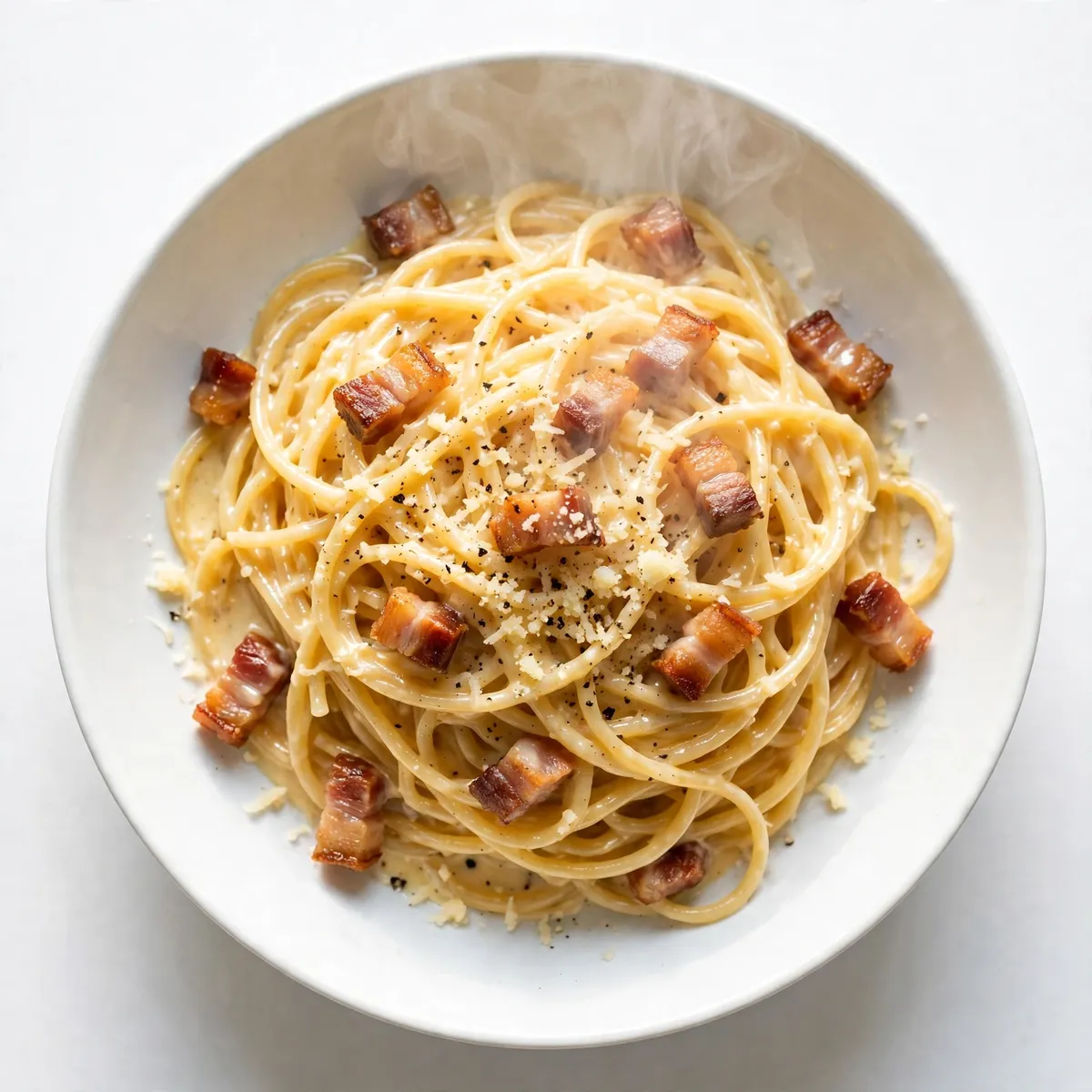
Spaghetti carbonara is Rome's most argued-about pasta — and the argument is usually about cream. The authentic version has none: just eggs, Pecorino Romano, guanciale and black pepper, turned into a silky sauce by starchy pasta water and the heat of the pasta itself. This recipe shows you the technique in 30 minutes, with no scrambled eggs.
Ingredients
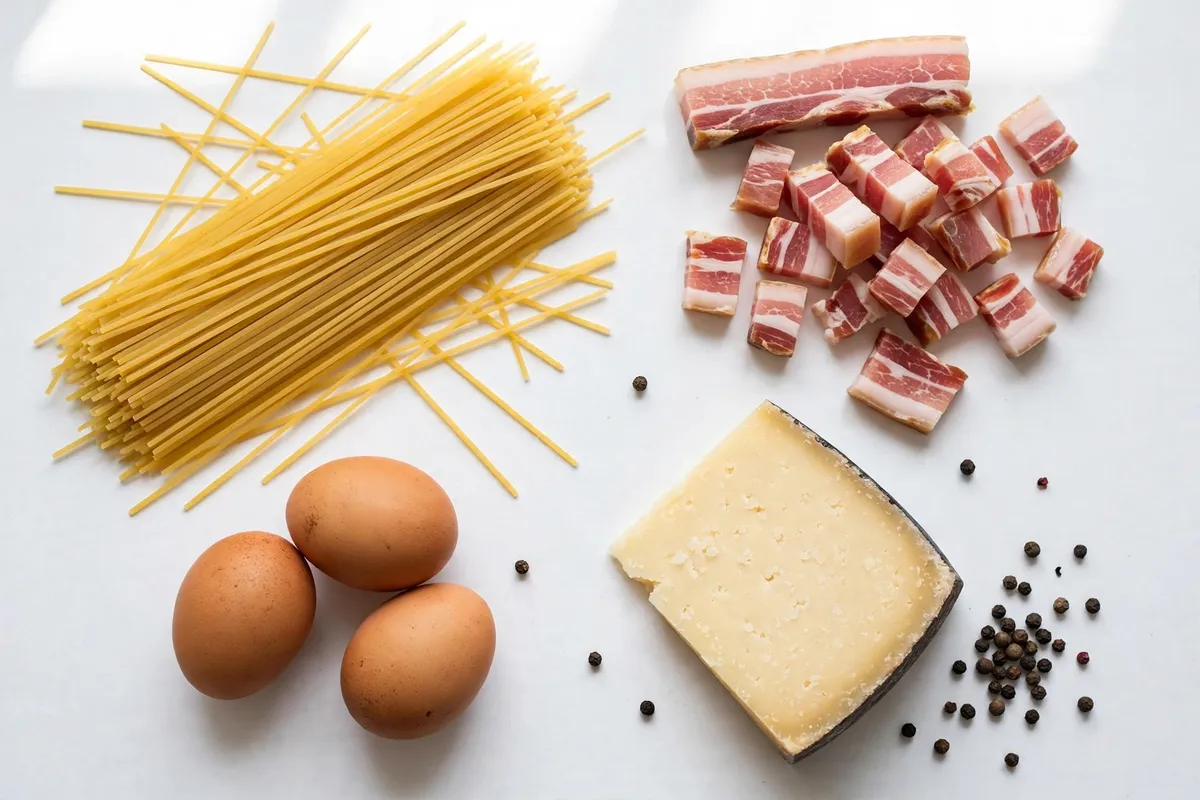
- 400g (14 oz) spaghetti
- 200g (7 oz) guanciale, cut into small strips (pancetta works too)
- 3 large egg yolks, plus 1 whole egg, at room temperature
- 80g (about 1 cup) Pecorino Romano cheese, finely grated, plus extra to serve
- 1 teaspoon coarsely ground black pepper, plus extra to serve
- Salt, for the pasta water
How to make Spaghetti Carbonara
Crisp the guanciale
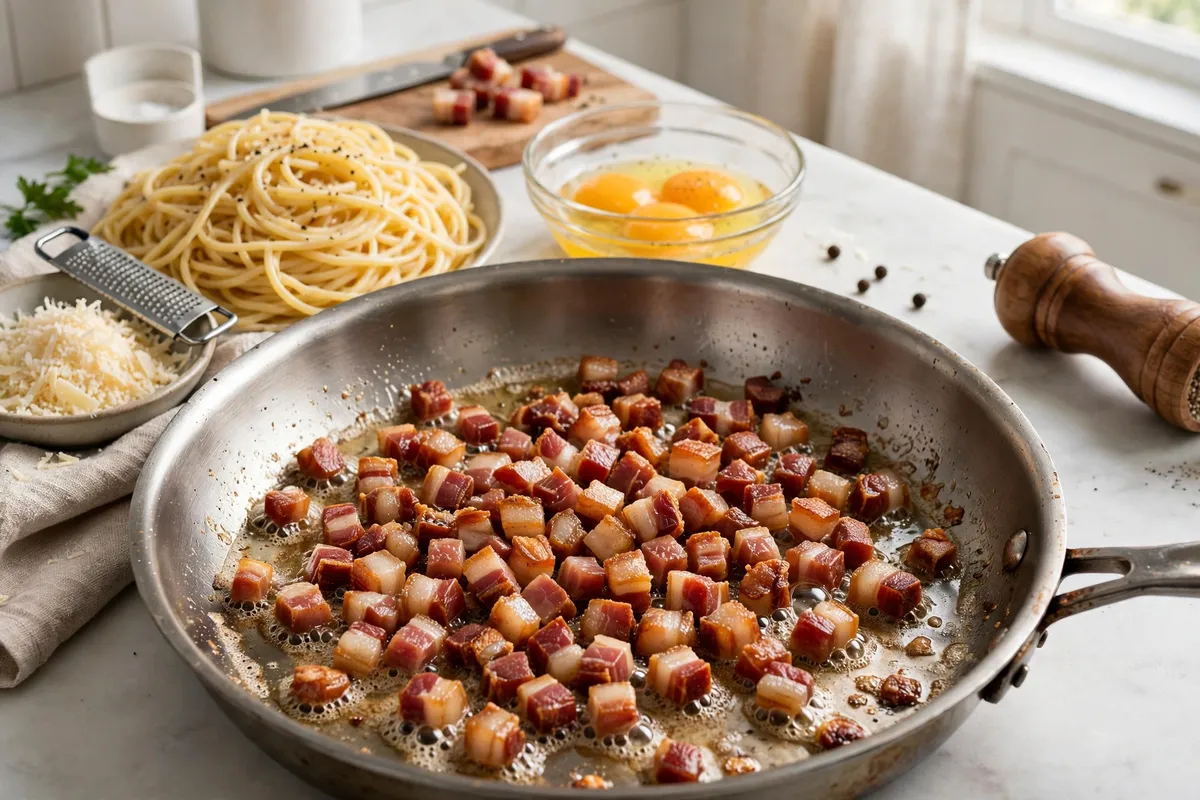
Put the guanciale in a cold large skillet, then set it over medium-low heat. Let the fat render slowly, stirring now and then, until the pieces are golden and crisp, about 8 to 10 minutes. Lift them out with a slotted spoon and keep every drop of the rendered fat in the pan.
Whisk the egg mixture
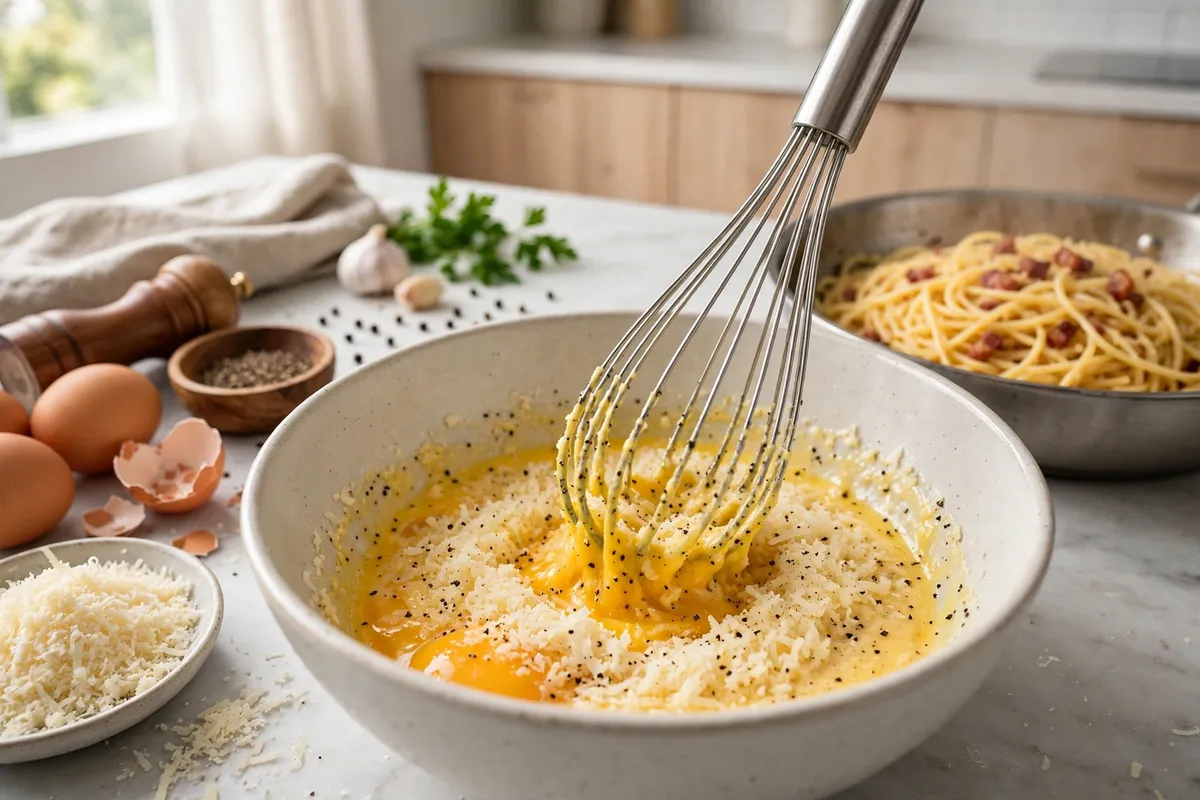
While the pork cooks, whisk the yolks and whole egg in a medium bowl with the grated Pecorino and a generous amount of black pepper until smooth and thick. Room-temperature eggs are important — cold eggs seize when they meet hot pasta.
Cook the pasta
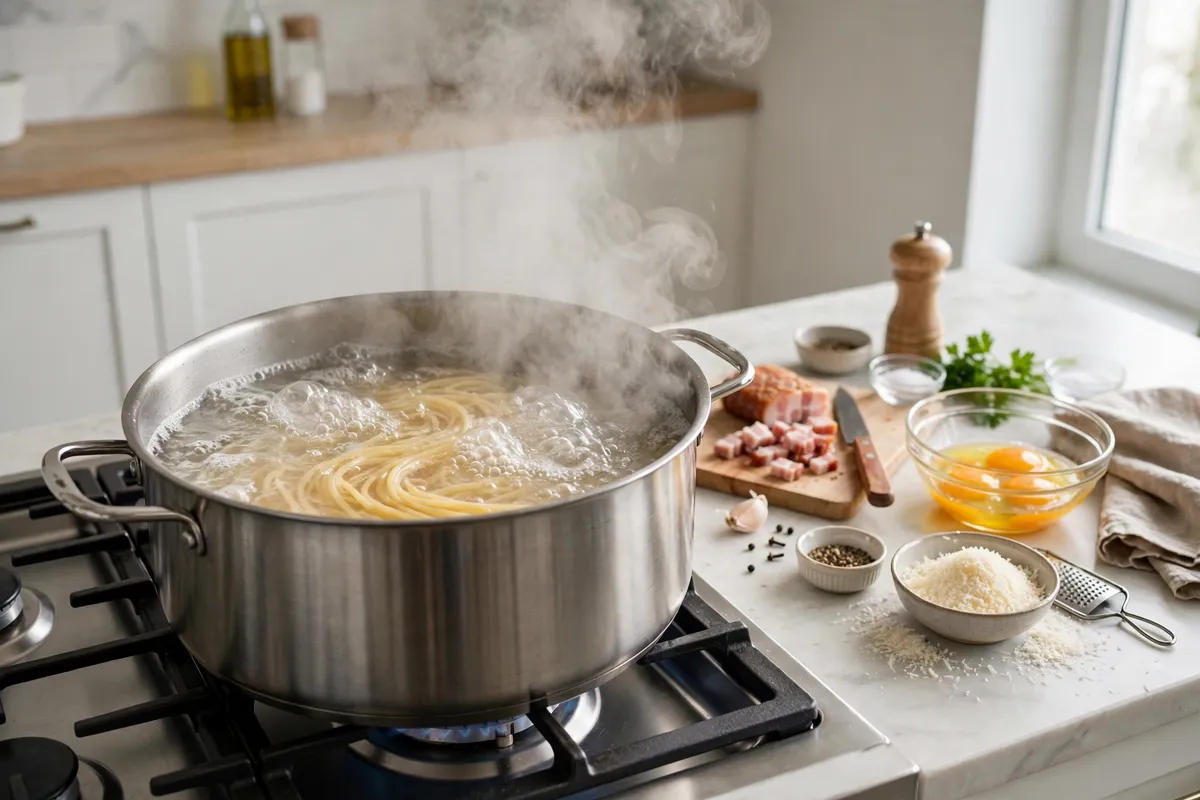
Bring a large pot of generously salted water to a rolling boil and cook the spaghetti until just al dente, a minute less than the packet says. Before draining, scoop out a cup of the starchy pasta water — it is what turns the eggs and cheese into a sauce.
Toss off the heat
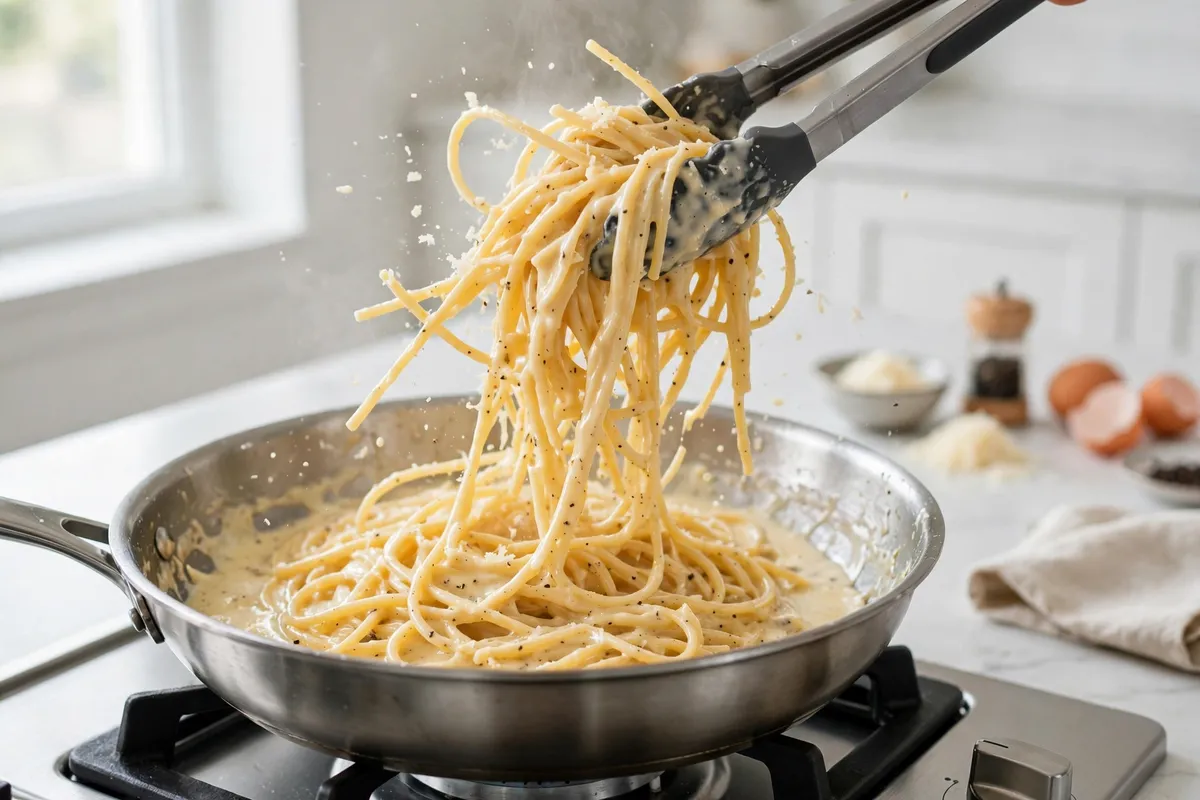
Drain the pasta and add it straight to the pan with the guanciale fat. Toss for a minute to coat every strand. Take the pan off the heat, wait about 30 seconds, then pour in the egg mixture while tossing constantly. Loosen with splashes of pasta water until the sauce is glossy and silky. The residual heat cooks the eggs gently — if the pan is too hot, they scramble.
Serve immediately
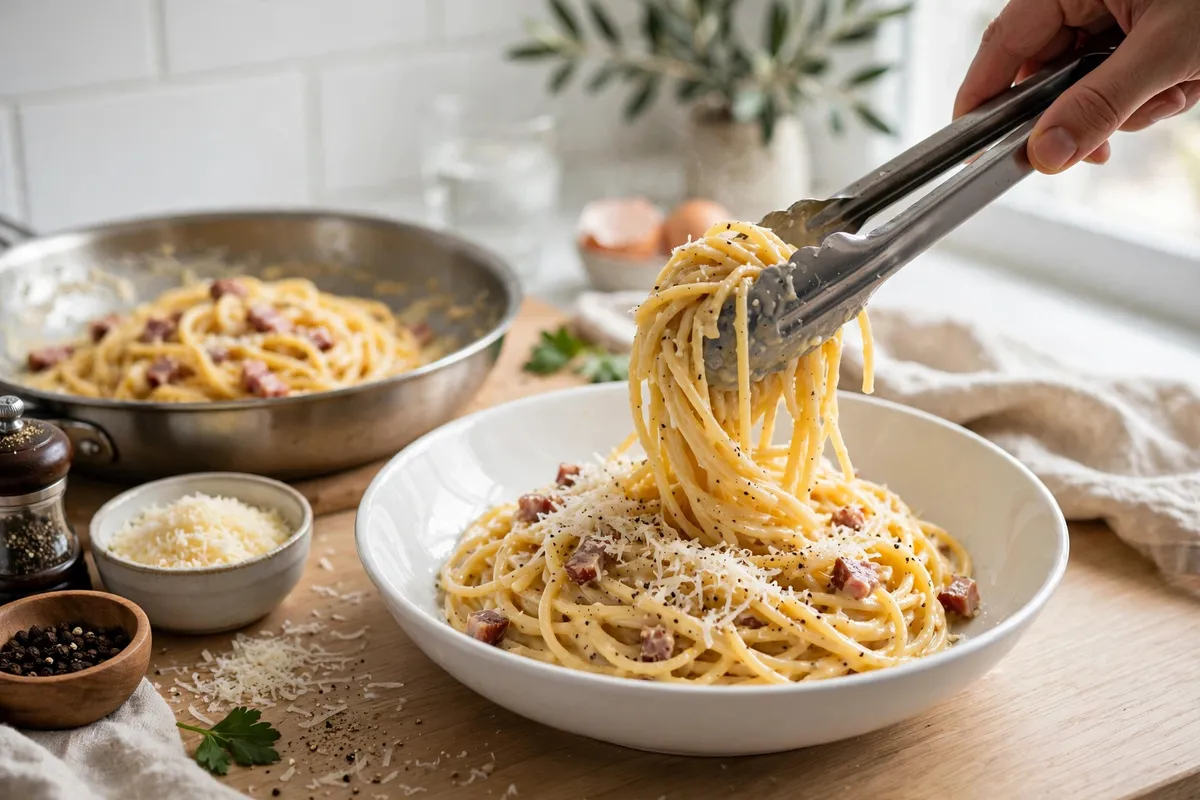
Fold in the crispy guanciale, divide between warm bowls, and finish with extra Pecorino and black pepper. Carbonara waits for no one — the sauce is at its best the moment it leaves the pan.
Tips for the best Spaghetti Carbonara
- Never add cream: the sauce is eggs, cheese, pork fat and starchy pasta water. Cream mutes the Pecorino and turns the dish heavy.
- Grate the cheese finely — coarse shreds clump instead of melting into the eggs. Never use pre-grated cheese; the anti-caking starch ruins the texture.
- If the sauce tightens, add pasta water a tablespoon at a time while tossing. If it looks grainy, the pan was too hot — keep tossing off the heat with a splash of water.
How to store Spaghetti Carbonara
Carbonara doesn't keep well — the emulsion breaks as it cools and doesn't recover on reheating. It is best eaten the moment it's made. If you must store leftovers, refrigerate for up to 1 day and reheat very gently in a pan with a splash of water.
Spaghetti Carbonara FAQs
Does authentic carbonara have cream?
No. Real Roman carbonara has no cream, no butter, no garlic and no onion. The creamy sauce comes from eggs, Pecorino Romano, guanciale fat and starchy pasta water, emulsified by tossing off the heat.
How do you stop carbonara eggs from scrambling?
Take the pan off the heat and wait about 30 seconds before adding the egg mixture, then toss constantly. Tempering helps too: whisk a spoonful of hot pasta water into the eggs first. If the sauce looks grainy, the pan was too hot.
What is guanciale, and what can I use instead?
Guanciale is cured pork cheek — fatty, peppery and unsmoked. It renders into clear fat that carries the sauce. Pancetta is the closest substitute; unsmoked bacon works in a pinch, though the smoke changes the flavour.
Can I use bacon instead of guanciale in carbonara?
You can, but it won't taste quite like Rome — bacon's smoke competes with the Pecorino. If bacon is all you have, choose unsmoked bacon and blanch it for 30 seconds first to rinse off some of the smokiness.
Your week of dinners, planned.
Build a free 7-day meal plan and download it as a beautiful image.