
Shrimp Stir Fry Recipe
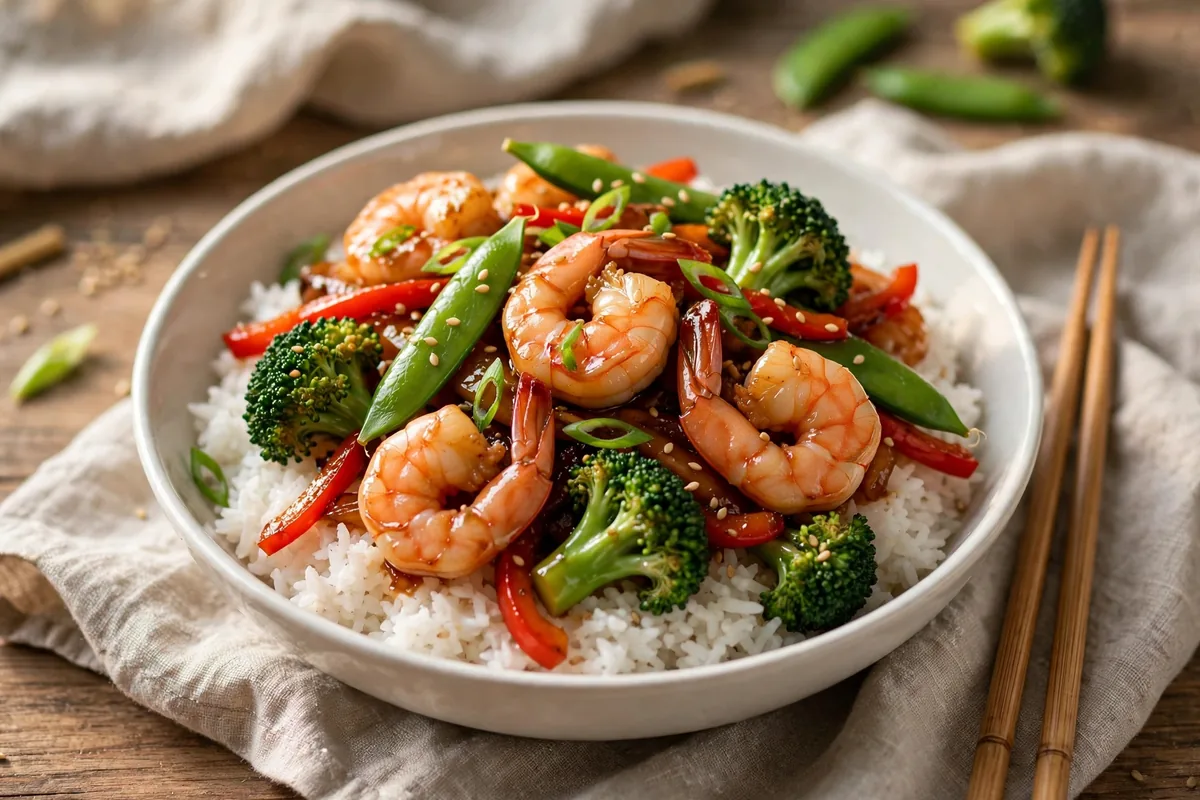
This easy shrimp stir fry recipe is the 20-minute weeknight dinner that tastes like takeout: plump shrimp, crisp broccoli, bell peppers and snap peas tossed in a glossy soy-honey sauce, served over rice or noodles. It is a shrimp stir fry recipe easy enough for a first-time wok cook, and fast enough for the busiest weeknight. Everything cooks in one wok, the sauce takes two minutes to whisk, and dinner is on the table before the rice cooker finishes.
Ingredients
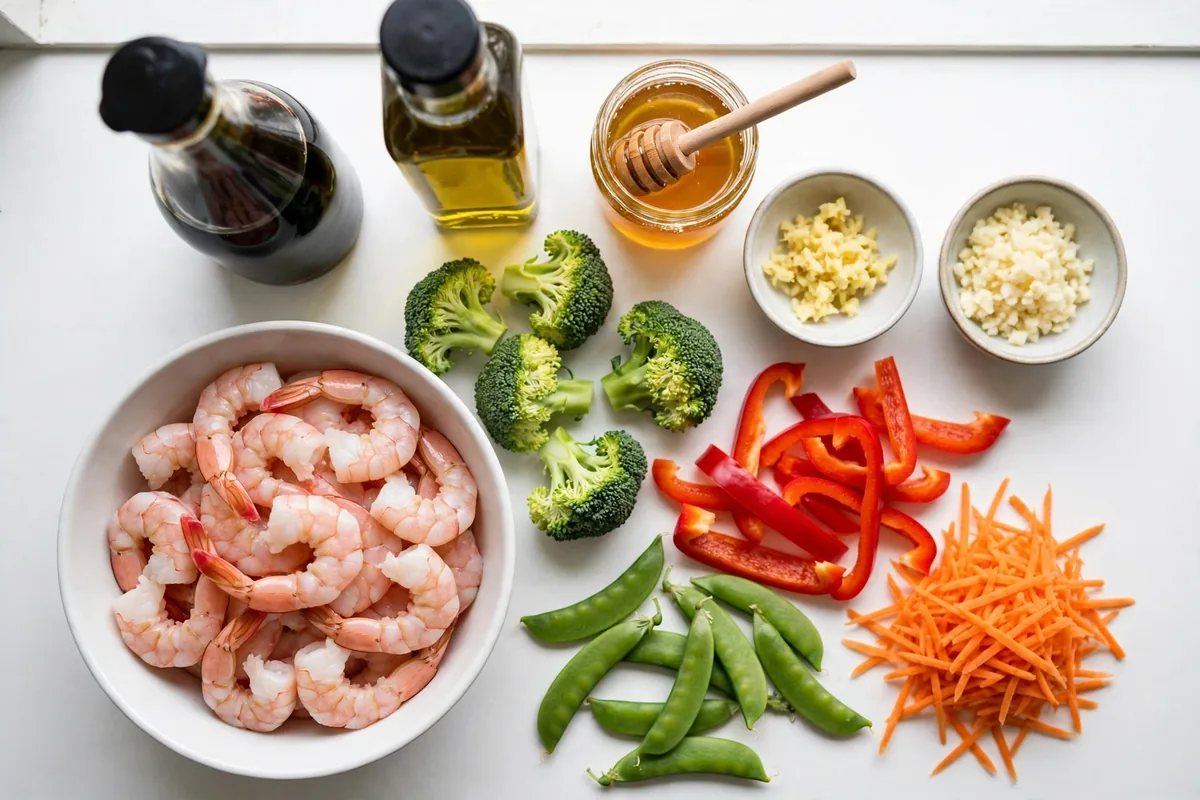
- 1 lb (450g) large shrimp, peeled and deveined
- 2 tbsp soy sauce
- 1 tbsp honey
- 1 tbsp oyster sauce
- 1 tbsp hoisin sauce
- 1 tsp sesame oil
- 1 tbsp rice vinegar
- 1 tbsp cornstarch
- 2 tbsp vegetable oil, divided
- 3 cups broccoli florets
- 1 red bell pepper, sliced
- 1 cup snap peas
- 1 cup shredded carrots
- 3 cloves garlic, minced
- 1 tbsp fresh ginger, grated
- 2 green onions, sliced
- 1 tsp sesame seeds
- Cooked rice or noodles, to serve
How to make shrimp stir fry
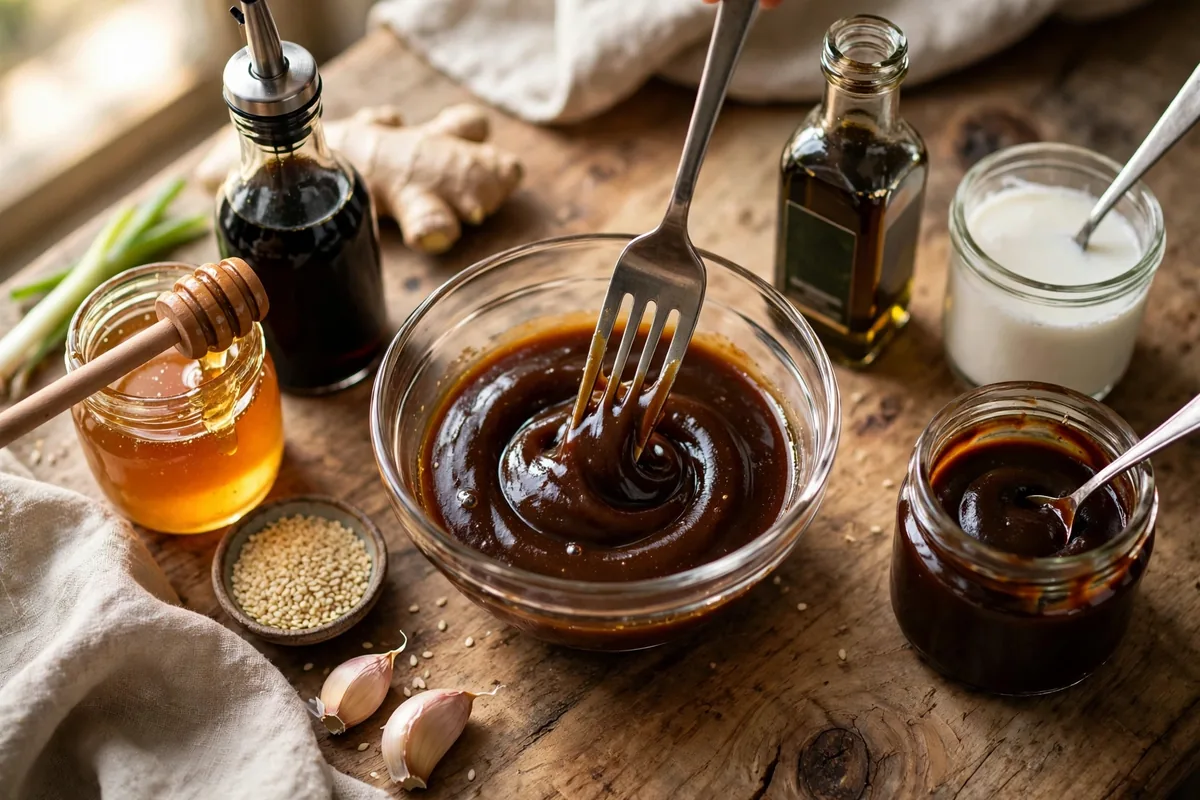
Whisk the stir fry sauce
Whisk the soy sauce, honey, oyster sauce, hoisin sauce, sesame oil, rice vinegar and cornstarch in a small bowl until the cornstarch dissolves and the sauce is smooth. Set it beside the stove — a stir fry moves fast, so everything must be ready before the pan gets hot. This is the shrimp stir fry sauce that makes the whole dish: sweet, salty, glossy and ready in two minutes.
Cook the shrimp
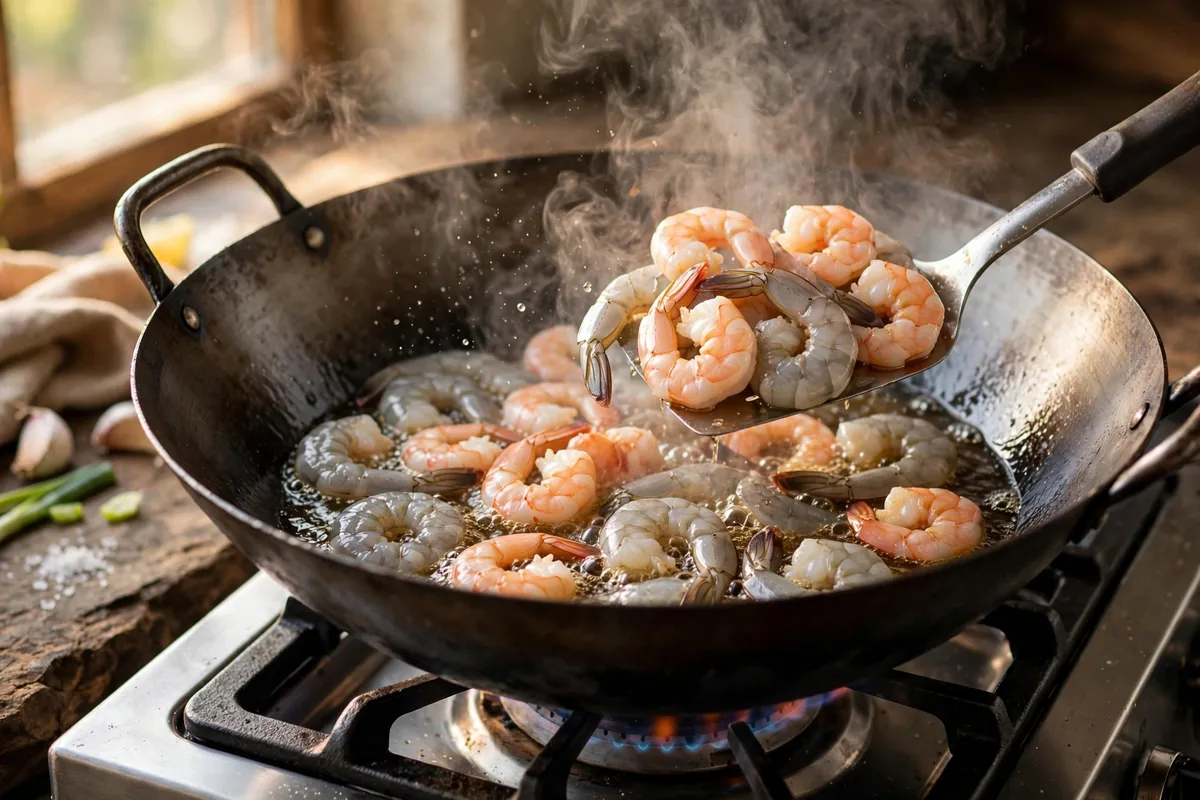
Heat 1 tablespoon of oil in a large wok or skillet over high heat until it shimmers. Add the shrimp in a single layer and cook for 1–2 minutes per side, until pink and curled into C shapes. Remove the shrimp to a plate right away — they finish cooking later in the sauce, and shrimp that stays in the wok turns rubbery fast.
Stir-fry the vegetables
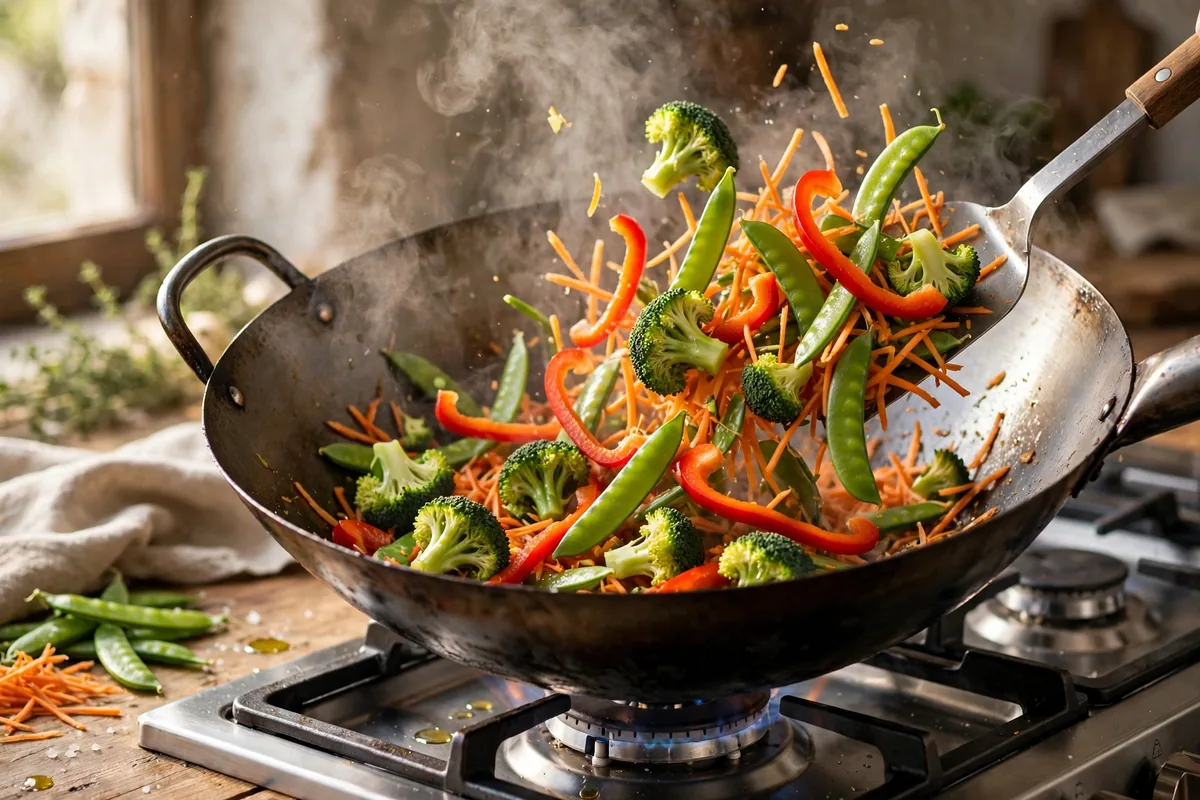
Add the remaining oil to the same wok. Add the broccoli, bell pepper, snap peas and carrots and stir-fry for 3–4 minutes, until bright and crisp-tender. Add the garlic and ginger and cook for 30 seconds more, until fragrant. Keep the heat high and the food moving — that is what keeps the vegetables crisp instead of steamed.
Add the sauce and shrimp
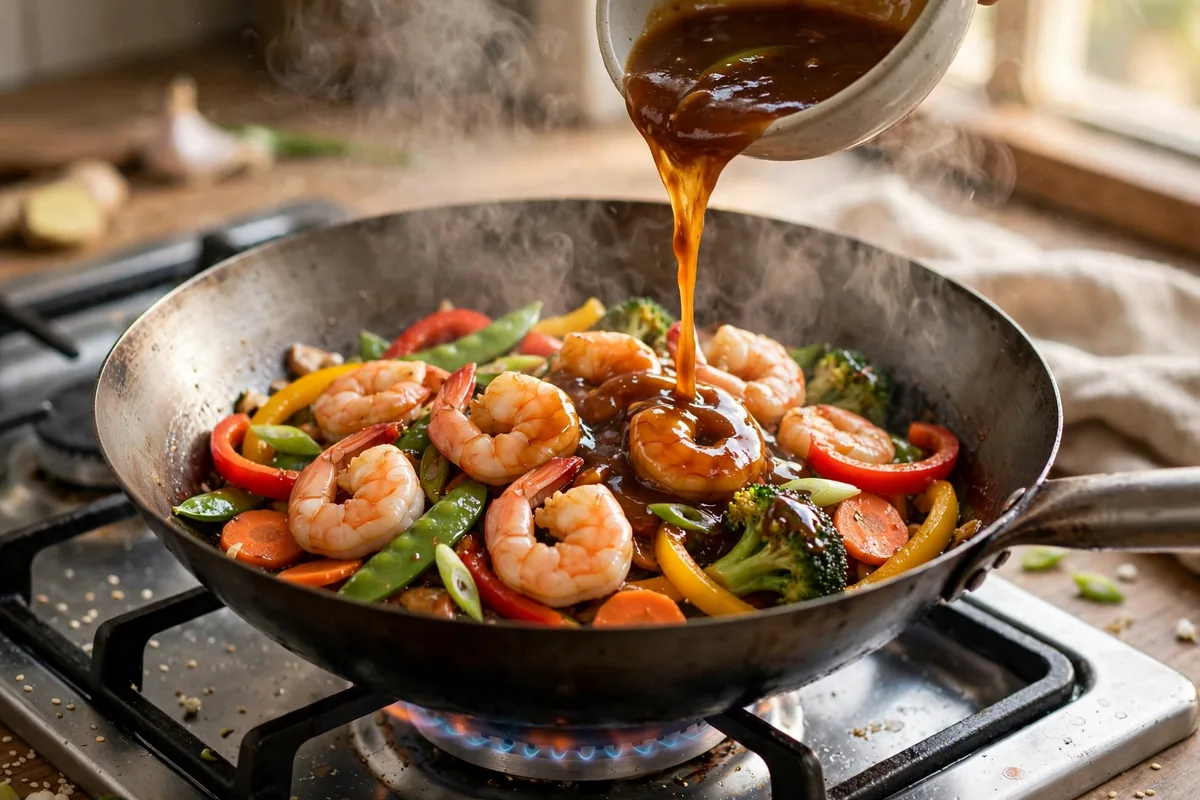
Return the shrimp to the wok, give the sauce a quick re-whisk, and pour it over everything. Toss for 1–2 minutes until the sauce thickens into a glossy glaze that coats the shrimp and vegetables. The cornstarch is what turns a thin sauce into the shiny coating you get at a good takeout place.
Serve over rice or noodles
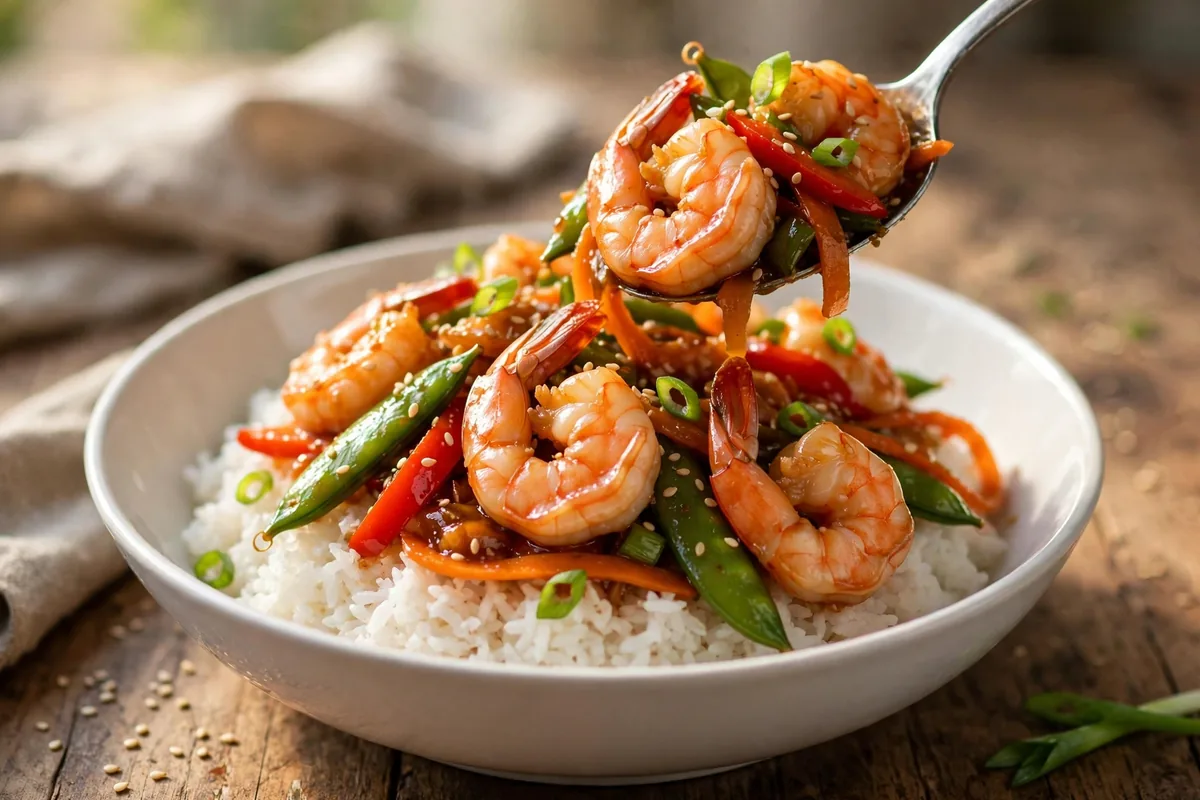
Serve the shrimp stir fry immediately over rice or tossed with noodles, topped with sliced green onions and sesame seeds. Shrimp stir fry with rice is the classic plate; shrimp stir fry with noodles turns it into a one-bowl dinner. Either way, serve it the moment the sauce thickens — stir fry waits for no one.
The Best Shrimp Stir Fry Sauce
The sauce is what separates a great shrimp stir fry from a bland one, and this shrimp stir fry sauce recipe is deliberately simple: soy sauce for salt, honey for sweetness, oyster sauce and hoisin for savoury depth, sesame oil for nuttiness, rice vinegar for brightness, and cornstarch to make it glossy. It is an easy shrimp stir fry sauce — whisk it in two minutes and it keeps in the fridge for a week, so you can make a double batch and have next week's sauce ready. It is a shrimp stir fry sauce recipe easy enough to make from memory after one try — a shrimp stir fry sauce easy to whisk from pantry staples, and an easy shrimp stir fry with soy sauce at its base needs nothing fancier than that. Once you know this shrimp stir fry recipe sauce by heart, you can build the whole dinner from memory.
Every variation starts from the same base. A shrimp stir fry sauce with soy sauce and honey is the classic sweet-savoury balance. A shrimp stir fry sauce with honey brings the sweetness that balances the salt, and this shrimp stir fry recipe with soy sauce as the base stays balanced rather than salty. A shrimp stir fry sauce with oyster sauce adds the deep, almost meaty flavour that makes takeout sauce taste like takeout. A shrimp stir fry sauce with sesame oil brings a toasted nuttiness — a little goes a long way, so measure it rather than pouring freehand. A shrimp stir fry sauce with hoisin sauce leans sweeter and thicker, closer to a teriyaki glaze. And a shrimp stir fry sauce for noodles wants one extra splash of soy sauce and a little water, so it coats the noodles instead of clinging only to the shrimp. If you want a lighter version, use low-sodium soy sauce, swap the honey for half the amount, and skip the hoisin — the sauce stays glossy and flavourful. This is an easy shrimp stir fry sauce recipe in the truest sense: six pantry ingredients, one bowl, no cooking.
Shrimp Stir Fry with Vegetables
This shrimp stir fry with vegetables recipe is built around the vegetables that hold up best in a hot wok. Any shrimp stir fry recipe with vegetables lives or dies by the vegetables you choose, so pick ones that stay crisp. Shrimp stir fry with broccoli is the classic — broccoli florets turn bright green and stay crisp, and they catch the sauce in their florets. A shrimp stir fry recipe with broccoli is the combination most takeout places use — shrimp stir fry with vegetables and broccoli is the takeout classic, and an easy shrimp stir fry with broccoli is the version to make on a busy night. An easy shrimp stir fry with vegetables is the weeknight default: one wok, whatever vegetables are in the fridge. Beyond broccoli, the best vegetables to put in a shrimp stir fry are bell peppers, snap peas, snow peas, shredded carrots, mushrooms, asparagus, green beans and bok choy. Shrimp stir fry with vegetables and mushrooms adds an earthy note; add the mushrooms with the broccoli so they brown rather than steam. Shrimp stir fry with vegetables and sauce is at its best when the sauce goes in last, so the vegetables stay crisp under the glaze.
Shrimp stir fry with vegetables and noodles turns the same pan into a one-bowl meal — toss cooked noodles straight into the wok with the sauce. Shrimp stir fry with vegetables and rice is the lighter, classic plate. Shrimp stir fry with vegetables and rice noodles is a good gluten-free option if you use tamari instead of soy sauce. And if the fridge is nearly empty, an easy shrimp stir fry with frozen vegetables works surprisingly well: use a stir-fry blend straight from the freezer, cook it a minute longer, and pat the shrimp dry so the extra moisture doesn't thin the sauce. However you build it, this shrimp and vegetable stir fry follows one rule: cut everything the same size, keep the heat high, and keep the food moving. This is shrimp stir fry with vegetables easy enough for a first-time cook — one wok, one sauce, twenty minutes — and shrimp stir fry with vegetables healthy enough to make every week.
Shrimp Stir Fry with Noodles vs Rice
The two classic ways to serve this shrimp stir fry recipe are over rice or tossed with noodles, and both are right. This shrimp stir fry recipe with rice is the lighter plate — an easy shrimp stir fry with rice, jasmine rice soaking up the sauce, and a bowl of shrimp stir fry with rice is one of the most-searched shrimp and rice recipes for a reason. If you have leftover rice, this dinner pairs perfectly with our fried rice recipe: cook the stir fry, then toss the rice in the same wok for a two-in-one dinner.
This shrimp stir fry recipe with noodles is the heartier option — an easy shrimp stir fry with noodles, and a shrimp stir fry recipe with noodles and vegetables is the full one-bowl dinner. An easy shrimp stir fry with ramen noodles uses the dried noodle blocks without the seasoning packet — cook them, drain, and toss them in the wok with the sauce for the last minute. Shrimp stir fry with udon noodles is thicker and chewier, closer to a restaurant noodle bowl. Rice noodles are the lightest choice and the best gluten-free option. Whichever you choose, cook the noodles separately and add them at the very end — noodles cooked in the wok soak up all the sauce and turn starchy.
Tips for the Best Shrimp Stir Fry
- Don't overcook the shrimp. Shrimp needs only 2–4 minutes in a hot wok. A C shape means done; an O shape means overcooked and rubbery. Cook the shrimp first, set it aside, and add it back at the end so it only reheats in the sauce.
- Use a very hot wok. A stir fry needs high heat — the oil should shimmer before anything goes in. A crowded or lukewarm pan steams the food instead of searing it. If your wok is small, cook in two batches.
- Pat the shrimp dry. Wet shrimp steams instead of browning. Pat it dry with paper towels before it hits the oil, and season it lightly with salt first.
- Frozen shrimp works fine. Most shrimp is sold frozen, and it is often fresher than the "fresh" shrimp at the counter. Thaw it in a bowl of cold water for 15–20 minutes, then drain and pat dry. Never cook shrimp straight from frozen — it releases too much water and cools the pan.
- Prep everything before you start. A stir fry cooks in under 10 minutes, so there is no time to chop mid-cook. Cut the vegetables, whisk the sauce, and have the rice or noodles ready before the wok gets hot.
- Make it healthy. This healthy shrimp stir fry is already light — shrimp is lean protein and the pan is mostly vegetables. For an even lighter version, use low-sodium soy sauce, halve the honey, load up on vegetables, and serve over cauliflower rice or brown rice. At around 320 calories per serving without rice, this shrimp stir fry recipe healthy enough for a weeknight regular.
Variations: Shrimp Recipes for Dinner
This recipe is one of the most versatile shrimp recipes for dinner, because the same method works with almost any protein or sauce. Swap the shrimp for scallops — sear them for 2 minutes per side and add them back at the end the same way. Swap the vegetables for whatever is in season: asparagus in spring, green beans in summer, bok choy year-round. For a spicy version, add a tablespoon of sriracha or a teaspoon of chili flakes to the sauce. For a garlicky, buttery version closer to shrimp scampi, skip the soy sauce and honey and toss the shrimp in butter, garlic, lemon juice and white wine — a different dish, but the same 20-minute promise. If you like this style of cooking, our chicken stir fry recipe uses the same wok method with chicken instead of shrimp, and our 15 minute meals guide has more dinners in the same fast weeknight spirit. Serve the finished stir fry with a simple soup on the side — a light egg drop soup or miso soup turns it into a full takeout-style meal.
How to Store Shrimp Stir Fry
Shrimp stir fry keeps for up to 3 days in the fridge in an airtight container. Reheat it gently in a skillet over medium heat for 2–3 minutes — the microwave overcooks shrimp fast and turns it rubbery. Store the rice or noodles separately so they don't soak up the sauce and go soggy. Shrimp stir fry does not freeze well: the shrimp turns tough and the vegetables lose their crispness, so it is best eaten within a few days. For meal prep, cook the vegetables and sauce ahead and add freshly cooked shrimp when you reheat — that way the shrimp is always perfectly cooked.
Shrimp Stir Fry FAQs
What are the best vegetables to put in a shrimp stir fry?
The best vegetables for a shrimp stir fry are the ones that stay crisp after a few minutes in a hot wok: broccoli, bell peppers, snap peas, snow peas, carrots, mushrooms, asparagus, green beans and bok choy. Broccoli and bell peppers are the classic pair. Cut everything into similar sizes so it cooks evenly, and add softer vegetables like mushrooms and bok choy last so they don't go soggy.
What sauce goes well with shrimp stir fry?
A soy-based sauce is the classic match for shrimp stir fry: soy sauce for salt, honey for sweetness, oyster sauce and hoisin for depth, sesame oil for nuttiness, and rice vinegar for brightness, thickened with a little cornstarch. For a spicy version, add sriracha or chili flakes; for a lighter version, use low-sodium soy sauce and skip the hoisin.
How long to stir-fry shrimp?
Shrimp needs only 2–4 minutes in a hot wok: about 1–2 minutes per side, until pink and curled into a C shape. A C means done; an O means overcooked and rubbery. Because shrimp finishes so fast, cook it first, set it aside, and add it back at the very end so it only reheats in the sauce instead of cooking twice.
What can I use instead of oyster sauce in stir-fry?
The closest swap for oyster sauce is hoisin sauce — use the same amount, and add a pinch of sugar if your hoisin is less sweet. Fish sauce mixed with a little brown sugar also works, or simply use extra soy sauce with a teaspoon of honey. The stir fry will still be glossy and savoury without oyster sauce.
Your week of dinners, planned.
Build a free 7-day meal plan and download it as a beautiful image.