Sage and Onion Stuffing
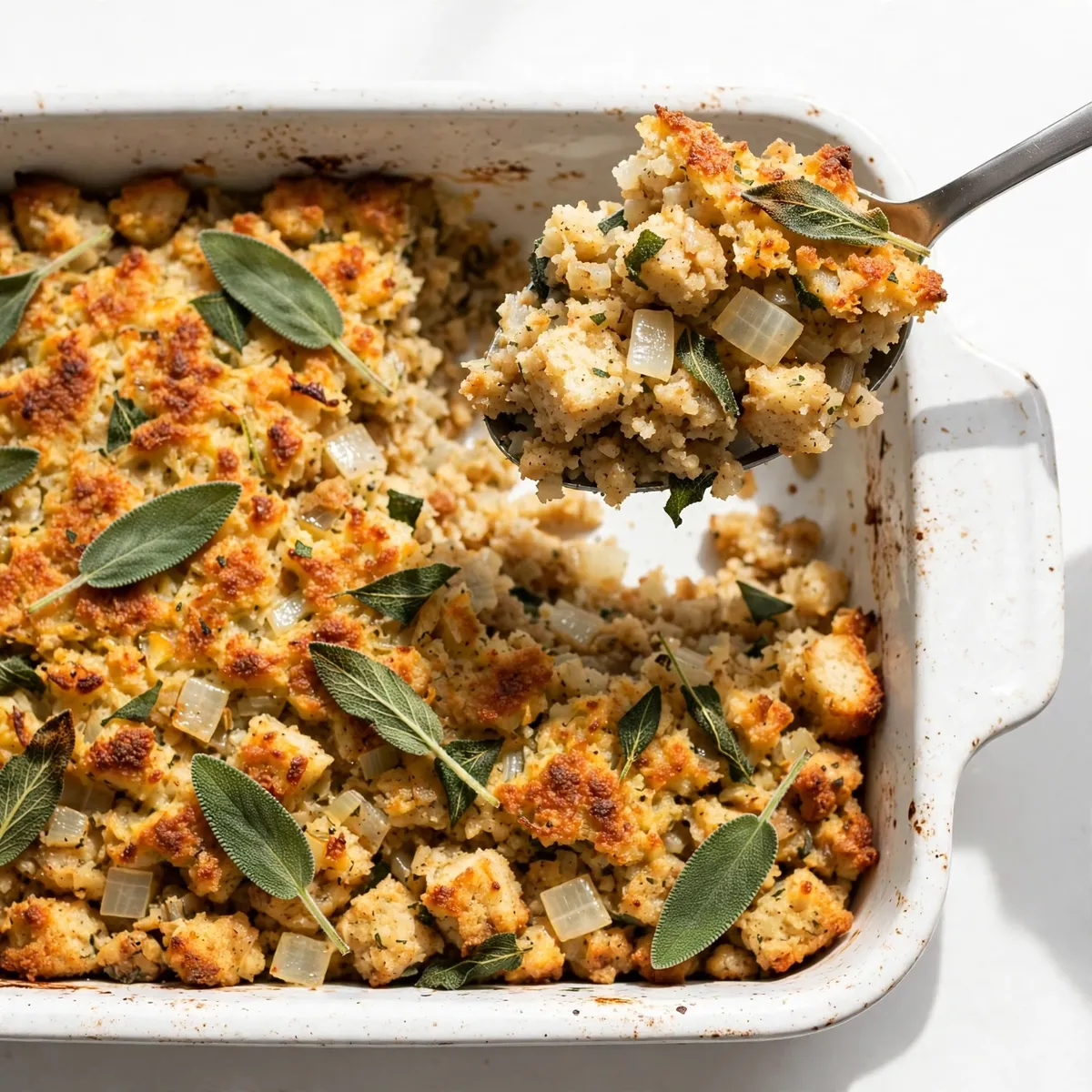
Sage and onion stuffing is the side dish the whole holiday table revolves around: dried bread, buttered onions and celery, and plenty of fresh sage, baked in its own dish until the top is crisp and golden and the centre is soft and savoury. No bird required.
Ingredients
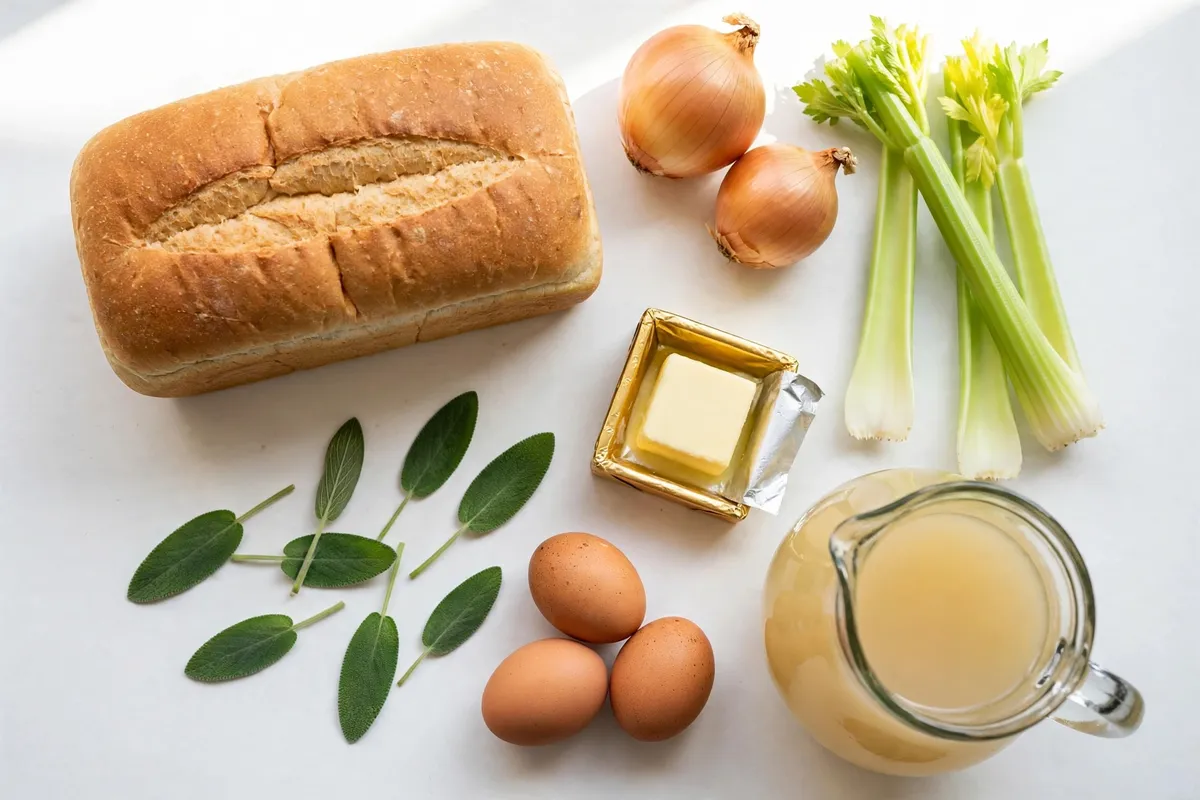
- 1 lb (450g) sturdy white bread, cut into ½-inch cubes, about 12 cups
- ½ cup (115g) butter
- 1 large onion, diced
- 3 celery stalks, diced
- 3 tbsp fresh sage, chopped
- 1 tbsp fresh thyme leaves
- 2 large eggs, beaten
- 2½–3 cups (600–720ml) chicken or vegetable stock
- 1 tsp salt
- ½ tsp black pepper
How to make sage and onion stuffing
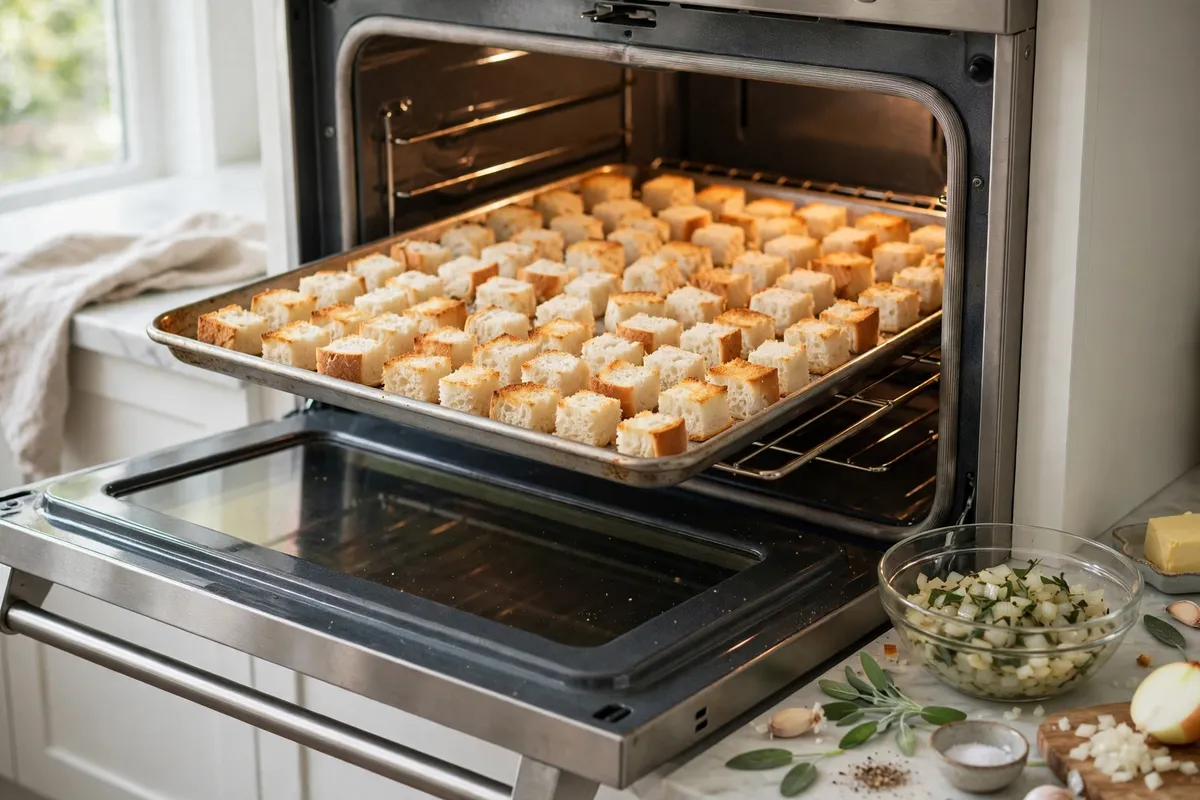
Dry the bread cubes
Spread the bread cubes in a single layer on two large sheet pans and dry them in the oven at 300°F (150°C) for 25–35 minutes, stirring once, until crisp and lightly golden. Let them cool completely — dry bread soaks up the stock without turning to mush.
Soften the onion and celery
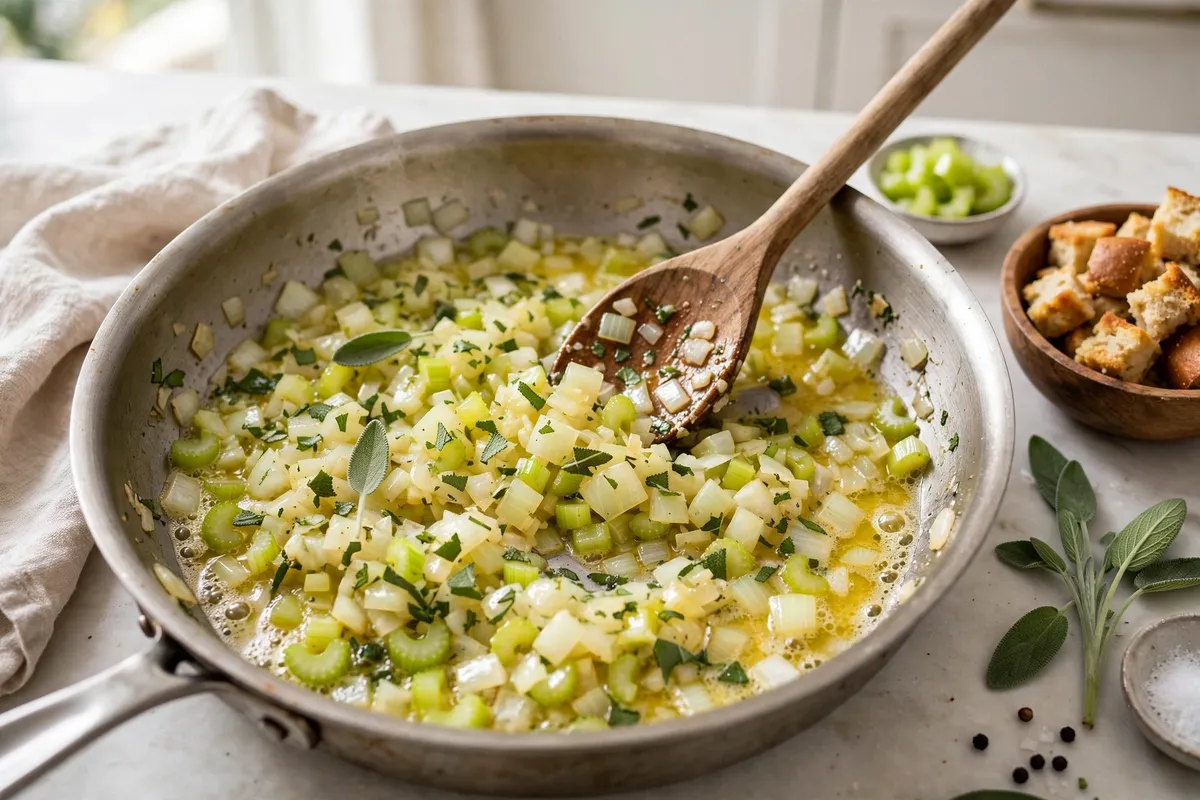
Melt the butter in a large skillet over medium heat. Cook the diced onion and celery for 8–10 minutes, stirring often, until soft and translucent but not browned. Stir in the chopped sage and thyme and cook for 1 minute more, until fragrant.
Toss it all together
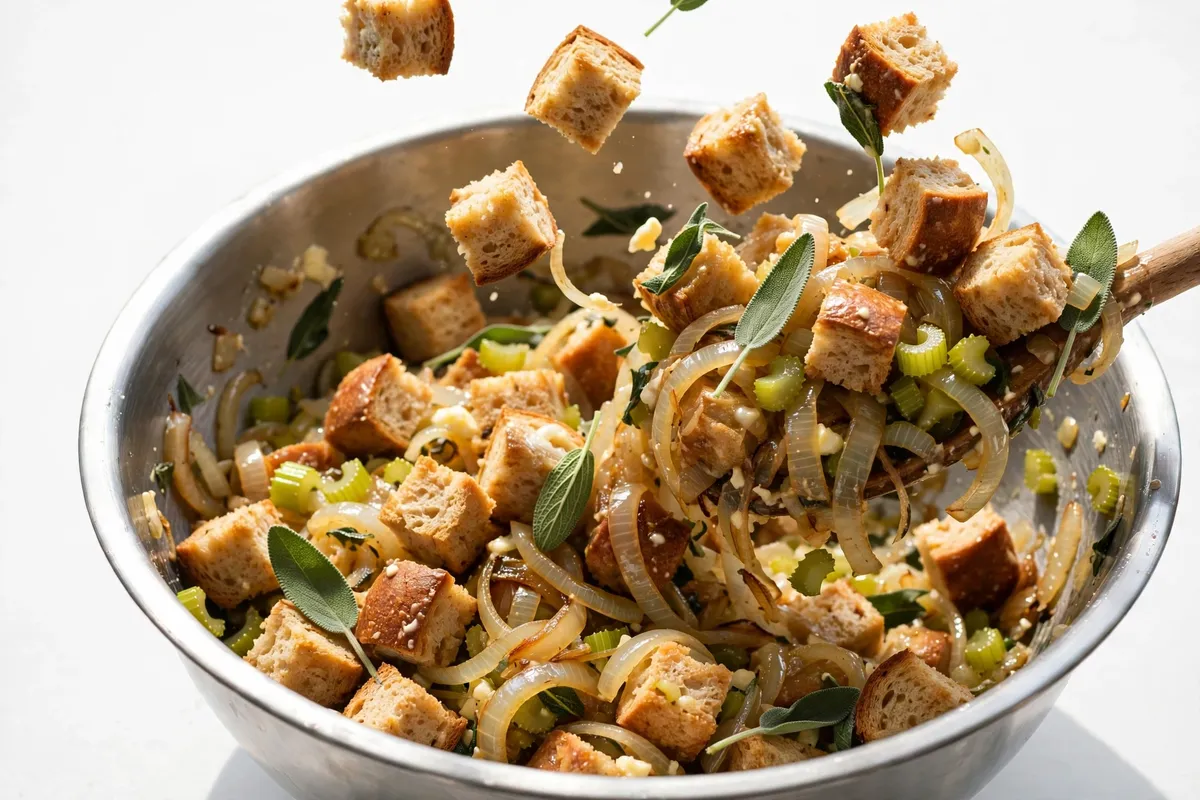
Tip the dried bread cubes into your largest bowl and add the buttered onion, celery and herbs. Season with the salt and pepper and toss gently until the bread is evenly coated in butter — this is what gives the stuffing its rich, savoury flavour.
Add stock and eggs
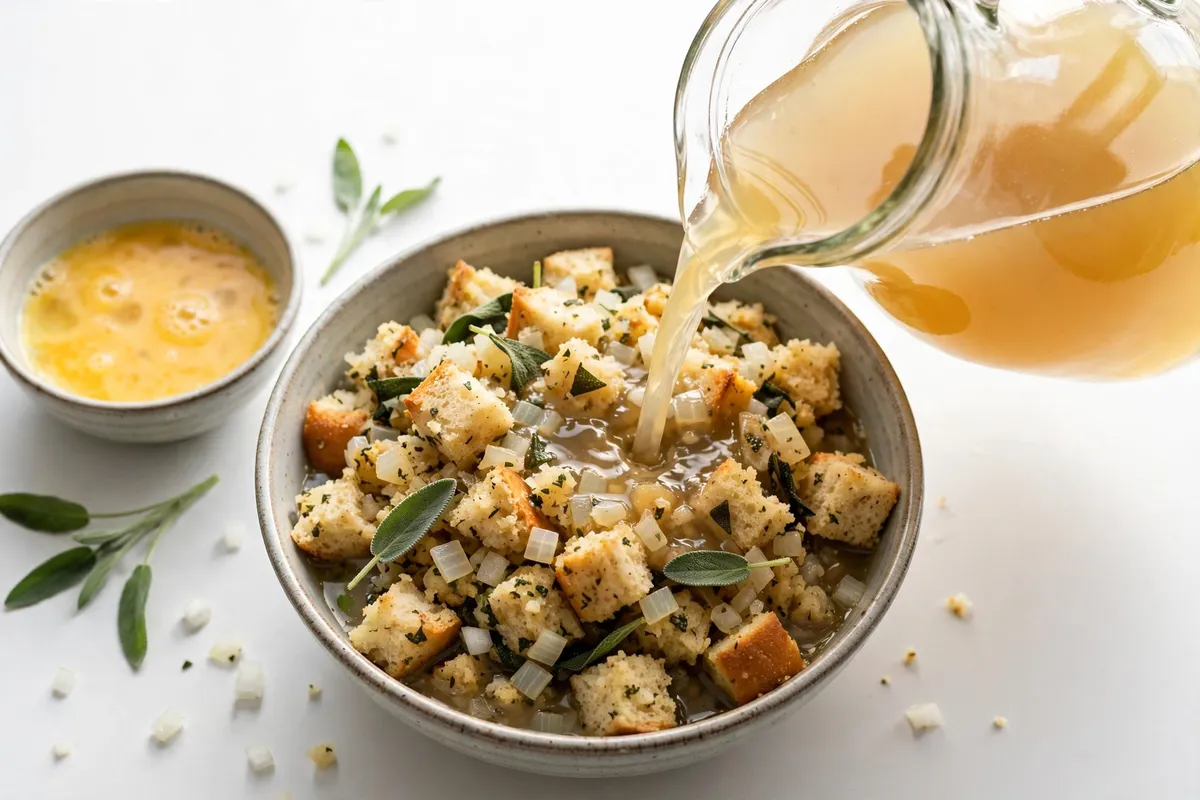
Pour 2½ cups of stock over the mixture and add the beaten eggs. Toss gently until the bread is evenly moistened, adding more stock a little at a time if the cubes still look dry. The mixture should be damp through, not swimming.
Bake until golden
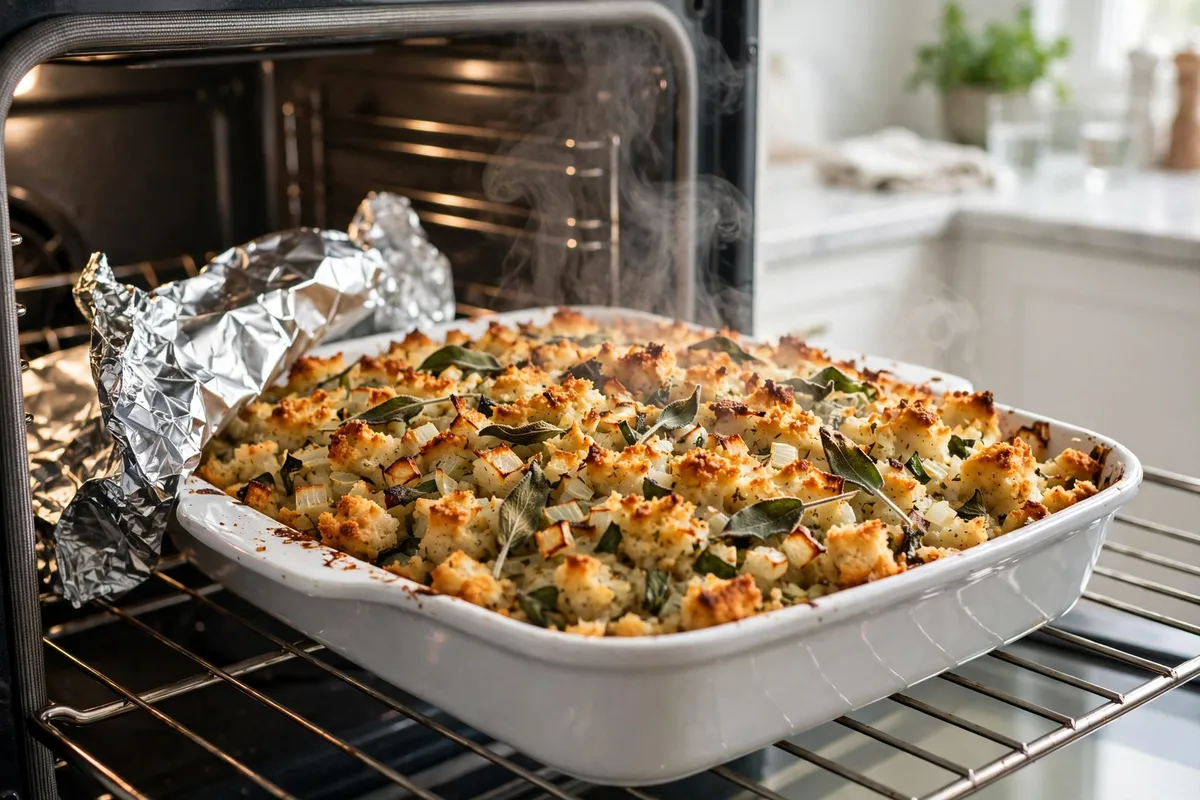
Transfer the stuffing to a greased 9×13-inch baking dish, cover tightly with foil and bake at 350°F (175°C) for 30 minutes. Remove the foil and bake for 20–25 minutes more, until the top is crisp and golden and the centre reads 165°F (74°C).
Tips for the best sage and onion stuffing
- Use sturdy, day-old bread. A firm white loaf, sourdough or French bread holds its shape after soaking. Fresh, soft sandwich bread collapses into porridge — if that is all you have, dry it a little longer in the oven.
- Dry the bread properly. This step looks skippable and it is not. Crisp, dry cubes drink up the stock and butter while keeping their shape; damp cubes go straight to soggy.
- Do not pack the dish. Spoon the stuffing in loosely and leave it a little airy. Packed stuffing steams into a dense brick; loose stuffing bakes up light, with crispy edges all through.
- Make it your own. The classic base takes well to additions: browned sausage meat, toasted chestnuts, dried cranberries or a diced apple. Fold any extras in with the vegetables at step 3.
How to store sage and onion stuffing
Refrigerate leftover stuffing within two hours of serving — it keeps for 3–4 days in an airtight container. Reheat covered in a 350°F (175°C) oven for 20 minutes with a splash of stock to keep it moist, then uncover for 5 minutes to re-crisp the top. Cooked stuffing also freezes well for up to 3 months; thaw overnight in the fridge before reheating.
Sage and Onion Stuffing FAQs
What is the difference between stuffing and dressing?
They are the same dish with different names. Technically, stuffing is cooked inside the bird and dressing is baked in its own dish — and in the American South, dressing is the usual word either way. This recipe is baked separately in a dish, so it is dressing in the strict sense, but everyone calls it stuffing.
Can you make stuffing ahead of time?
Yes — dry the bread cubes and cook the onion, celery and herbs up to 2 days ahead and refrigerate them separately. On the day, toss everything together with the stock and eggs and bake as usual. Mixing the wet and dry parts ahead of time makes the bread soggy, so keep them apart until baking day.
Should stuffing be cooked inside the turkey?
The USDA recommends baking stuffing separately rather than inside the bird. Stuffing packed into a turkey must reach 165°F (74°C) to be safe, and by the time the centre gets there the turkey itself is usually overcooked. Baked in its own dish, stuffing is safer, cooks evenly, and gets a crisp golden top the bird version never can.
How do you keep stuffing moist?
Do not skimp on the stock — 2½ to 3 cups for this recipe — and bake the stuffing covered with foil for the first 30 minutes so the steam keeps it moist inside. The foil only comes off for the last 20–25 minutes to crisp the top. If the mixture looks dry before it goes in the oven, add more stock a little at a time.
Your week of dinners, planned.
Build a free 7-day meal plan and download it as a beautiful image.