Prime Rib Roast
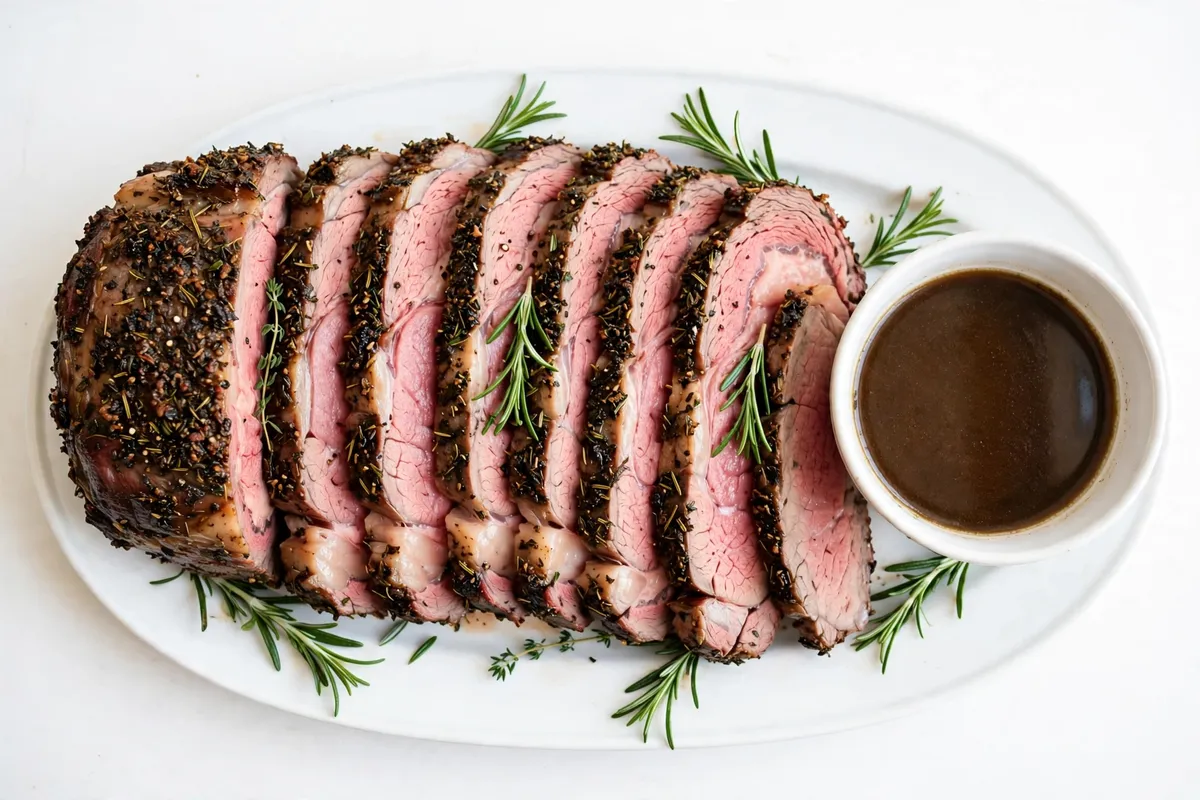
Prime rib roast is the most impressive cut you can put on a holiday table, and the reverse sear method makes it almost impossible to overcook. A long, gentle roast at 225°F brings the whole joint to an even pink, then a short blast at 500°F builds a dark, crisp crust.
Ingredients
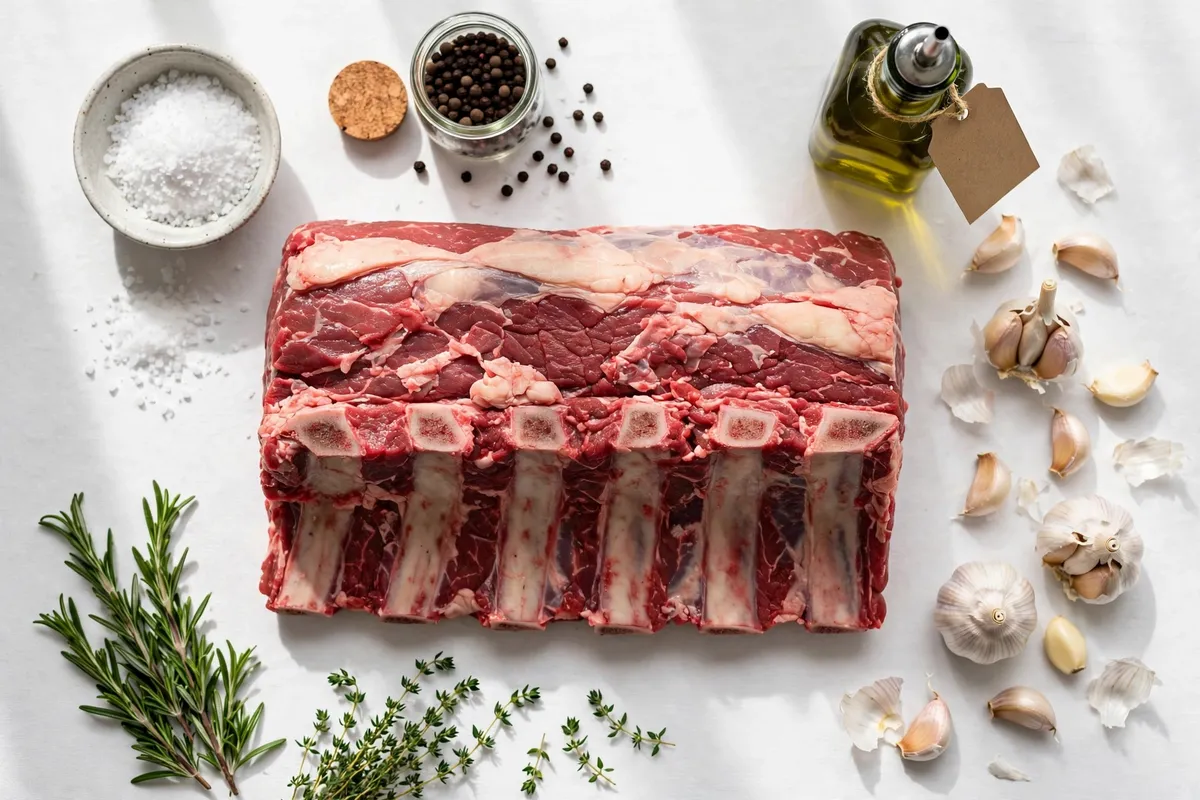
- 1 bone-in standing rib roast, 6–7 lb (2.7–3.2 kg), 3 ribs
- 2 tbsp kosher salt
- 2 tsp black pepper
- 4 garlic cloves, minced
- 2 tbsp fresh rosemary, finely chopped
- 1 tbsp fresh thyme leaves
- 2 tbsp olive oil
How to make prime rib roast
Season the roast
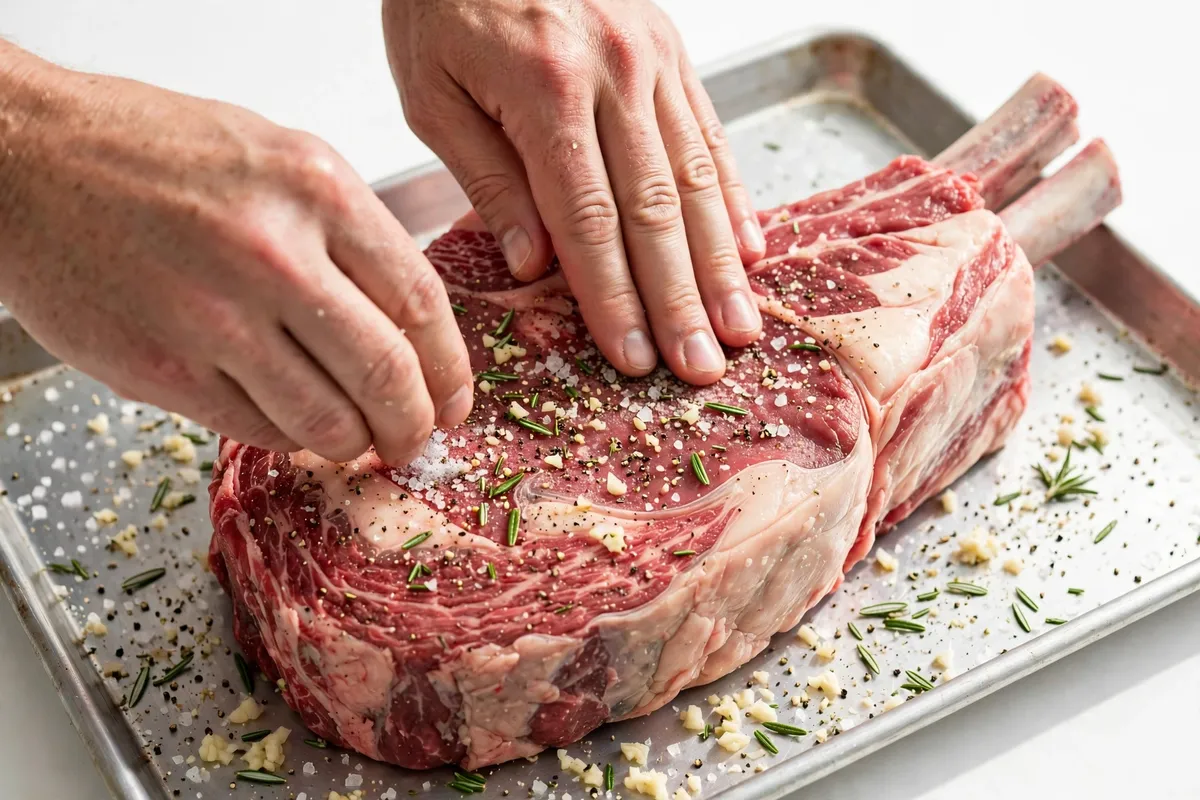
Pat the roast dry with paper towels, then rub it all over with the salt, pepper, minced garlic, rosemary, thyme and olive oil. Let it sit at room temperature for 1 hour so the chill comes off — a cold roast cooks unevenly. For even better flavour, season it the night before and leave it uncovered in the fridge.
Roast low and slow
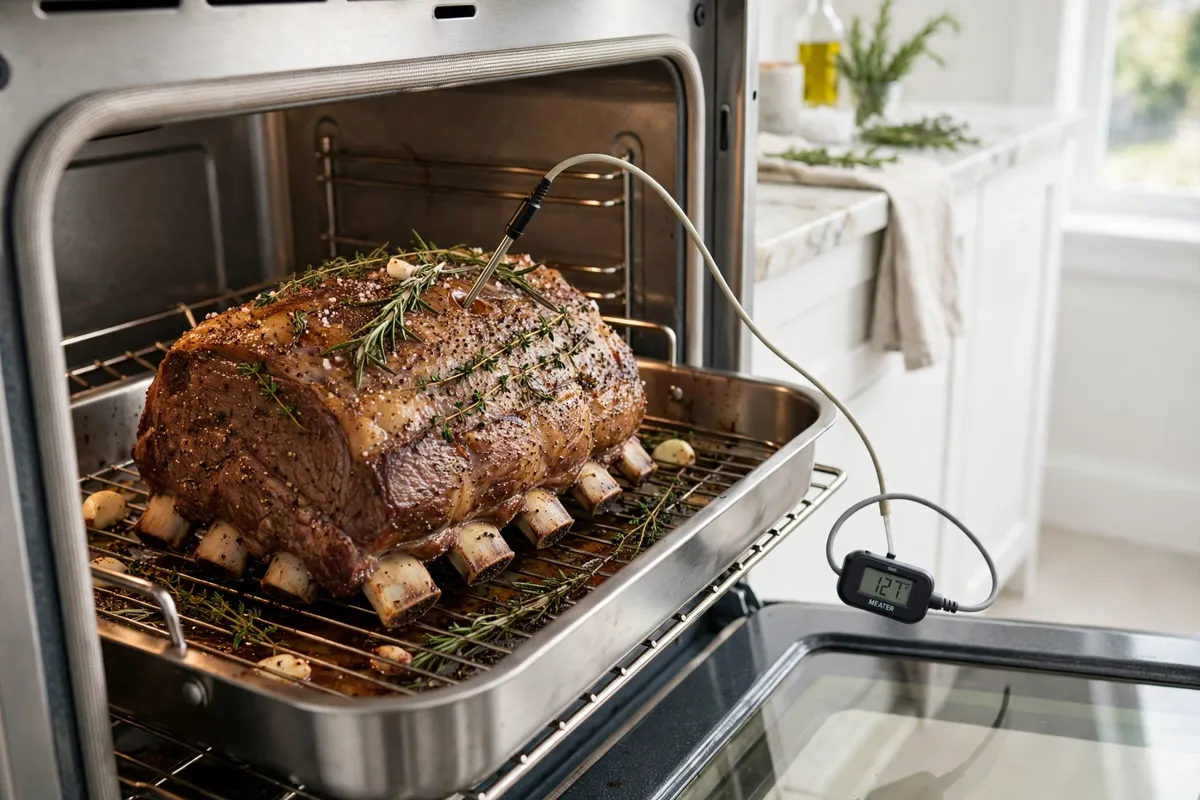
Set the roast bone-side down on a rack in a roasting pan and cook uncovered at 225°F (107°C) for 30–35 minutes per pound — 3 to 4 hours for a 6–7 lb roast. Use a probe thermometer and take it out when the centre reads 120°F (49°C) for medium-rare.
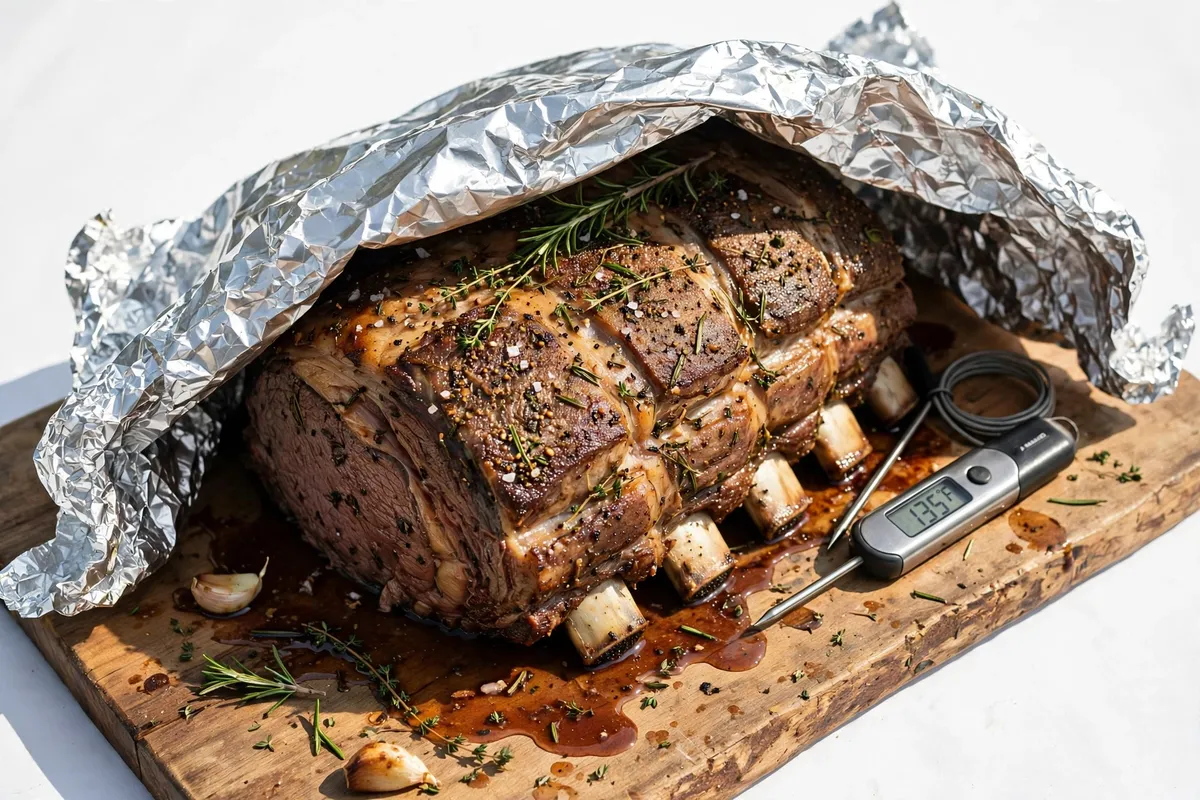
Rest under foil
Tent the roast loosely with foil and rest for 30 minutes. The temperature will climb to about 130°F (54°C) as it rests, and the juices will settle back into the meat. While it rests, turn the oven up to 500°F (260°C).
Sear for the crust
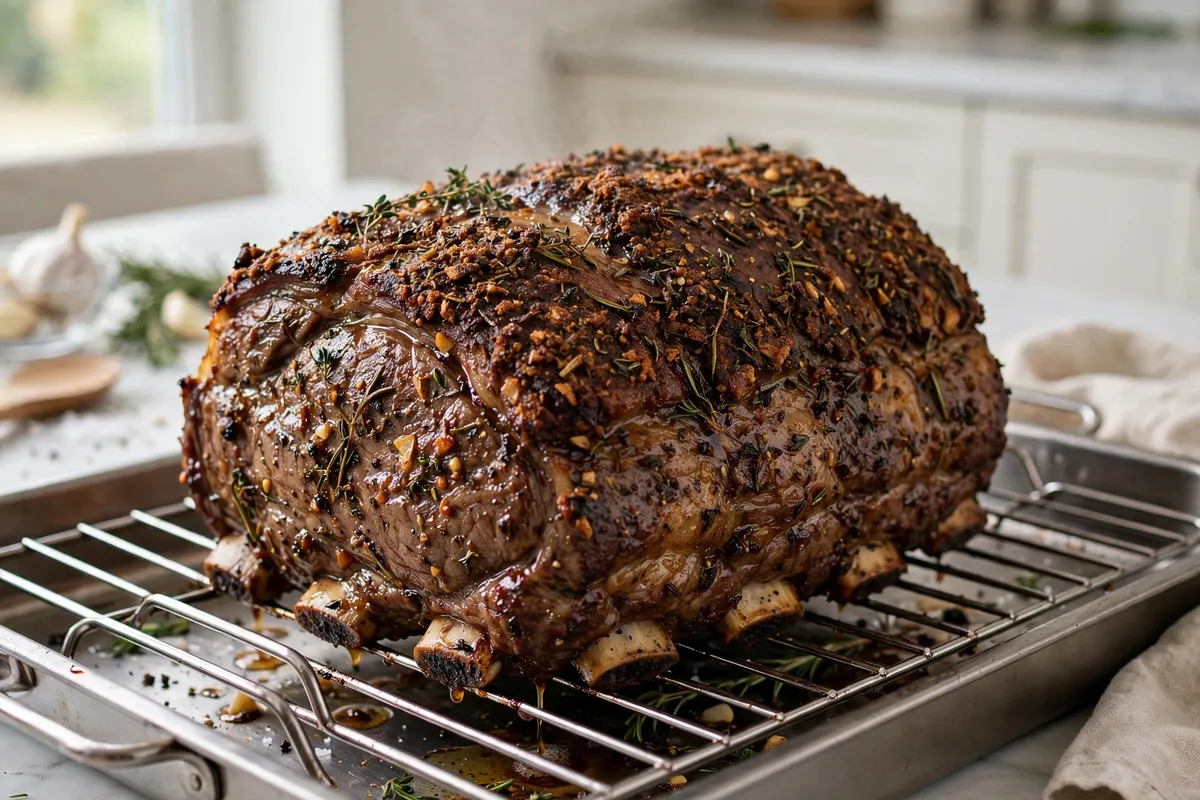
Uncover the roast and put it back in the blazing-hot oven for 8–10 minutes, until the outside is dark, crisp and deeply browned. This final sear is what gives reverse-seared prime rib its famous crust without overcooking the pink centre.
Carve and serve
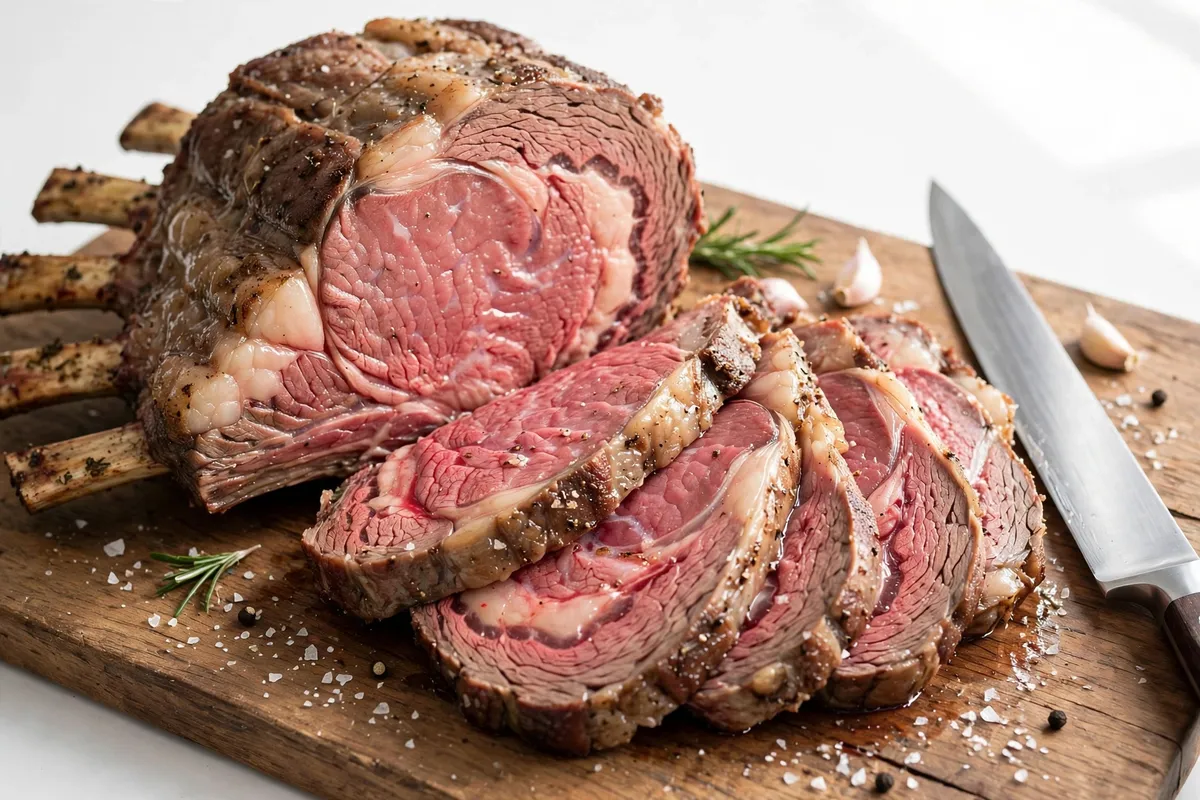
Cut along the bones to remove the rack in one piece, then slice the eye of the roast into thick steaks, about ¾ inch each. Pour any juices from the board and pan over the slices and serve immediately, while the crust is still crisp.
Prime rib temperature chart
Pull the roast 10°F below your target — the temperature climbs during the 30-minute rest and the final sear. These are centre temperatures for the reverse sear method.
- Rare: pull at 110°F (43°C) → finishes at about 120°F (49°C)
- Medium-rare: pull at 120°F (49°C) → finishes at about 130°F (54°C)
- Medium: pull at 130°F (54°C) → finishes at about 140°F (60°C)
Tips for the best prime rib roast
- Buy bone-in. The bones act as a natural roasting rack, insulate the meat from the pan, and add flavour. A 3-rib roast (6–7 lb) serves 8 generously — allow about ¾ lb per person.
- Season the day before. Salting the roast 24 hours ahead and leaving it uncovered in the fridge dries the surface and seasons the meat all the way through. It is the simplest upgrade you can make.
- Use a probe thermometer. This is an expensive cut — guessing is not worth it. A leave-in probe that beeps at 120°F takes all the anxiety out of the long roast.
- Serve it straight after the sear. The crust is at its best in the first few minutes out of the hot oven. Have the carving board, knife and plates ready before the roast goes back in for its sear.
How to store prime rib
Refrigerate leftover prime rib within two hours of serving — it keeps for 3–4 days wrapped tightly in foil or in an airtight container. For longer storage, freeze slices in portions for up to 3 months and thaw overnight in the fridge. Reheat gently in a low oven (250°F / 120°C) with a splash of beef stock, so the slices warm through without turning grey.
Prime Rib Roast FAQs
How long do you cook prime rib per pound?
With the reverse sear method at 225°F (107°C), prime rib needs 30–35 minutes per pound — 3 to 4 hours for a 6–7 lb roast. At a conventional 325°F (165°C), it needs 15–20 minutes per pound for medium-rare. Time is only a guide: the thermometer reading is what decides when the roast comes out.
What temperature should prime rib be for medium-rare?
For medium-rare, pull the roast from the oven when the centre reads 120°F (49°C). During the 30-minute rest the temperature climbs to about 130°F (54°C), which is the classic medium-rare finish. For rare, pull at 110°F; for medium, pull at 130°F.
Do you cook prime rib covered or uncovered?
Cook prime rib uncovered the whole time. Covering it with foil would steam the outside and stop the crust from forming. Foil only comes out for the resting period, when the roast is tented loosely to keep it warm while the juices settle.
How long should prime rib rest?
Rest prime rib for at least 30 minutes, tented loosely with foil. A roast this size needs the full half hour: the juices redistribute through the meat, the temperature evens out, and the slices hold together when carved. Skipping the rest means the juices run out onto the board instead of staying in the meat.
Your week of dinners, planned.
Build a free 7-day meal plan and download it as a beautiful image.