
Pesto Pasta Recipe
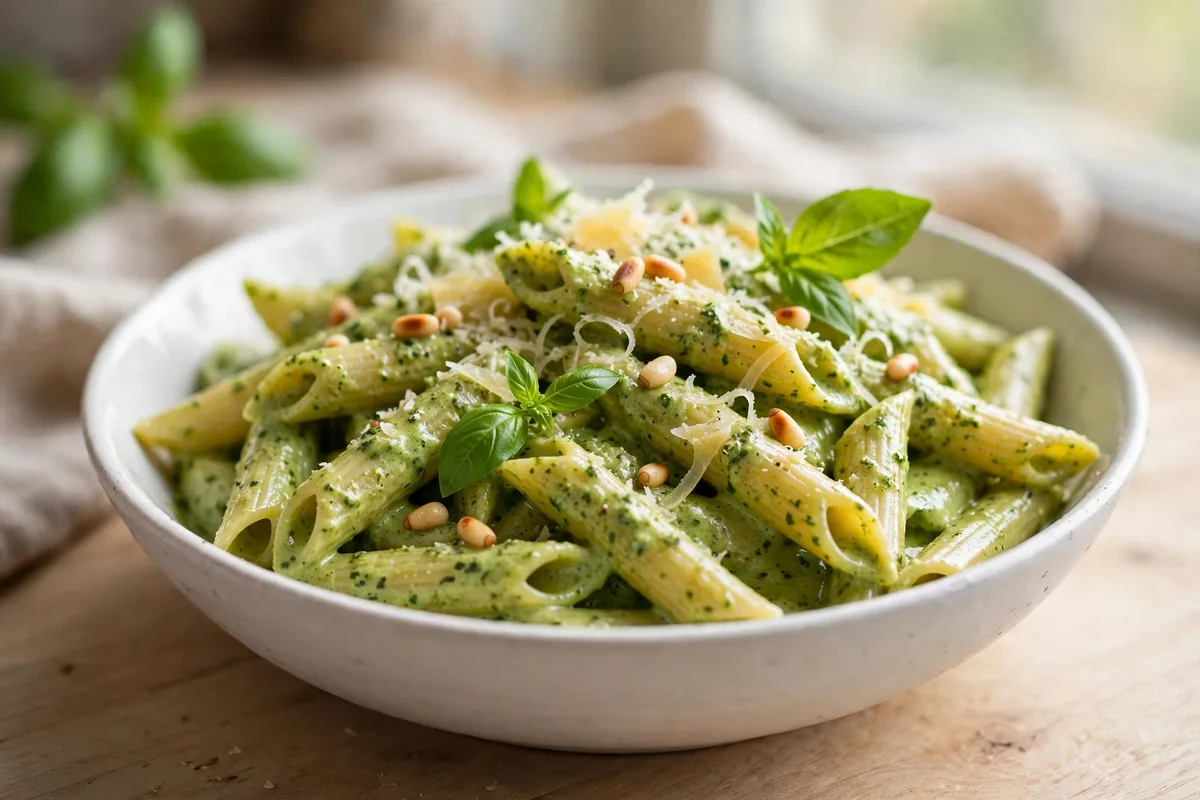
This pesto pasta recipe is the 20-minute weeknight dinner that tastes like a restaurant meal: fresh basil pesto, blitzed in minutes from basil, pine nuts, garlic, Parmesan and good olive oil, folded into a light cream sauce and tossed with penne until every piece is coated in glossy green. It is an easy pesto pasta recipe at heart — one pot, one skillet, one food processor — and a pesto pasta recipe creamy enough to feel like a restaurant dish.
Ingredients
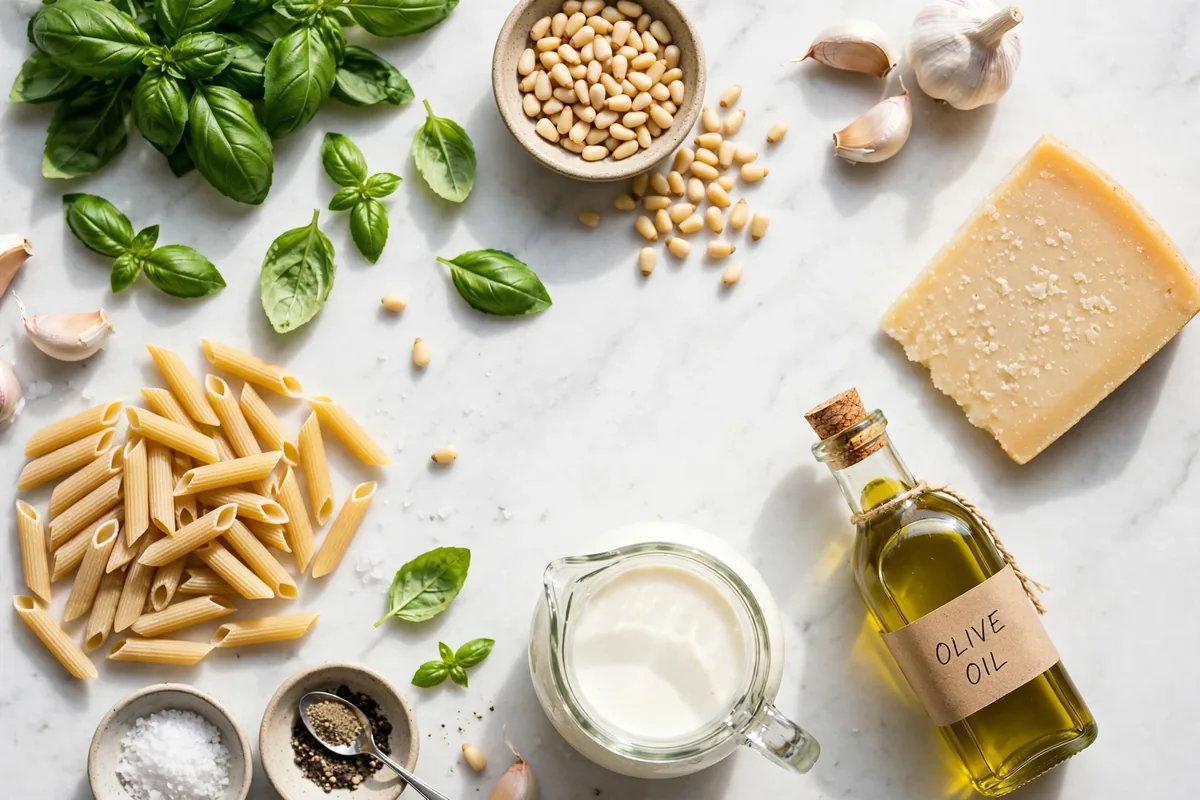
- 12 oz (340g) penne pasta
- 2 cups fresh basil leaves, packed
- ⅓ cup pine nuts, toasted
- 2 garlic cloves
- ½ cup grated Parmesan cheese, plus more to serve
- ⅓ cup extra-virgin olive oil
- ½ cup heavy cream
- 1 tbsp lemon juice
- ½ tsp fine sea salt, plus more for the pasta water
- ¼ tsp black pepper
- 1 cup cherry tomatoes, halved
How to make pesto pasta
Make the basil pesto
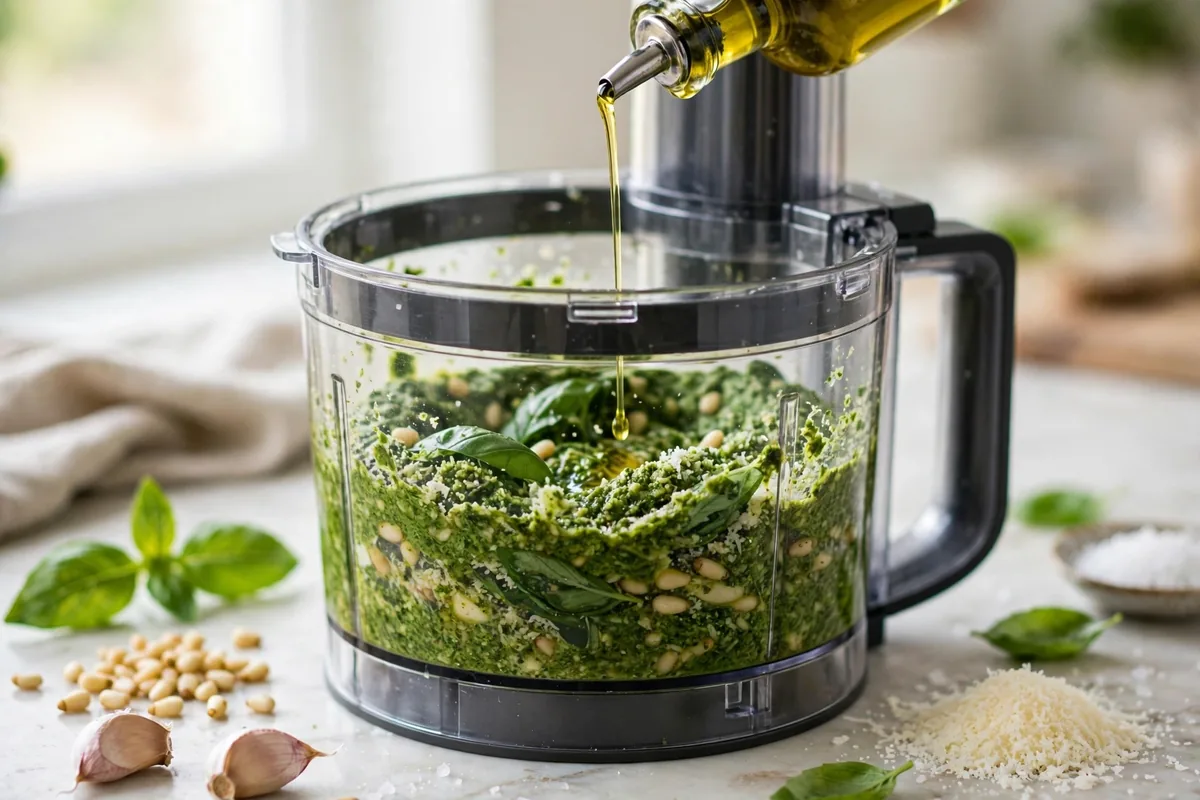
Add the basil leaves, toasted pine nuts, garlic, Parmesan, lemon juice, salt and pepper to a food processor. Pulse until finely chopped, then with the motor running, drizzle in the olive oil until the pesto is smooth and vivid green. This is classic Pesto alla Genovese — the basil pesto from Genoa — and it takes about two minutes. Taste it and add more salt or lemon if it needs brightening. Store-bought pesto works in a pinch, but homemade is brighter, fresher and cheaper per jar.
Cook the pasta
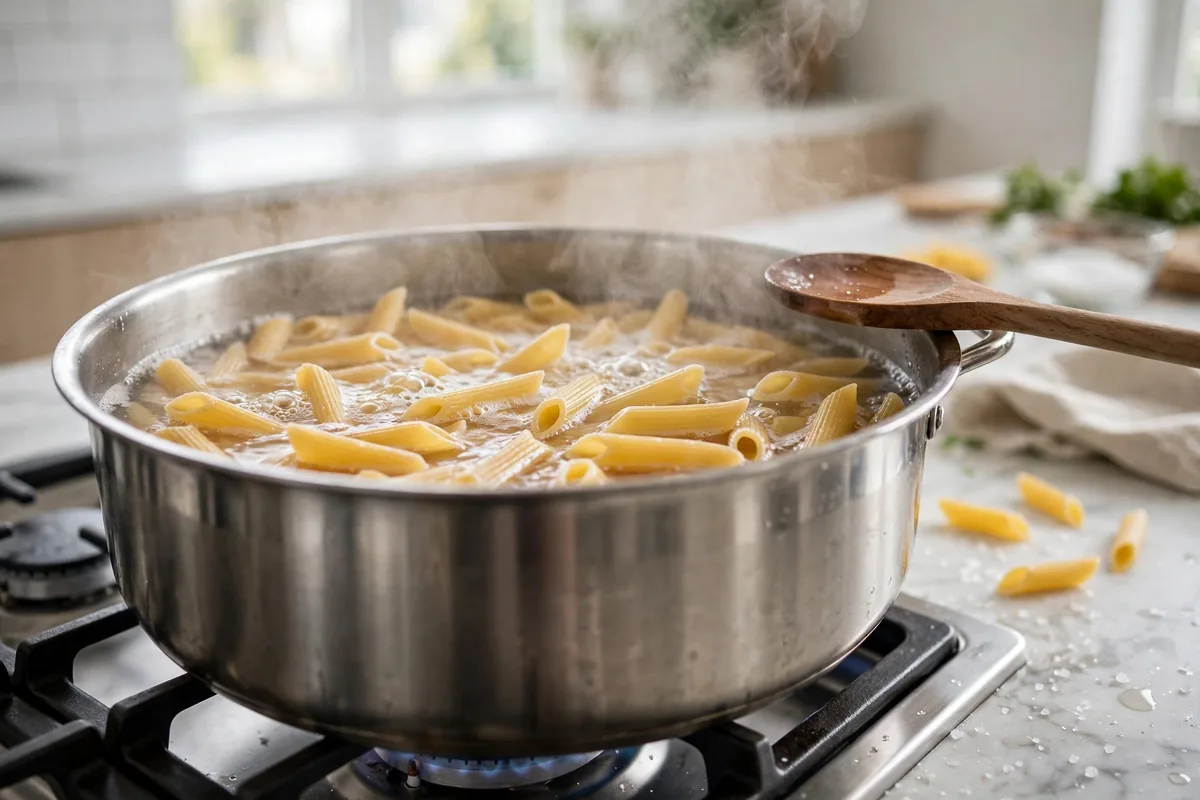
Bring a large pot of generously salted water to a rolling boil and cook the penne until just al dente, about 1 minute less than the package says — it finishes cooking in the sauce. Before draining, scoop out and reserve 1 cup of the starchy pasta water. That cloudy water is the secret to a silky sauce: its starch emulsifies the oil and cream so the pesto clings to the pasta instead of sliding off.
Build the creamy pesto sauce
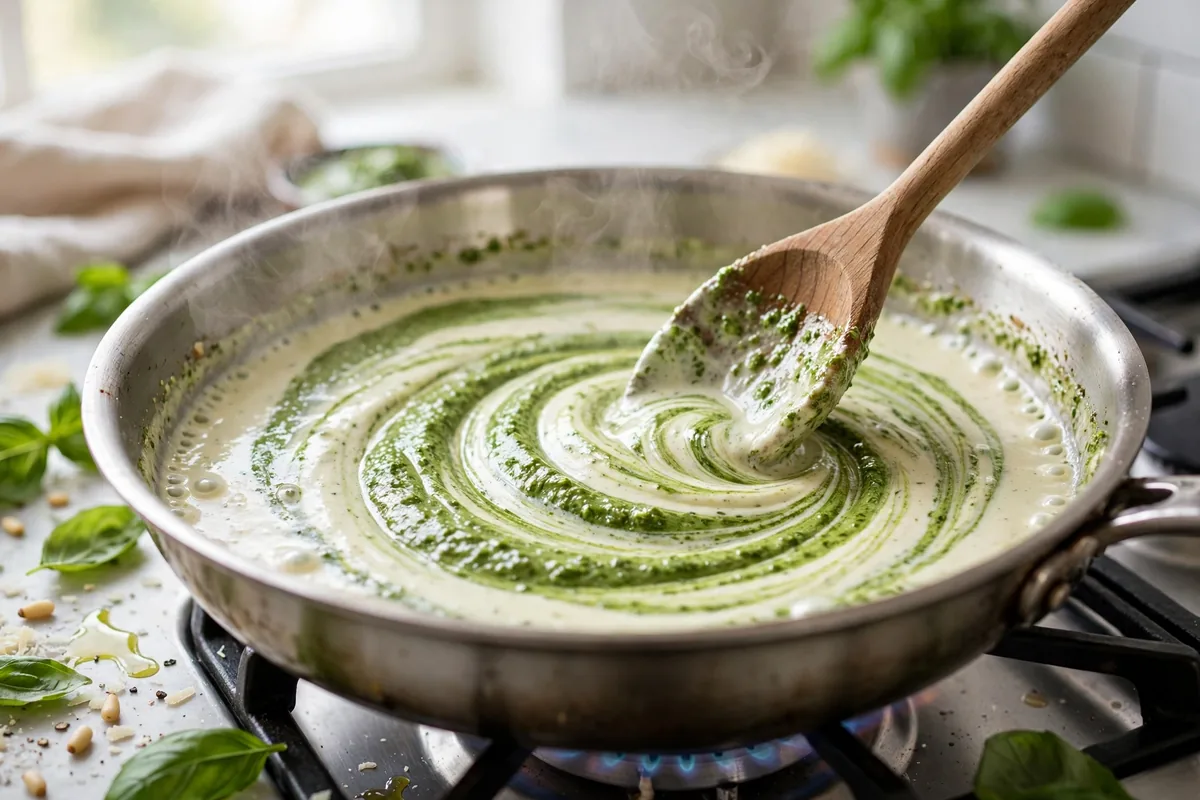
Warm the heavy cream in a large skillet over low heat until it just starts to steam, then take the pan off the heat and stir in the pesto. This is what makes it a creamy pesto pasta recipe — the cream softens the garlic and stretches the pesto into a sauce that coats every piece. Never boil pesto: high heat turns basil dull olive and bitter, and the cheese can go grainy. Low heat and off-heat stirring keep the sauce bright green and glossy.
Toss it all together
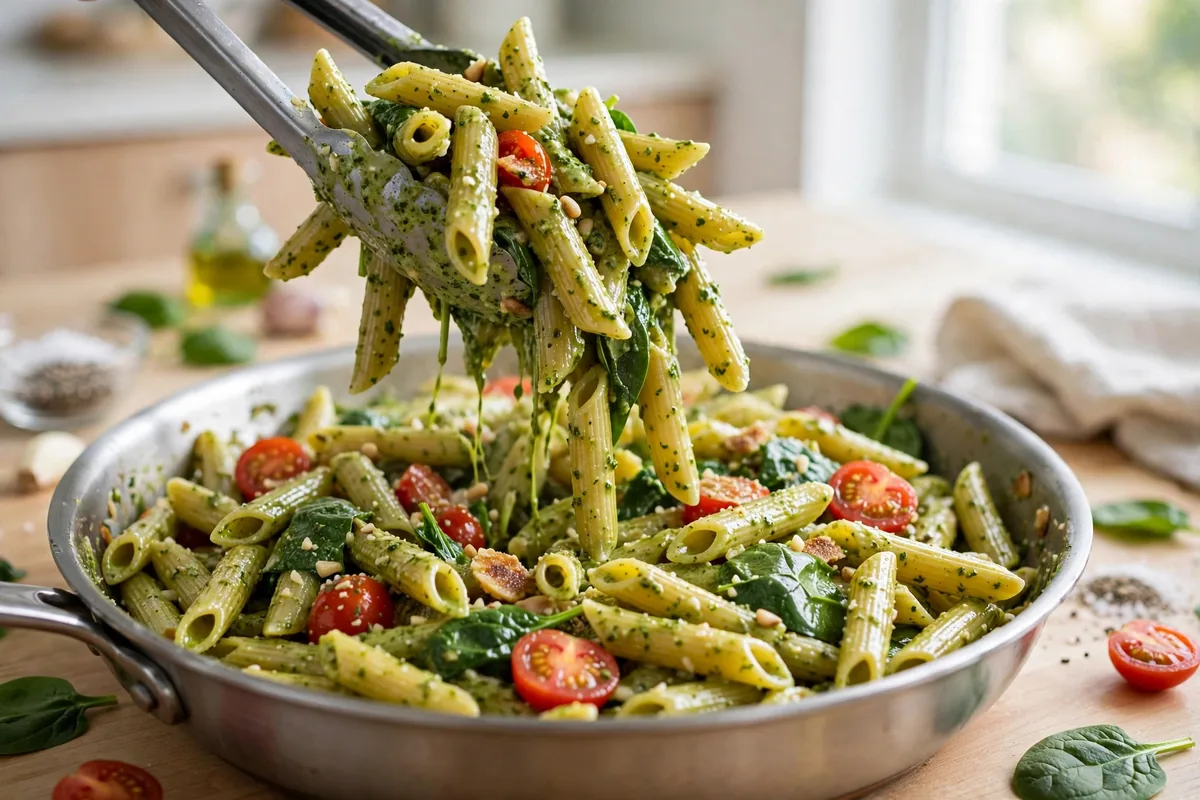
Add the drained pasta and the cherry tomatoes to the skillet and toss for 1–2 minutes over low heat, splashing in the reserved pasta water a few tablespoons at a time until every piece of pasta is coated in a creamy green sauce that clings rather than pools. This is the pesto pasta recipe with cherry tomatoes at its best — the warm tomatoes soften just enough to release a little juice into the sauce. If you are adding spinach, broccoli or asparagus, toss it in here too.
Serve
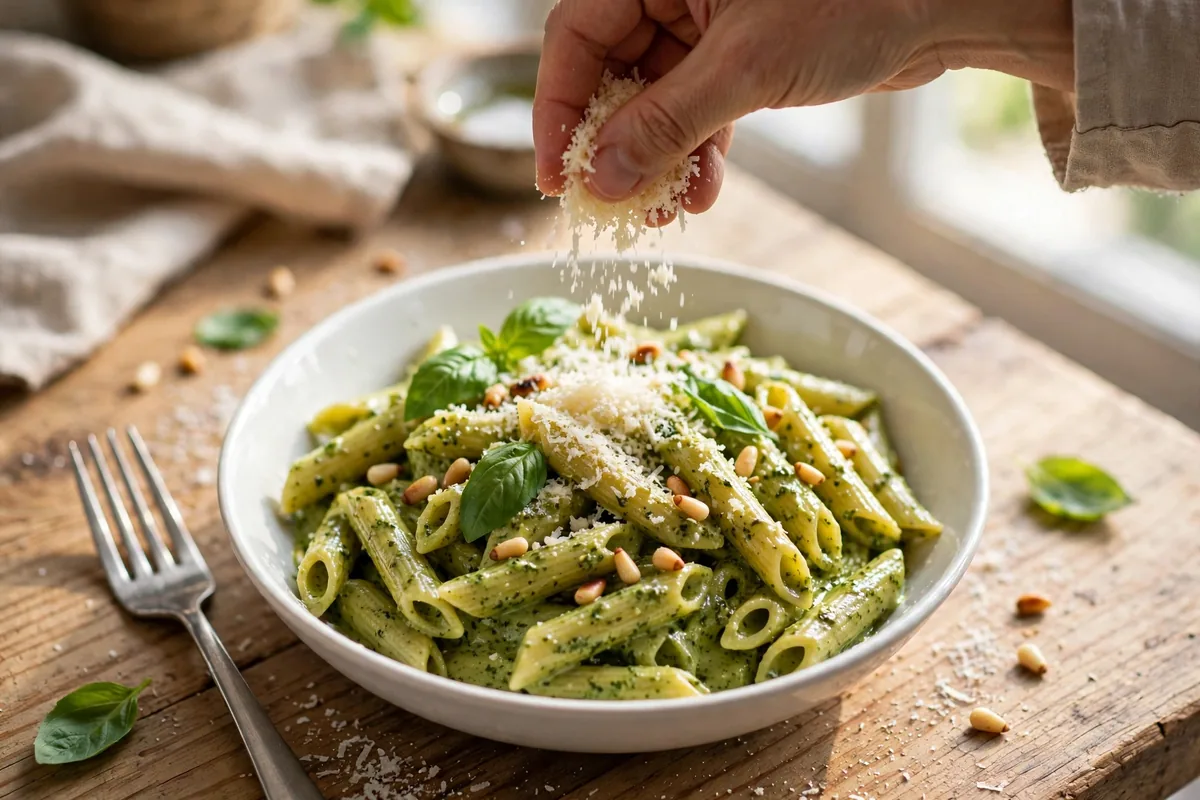
Divide the pesto pasta between warm bowls and top with extra grated Parmesan, a few toasted pine nuts and fresh basil leaves. Serve right away — pesto pasta is at its best the moment it leaves the pan, while the sauce is still glossy and the basil is at its brightest. Put extra Parmesan on the table and let everyone help themselves.
Which pasta shape is best for pesto?
Short, ridged shapes win for pesto pasta because the sauce has somewhere to grip. Penne pasta is the classic choice — the tubes trap pesto inside and the ridges hold it outside. Rigatoni works the same way with a bigger, chewier bite, and fusilli and farfalle are excellent too. Trofie, the short twisted shape from Liguria, is the traditional partner for Pesto alla Genovese if your store stocks it. For a heartier dinner, swap the penne for cheese tortellini and you have a tortellini pasta recipe version of the same dish — the filled pasta makes it rich enough to serve on its own. Spaghetti and linguine work in a pinch, but the pesto slides off long smooth strands, so toss well and add a little extra pasta water.
Pesto pasta variations
This pesto pasta recipe is a base, not a rule. The variations below are the versions people make most — same sauce, different dinner:
- Chicken pesto pasta. The most-searched version of all. A pesto pasta recipe with chicken is the version most families make first: slice grilled or pan-seared chicken breast over the top, or toss shredded rotisserie chicken through the sauce. A chicken pesto pasta recipe with a little cream becomes creamy chicken pesto pasta, and chicken pesto pasta creamy enough to coat the chicken is exactly what makes it a family favourite. Try chicken pesto pasta with sun dried tomatoes, chicken pesto pasta with tomatoes, chicken pesto pasta with broccoli, chicken pesto pasta with spinach, chicken pesto pasta with mozzarella or chicken pesto pasta with asparagus — or turn it into a chicken pesto pasta bake by topping the dressed pasta with mozzarella and baking until bubbly. A pesto pasta recipe with sun dried tomatoes is the simplest upgrade of all — stir a handful through the finished pasta.
- Creamy pesto pasta with chicken and tomatoes. The richest version: cream in the sauce, sliced chicken, and cherry tomatoes that burst into the pan. Creamy pesto pasta with chicken is the weeknight staple; add the tomatoes and it tastes like something from a restaurant.
- Pesto pasta with shrimp. A pesto pasta recipe with shrimp is ready in the same 20 minutes — sear the shrimp for 2 minutes per side while the pasta cooks, then toss through at the end. Creamy pesto pasta with shrimp is especially good with a squeeze of lemon and a pinch of chilli flakes.
- Pesto pasta with salmon. Flake pan-seared or baked salmon into the finished pasta, or serve a fillet on top. Creamy pesto pasta with salmon and a pesto pasta recipe with salmon both work beautifully — the rich fish stands up to the bold basil.
- Pesto pasta with vegetables. Keep it meat-free and let the produce lead: a pesto pasta recipe with broccoli, creamy pesto pasta with spinach, creamy pesto pasta with broccoli, or creamy pesto pasta with sun dried tomatoes and creamy pesto pasta with tomatoes. Roasted asparagus, peas and green beans all work. For anyone exploring vegetarianism, pesto pasta is one of the easiest satisfying meat-free dinners there is — and a pesto pasta recipe vegetarian enough for a weeknight needs nothing more than the base recipe and whatever vegetables are in the fridge.
- Vegan pesto. A vegan pesto recipe swaps the Parmesan for 3 tablespoons of nutritional yeast and a pinch more salt, and uses a splash of oat cream or extra pasta water instead of heavy cream. The basil, pine nuts and olive oil do the heavy lifting, so the flavour stays bright and savoury.
- Pistachio pesto pasta. The trending twist: replace the pine nuts with shelled pistachios for a pistachio pesto that is nuttier, slightly sweeter and a deeper green. Pistachio pesto pasta has become one of the most talked-about pesto variations, and it pairs especially well with creamy pesto pasta with salmon or with burrata torn over the top.
- Pesto pasta salad. Chill the dressed pasta, then toss with mozzarella pearls, cherry tomatoes and a little extra olive oil for an easy pesto pasta salad — a pesto pasta salad that holds up in a lunchbox or at a picnic, and one of the best uses for leftover pesto pasta.
- Easy pesto pasta bake. Turn the finished pasta into an easy pesto pasta bake: transfer to a baking dish, top with mozzarella and a handful of breadcrumbs, and bake at 375°F (190°C) for 15 minutes until golden and bubbling. Add chicken and it becomes the chicken pesto pasta bake above.
Chicken pesto pasta recipes are among the most-searched pasta dinners in the US, and the reason is simple: the same sauce gives you a different meal every time. Every version here is a pesto pasta recipe easy enough for a Tuesday night. Easy pesto pasta with chicken, easy pesto pasta with shrimp, easy pesto pasta with spinach, easy pesto pasta with tomatoes, easy pesto pasta with sun dried tomatoes and easy pesto pasta with broccoli are all the same 20-minute method with one ingredient swapped — pick whatever is in the fridge and the dinner still works.
Tips for the best pesto pasta
- Toast the pine nuts. Two minutes in a dry skillet until golden wakes up their flavour and keeps the pesto from tasting flat. Watch them closely — pine nuts go from toasted to burnt in seconds.
- Keep the pesto off the boil. Basil turns dark and bitter over high heat. Warm the cream first, then stir the pesto in off the heat. The sauce should be hot enough to serve, never bubbling.
- Salt the pasta water like the sea. It is the only chance to season the pasta itself. Under-salted water makes the whole dish taste flat no matter how good the pesto is.
- Save the pasta water. A cup of starchy water is the difference between pesto that coats and pesto that pools at the bottom of the bowl. Add it a splash at a time — you can always add more, but you cannot take it back.
- Use good olive oil. Pesto is mostly raw olive oil, so its flavour shows. A fruity extra-virgin olive oil makes a noticeably better pesto than a neutral one.
- Love creamy pasta? If you want the same creamy comfort with garlic instead of basil, try our creamy garlic pasta — a garlic-forward cream sauce that pairs with the same chicken, shrimp and vegetable add-ins.
What to serve with pesto pasta
Pesto pasta is rich and full of flavour, so the best sides are simple. Garlic bread or focaccia is the obvious partner — something to catch the last of the sauce. A crisp green salad with a lemon dressing cuts through the cream, and a tomato and mozzarella salad echoes the basil. Roasted vegetables, especially asparagus, broccoli or green beans, add colour without competing. For a bigger dinner, serve grilled chicken, shrimp or salmon alongside, or start with a light soup such as minestrone. Pesto pasta with chicken, pesto pasta with shrimp, pesto pasta with tomatoes, pesto pasta with salmon and pesto pasta with vegetables all work as complete one-bowl meals too — no side required.
How to store pesto pasta
Leftover pesto pasta keeps in an airtight container in the fridge for up to 3 days. Reheat gently in a skillet over low heat with a splash of water or cream — the microwave works too, but stir halfway through so the sauce does not separate. The pesto itself keeps longer: store extra pesto in a jar in the fridge for up to a week with a thin layer of olive oil on top to keep it green, or freeze it in ice-cube trays for up to 3 months and thaw a cube or two whenever pasta night calls. Cooked pesto pasta does not freeze well — the cream sauce goes grainy — so freeze the pesto, not the finished dish.
Pesto Pasta FAQs
What is the best pasta to use for pesto pasta?
Short, ridged shapes are best for pesto pasta because the sauce clings to every ridge and pocket. Penne pasta is the classic choice, and rigatoni, fusilli and farfalle work just as well. Trofie is the traditional Ligurian shape, and cheese tortellini turns the same sauce into a heartier dinner. Long shapes like spaghetti work too, but the pesto slides off them more easily, so toss well and add a little extra pasta water.
Should I add pasta water to pesto?
Yes — a few tablespoons of starchy pasta water is what turns pesto into a sauce that coats the pasta instead of sitting on top of it. The starch emulsifies the olive oil and cream into a glossy, clinging sauce. Reserve a cup before draining, add it a splash at a time while tossing, and stop when the sauce looks silky. Do not add the water to the pesto in the food processor — add it in the pan, where you can control the consistency.
What to add to pesto pasta to make it better?
The fastest upgrades are protein and texture: sliced grilled chicken, shrimp or salmon turn it into a full meal, and sun-dried tomatoes, cherry tomatoes, spinach, broccoli or asparagus add colour and freshness. A spoonful of cream makes it a creamy pesto pasta, toasted pine nuts add crunch, and a squeeze of lemon brightens the basil. For a baked version, transfer the dressed pasta to a baking dish, top with mozzarella and bake until bubbly.
What goes with pesto pasta?
Pesto pasta pairs with simple sides that let the basil lead: garlic bread or focaccia for the sauce, a crisp green salad with lemon dressing, roasted vegetables, or grilled chicken, shrimp or salmon on the side. A tomato and mozzarella salad is a natural match, and a light soup such as minestrone makes it a complete dinner. Keep the sides simple — the pasta is already rich and full of flavour.
Your week of dinners, planned.
Build a free 7-day meal plan and download it as a beautiful image.