Ukadiche Modak
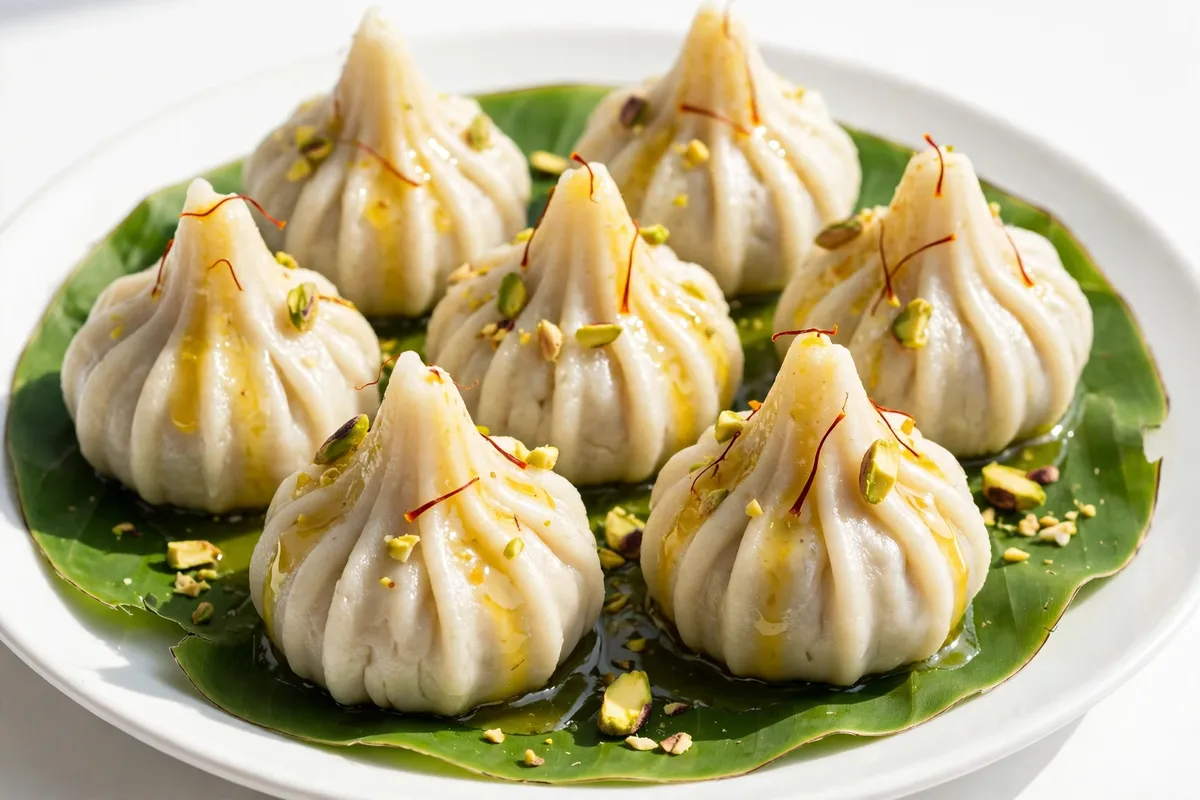
Modak is Lord Ganesha's favourite sweet — he is called Modakpriya, the one who loves modak — and a plate of 21 is offered as prasad every Ganesh Chaturthi. The classic Maharashtrian version, ukadiche modak, is a steamed rice flour dumpling with a soft coconut-jaggery filling, pleated by hand into a pointed dome and served warm with a drizzle of ghee. It looks intimidating; once the dough is right, it is not.
Ingredients
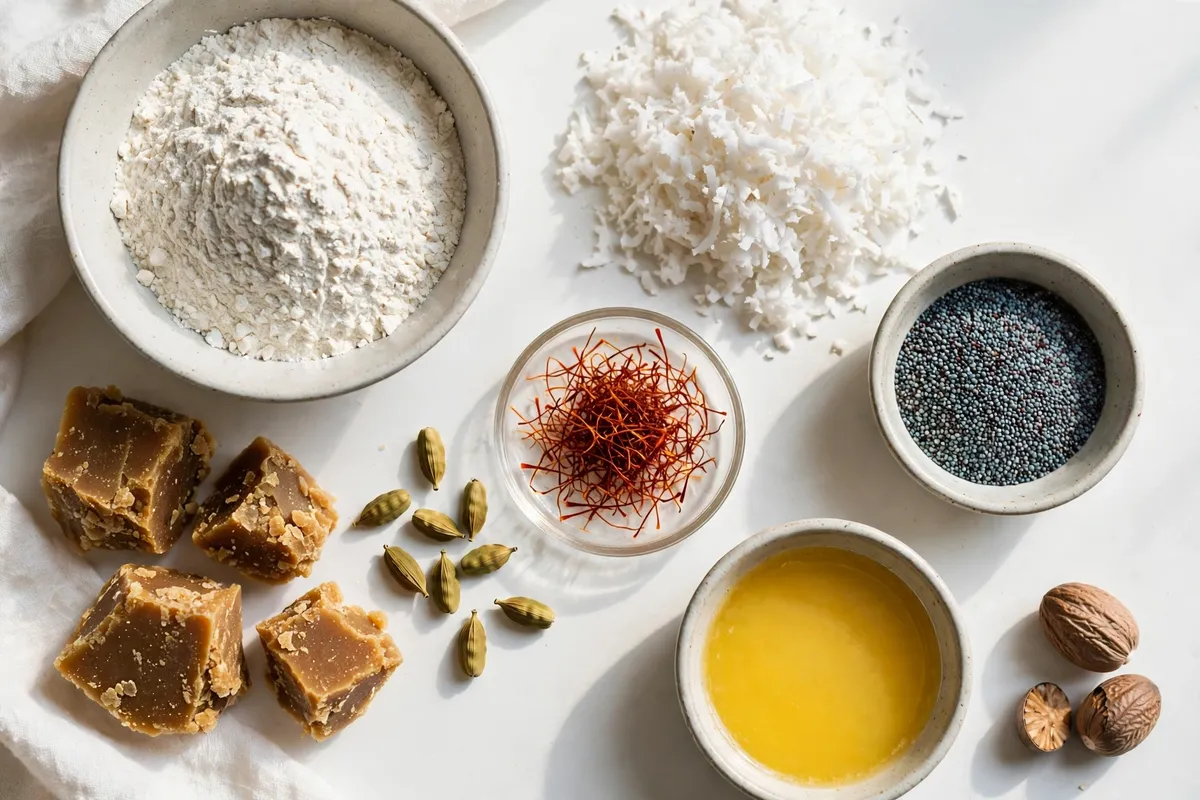
- 1 cup (150g) fine rice flour
- 1¼ cups (300ml) water
- 1 tsp ghee, plus extra for greasing
- ¼ tsp salt
- 1½ cups (150g) freshly grated coconut
- ¾ cup (150g) jaggery, grated or chopped
- ½ tsp ground cardamom
- 1 tbsp poppy seeds (khus khus), lightly toasted (optional)
- A pinch of grated nutmeg
- A few saffron strands (optional)
How to make ukadiche modak
Make the coconut-jaggery filling
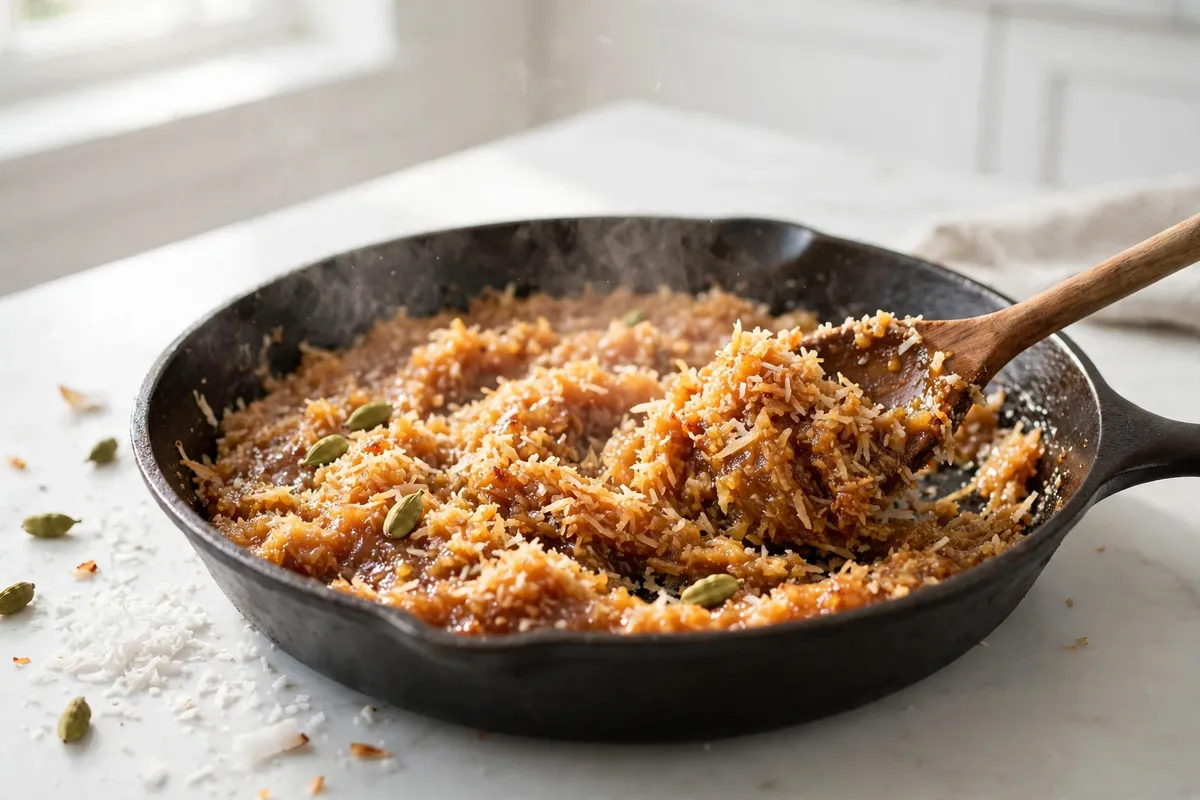
Heat a heavy pan on low heat and add the poppy seeds; fry for a few seconds until they start crackling. Add the grated coconut and jaggery and cook on low heat, stirring often, for 8–12 minutes, until the jaggery melts and the mixture thickens into a soft mass that leaves the sides of the pan. Stir in the cardamom, nutmeg and saffron. Spread on a plate to cool completely — shaping with hot filling tears the shell.
Make the rice flour dough (ukad)
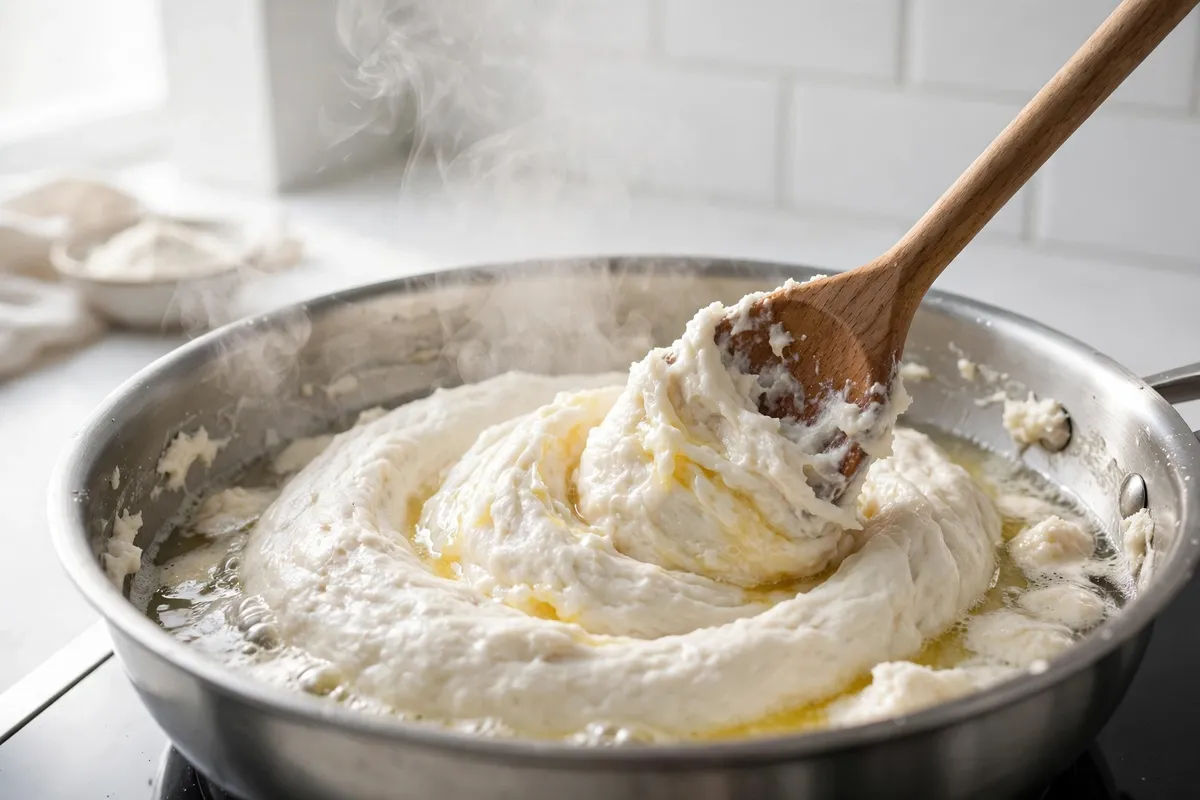
In a pan, bring the water, salt and 1 teaspoon of ghee to a rolling boil. Reduce the heat to low and add the rice flour in one go. Stir vigorously with a wooden spoon for 30–60 seconds until the flour absorbs the water and forms a rough mass. Turn off the heat, cover and rest for 3–4 minutes so the steam finishes cooking the flour.
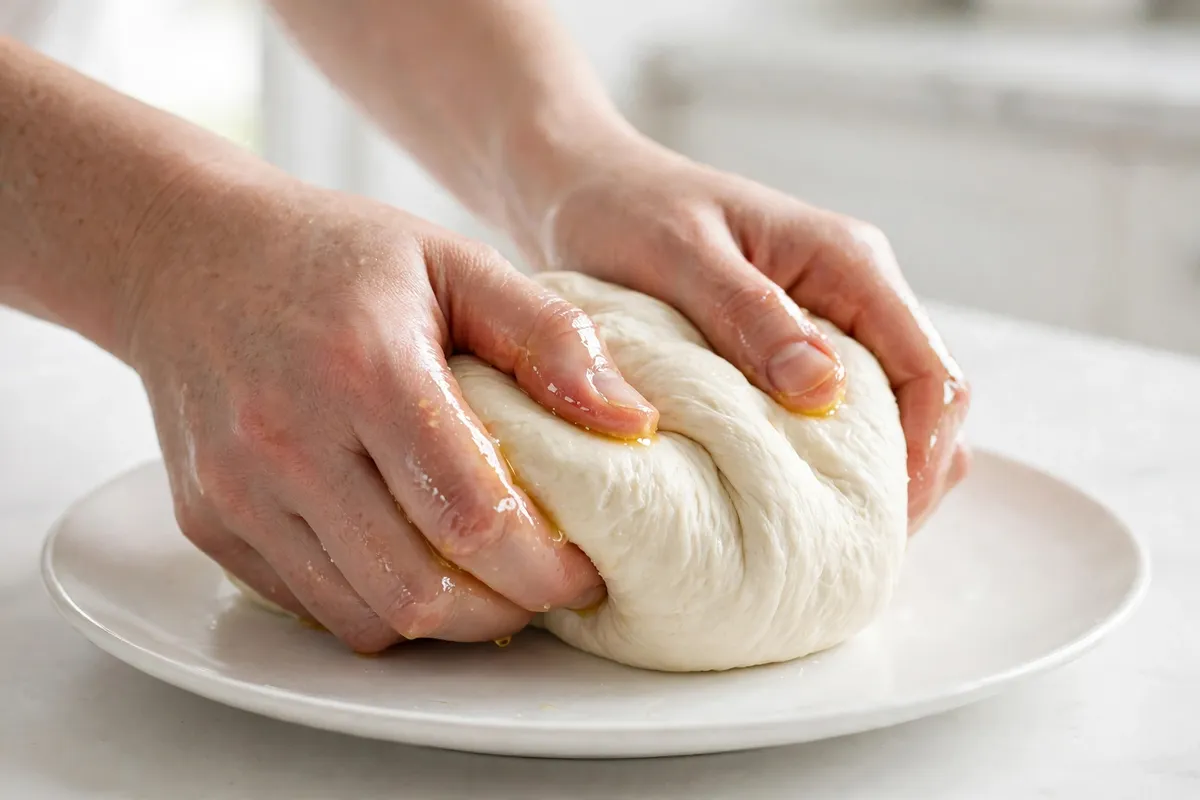
Knead the dough while warm
Turn the warm mixture onto a wide plate. While it is still hot but bearable, knead with ghee-greased hands for 3–5 minutes until smooth, soft and non-sticky. If it feels dry, sprinkle a few drops of warm water; if sticky, knead a little longer. Cover with a damp cloth — the dough dries out fast.
Shape and fill the modaks
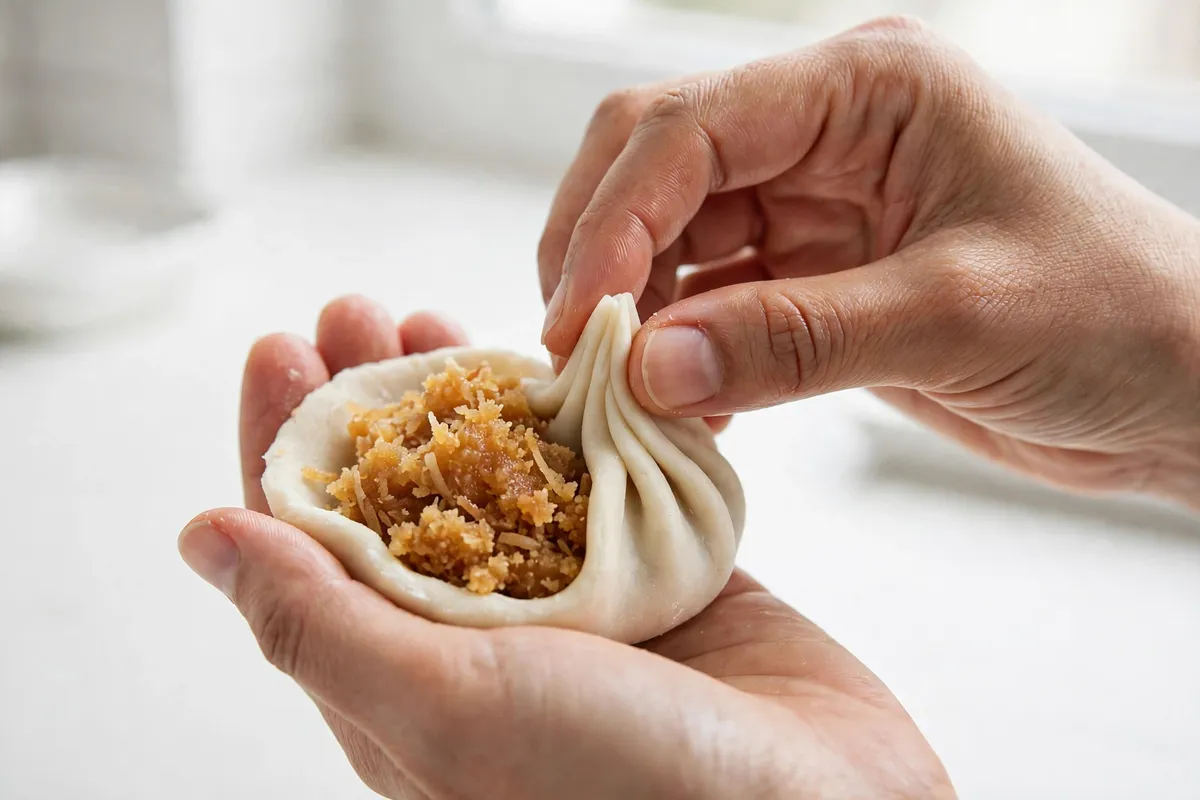
Grease your palms with ghee and divide the dough into 12 equal balls, keeping them covered. Flatten one ball into a thin disc, thicker at the centre and thinner at the edges. Place a spoonful of filling in the centre, then gather the edges up in pleats and pinch them together at the top to form a pointed dome. With a mould: grease it, press the dough in, add filling, close and unmould.
Steam until glossy
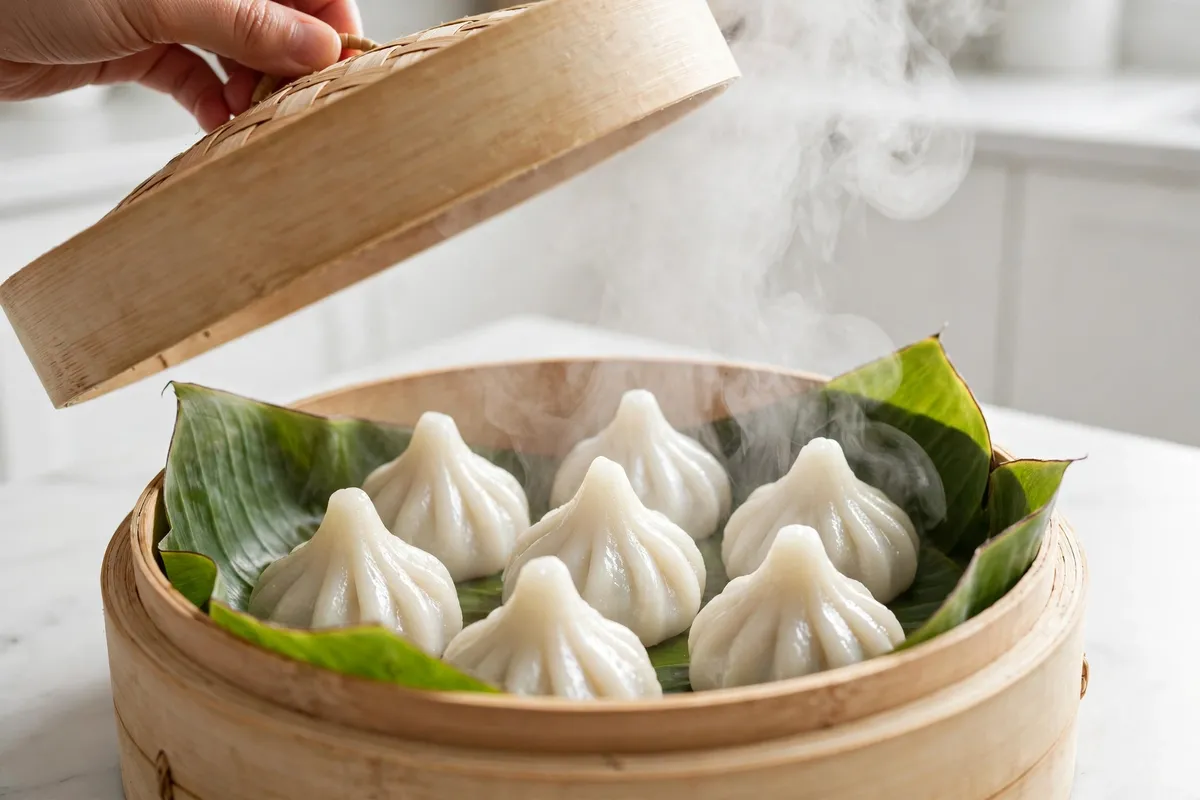
Line a steamer basket with a banana leaf or muslin cloth brushed with ghee. Place the modaks in with space between them and steam over medium-low heat for 10–15 minutes, until the shells turn glossy and slightly translucent and no longer feel sticky. Serve warm with a drizzle of ghee.
Tips for the best ukadiche modak
- Use fine rice flour. Coarse rice flour makes a grainy, cracking shell. Look for fine idiyappam or modak-specific rice flour at an Indian grocery — it makes a smooth, pliable dough that pleats without tearing.
- Keep everything covered and greased. Rice flour dough dries out in minutes. Keep the dough, the balls and the shaped discs under a damp cloth, and grease your palms with ghee before every modak. Dry dough cracks; moist dough pleats.
- Do not overcook the filling. The coconut-jaggery mixture should be moist and soft when it leaves the pan — it firms up as it cools. Overcooked filling turns hard and crunchy inside the steamed modak, which is the most common disappointment.
- Steam on medium-low, not high. Fierce steam makes the shells crack and go chewy. Gentle, steady steam for 10–15 minutes gives a soft, glossy shell. The modak are done when they no longer feel sticky to the touch.
How to store steamed modak
Ukadiche modak are best eaten the same day, warm, with a drizzle of ghee. They keep in an airtight container in the fridge for 1–2 days; re-steam for 3–4 minutes, or microwave with a few drops of water, to soften them before serving. They do not freeze well — the rice flour shell turns hard and grainy on thawing. The coconut-jaggery filling, on the other hand, keeps in the fridge for up to a week, so make it ahead and shape fresh modak on the day.
Ukadiche Modak FAQs
What is the difference between ukadiche modak and fried modak?
Ukadiche modak are steamed: a soft rice flour shell filled with coconut and jaggery, served warm with ghee — this is the traditional prasad for Ganesh Chaturthi. Fried modak use a wheat flour pastry, like a sweet samosa, and are deep-fried until crisp. Steamed modak are softer, lighter and gluten-free; fried modak keep longer and travel better.
Can you make modak without a mould?
Yes — hand-shaping is the traditional method. Flatten a ball of dough into a thin disc in your palm, add a spoonful of filling, then gather the edges up in small pleats and pinch them together at the top to form the pointed dome. The pleats do not need to be perfect; a smooth pinched top tastes exactly the same as a moulded one.
Why do my modaks crack?
Cracking means the dough dried out or was under-kneaded. Rice flour dough loses moisture fast: knead it while still warm until smooth, keep the dough and the shaped balls covered with a damp cloth at all times, and grease your hands with ghee while shaping. If a disc cracks at the edges, press it back together with a dab of warm water.
How long do steamed modaks keep?
Steamed modaks are best eaten the same day, warm, with ghee. They keep in an airtight container in the fridge for 1–2 days; re-steam for 3–4 minutes or microwave with a few drops of water before serving to soften them again. They do not freeze well — the rice flour shell turns hard and grainy.
Your week of dinners, planned.
Build a free 7-day meal plan and download it as a beautiful image.