Chicken Karahi
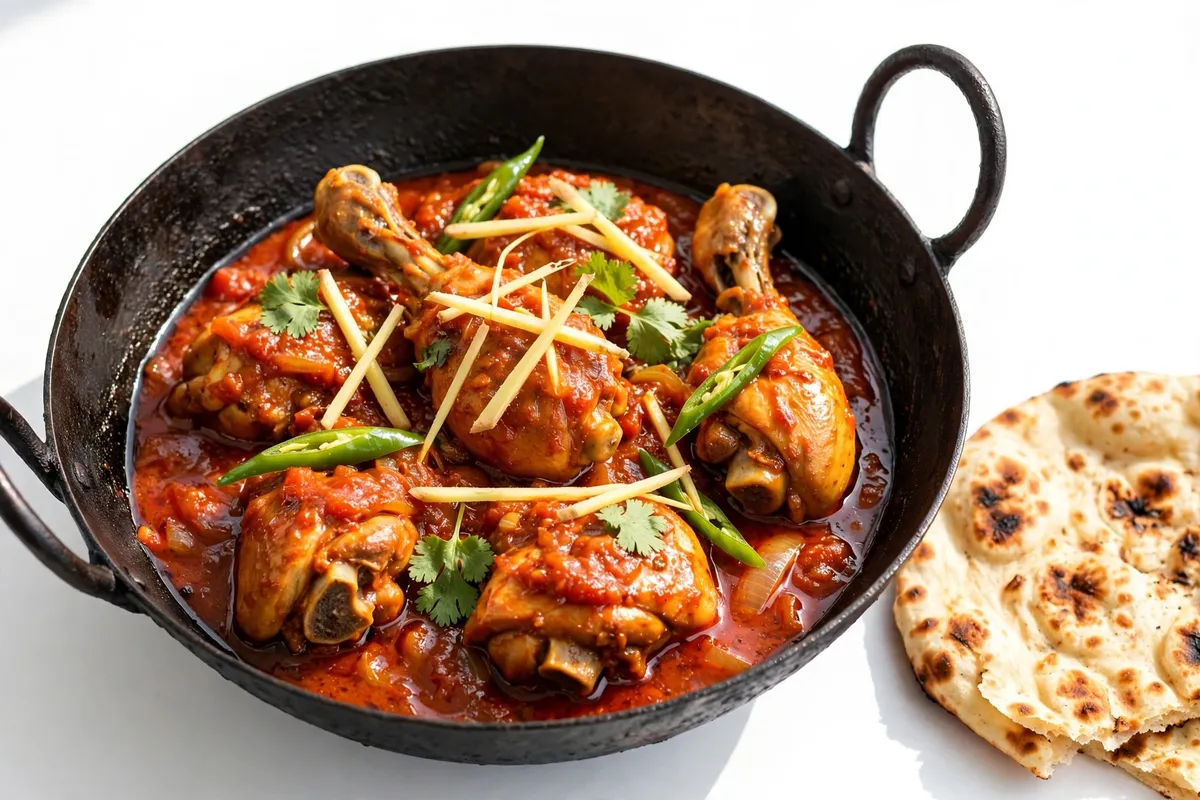
Chicken karahi is Pakistan's most famous dish — a fast, high-heat stir-fry from the dhabas of Lahore, where bone-in chicken sears in a wok, tomatoes collapse into a thick glossy masala, and the whole thing is finished with ginger, green chillies and butter. No onions, no water, no slow simmer: ready in 40 minutes.
Ingredients
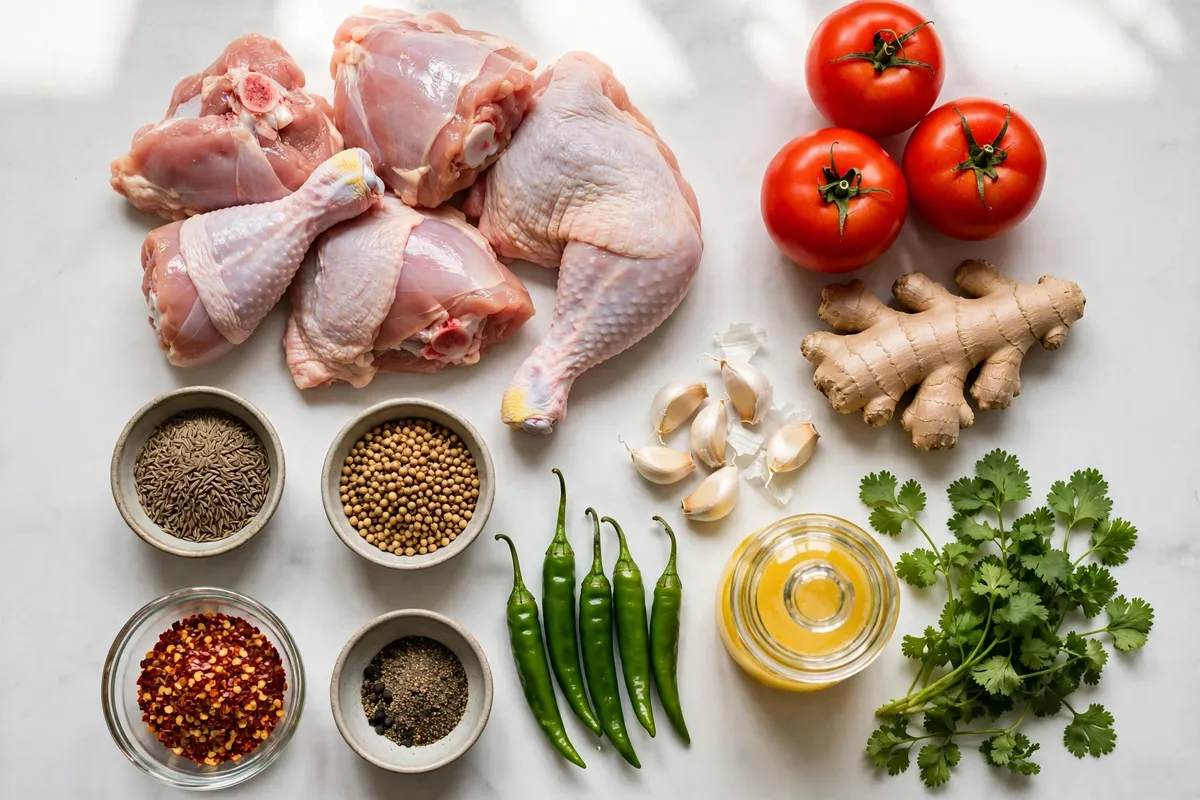
- 2 lb (900g) bone-in chicken, cut into small karahi pieces
- ¼ cup (60ml) oil or half oil, half ghee
- 1 tsp salt
- 1 tbsp ginger-garlic paste
- 5 medium ripe tomatoes (about 700g), halved
- 1 tsp red chili flakes
- 1 tsp coarsely crushed black pepper
- 1 tsp crushed coriander seeds
- 1 tsp cumin seeds, roasted and crushed
- ½ tsp ground turmeric
- 4 green chillies, slit lengthwise
- 2 tbsp julienned fresh ginger
- 1 tbsp butter or desi ghee
- ½ tsp garam masala
- 3 tbsp chopped fresh coriander
How to make chicken karahi
Sear the chicken
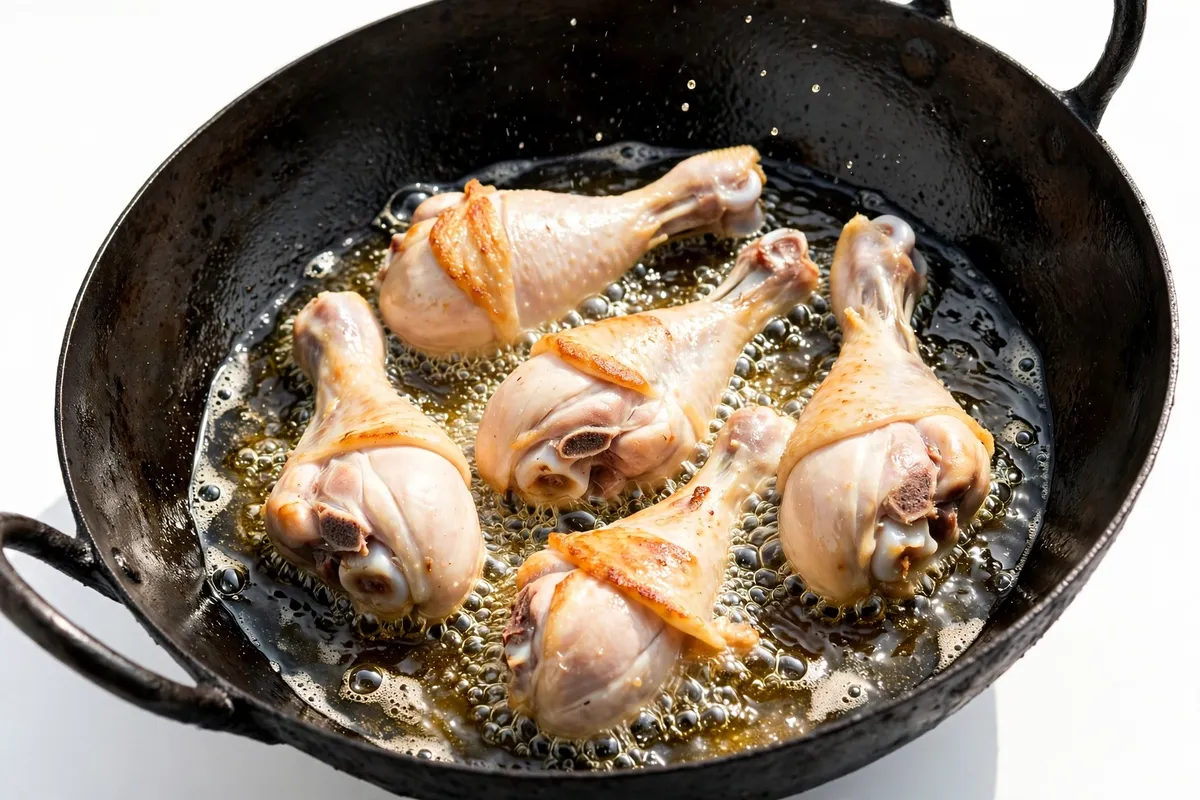
Heat the oil in a karahi or wok over high heat until it shimmers. Add the chicken and salt and fry, turning often, for 6–8 minutes until the pieces turn white all over with lightly golden edges. Add the ginger-garlic paste and fry for 1 minute more, until the raw smell disappears. Keep the heat high — if the oil is only warm, the chicken stews in its own water instead of searing.
Melt the tomatoes
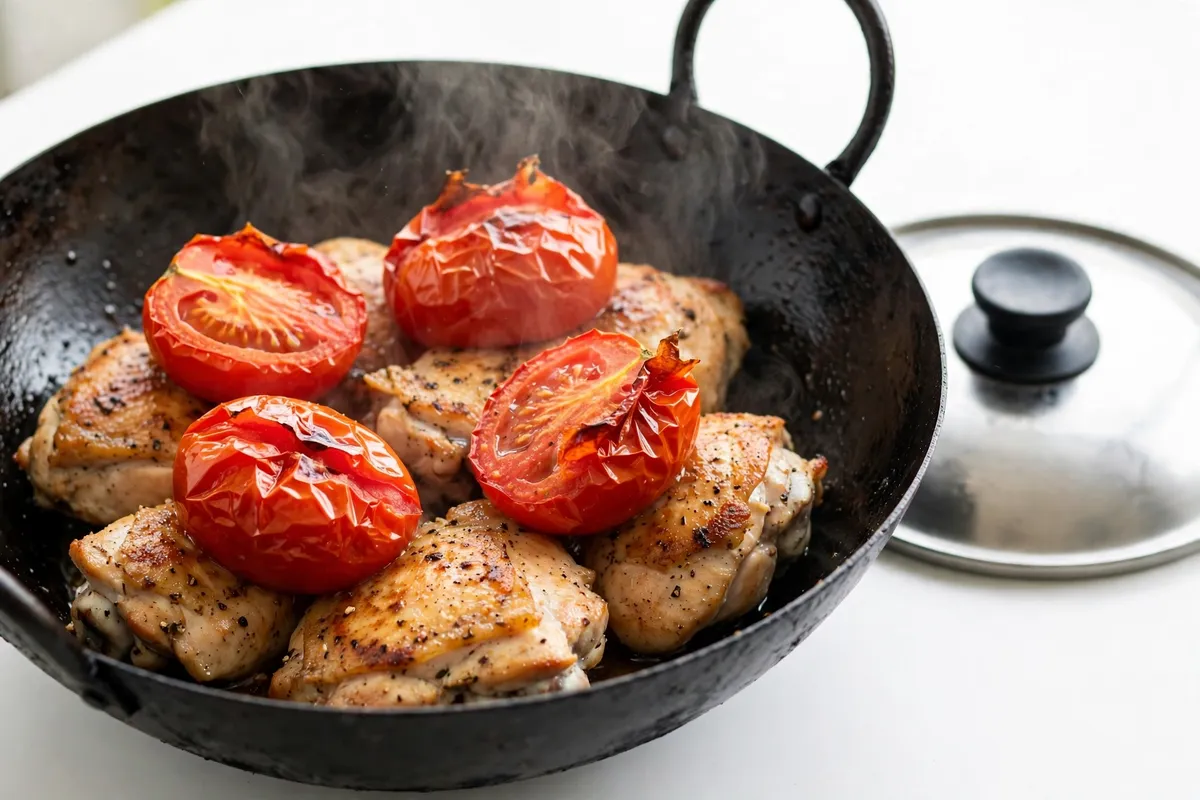
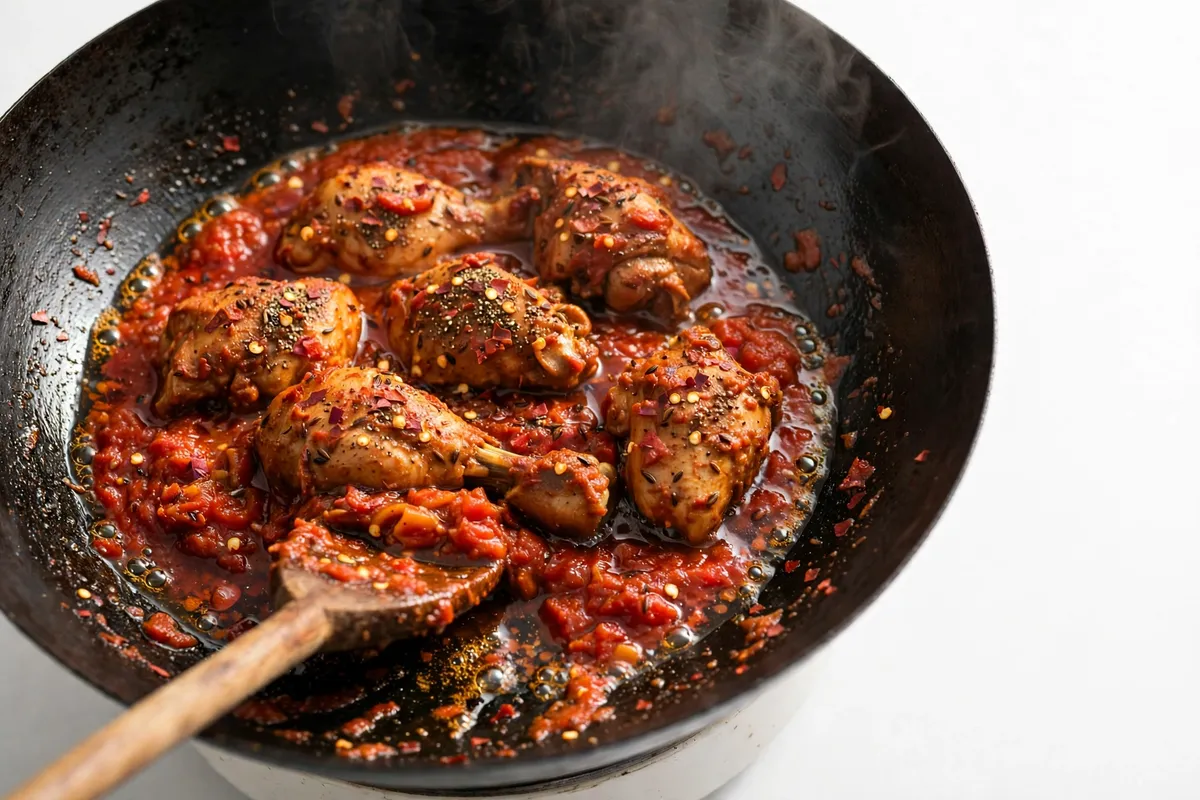
Place the tomato halves cut side down over the chicken, cover and cook on medium heat for 8 minutes, until the skins wrinkle and lift and the flesh is soft enough to mash. Pick the skins out with tongs and discard them. The tomatoes collapse in their own juice — no water is added at any point.
Bhuna on high
Mash the tomatoes into the chicken with your spoon. Add the chili flakes, black pepper, coriander, cumin and turmeric. Stir-fry uncovered on high heat for 10–12 minutes, scraping the bottom, until the liquid is gone, the masala is thick and glossy, and the oil separates at the edges. This high-heat bhuna is the heart of a karahi — do not rush it or cover the pan.
Finish and serve
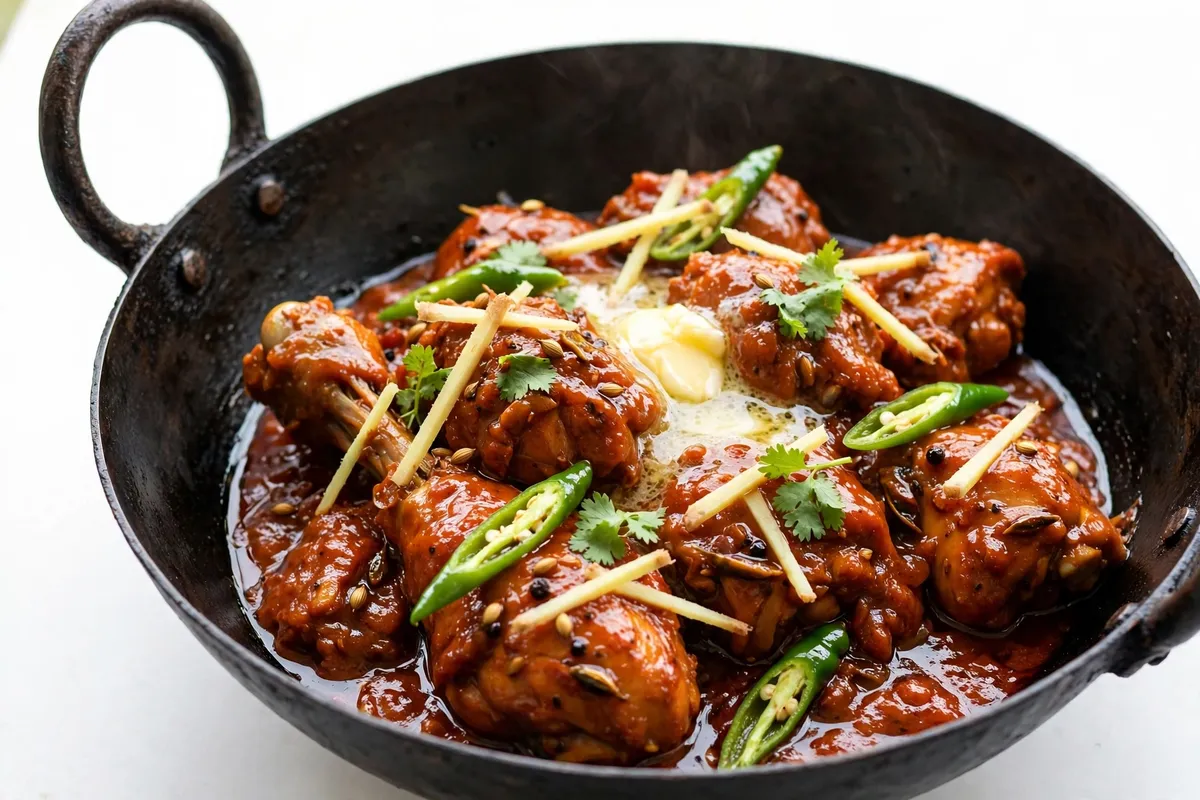
Lower the heat. Add the slit green chillies, julienned ginger and butter, sprinkle over the garam masala and chopped coriander, toss once and take off the heat. Check the chicken reads 165°F (74°C) at the thickest part, next to the bone. Serve straight from the wok with naan or roti — karahi is at its best the moment it leaves the flame.
Tips for the best chicken karahi
- Use ripe, flavourful tomatoes. The entire sauce is tomato, so flavourless winter tomatoes make a flavourless karahi. Deep red, fully ripe tomatoes — or good canned whole tomatoes in a pinch — are essential.
- Keep the heat high and the lid off for the bhuna. Karahi is a stir-fry: the moisture has to flash off for the masala to thicken and the oil to separate. A covered pan or a low flame gives you a watery stew instead.
- Prep everything before you start. Karahi cooks fast and over high heat, so there is no time to chop mid-cook. Have the ginger julienned, the chillies slit and the spices measured before the oil goes on.
- Crush the spices coarsely. Whole coriander and cumin, lightly crushed in a mortar, give karahi its rustic, dhaba character. Fine ground spices disappear into the sauce; coarse ones give little bursts of flavour in every bite.
How to store chicken karahi
Refrigerate leftovers within two hours — karahi keeps for 3–4 days in an airtight container. Reheat in a wok over medium-high heat with a splash of water, stirring, until piping hot; the masala thickens as it sits, so the water restores the glossy texture. It freezes well for up to 3 months; thaw overnight in the fridge and reheat the same way.
Chicken Karahi FAQs
What is the difference between karahi and curry?
Karahi is both a cooking vessel (a deep, round wok) and a technique: a fast, high-heat stir-fry where the chicken sears first and the tomatoes collapse into a thick masala with no added water. A curry is usually a slower, onion-based braise with a thinner gravy. Karahi is drier, glossier and more intense — a stir-fry, not a stew.
Does authentic chicken karahi have onions?
No — traditional Lahori and Peshawari karahi uses no onion at all. The masala is built only from tomato, ginger, garlic and chilli. Onion makes it a salan (a regular curry), not a karahi. Some home versions add a little onion, but the dhaba original — the one this recipe follows — skips it entirely.
Can I make chicken karahi with boneless chicken?
Yes, but bone-in is better. The bones add flavour to the masala and keep the meat juicy through the high-heat bhuna. If you use boneless thighs, cut them into large chunks and shorten the bhuna stage by a few minutes — boneless chicken dries out faster and can go tough if it is stir-fried too long.
What do you serve with chicken karahi?
Fresh naan or roti is the classic pairing — you need bread to scoop up the thick, glossy masala. It also goes well with steamed basmati rice, and a simple kachumber salad (chopped onion, tomato, cucumber and lemon) or a cooling raita balances the heat. Serve it straight from the wok for the full dhaba experience.
Your week of dinners, planned.
Build a free 7-day meal plan and download it as a beautiful image.