
Classic New York Cheesecake Recipe
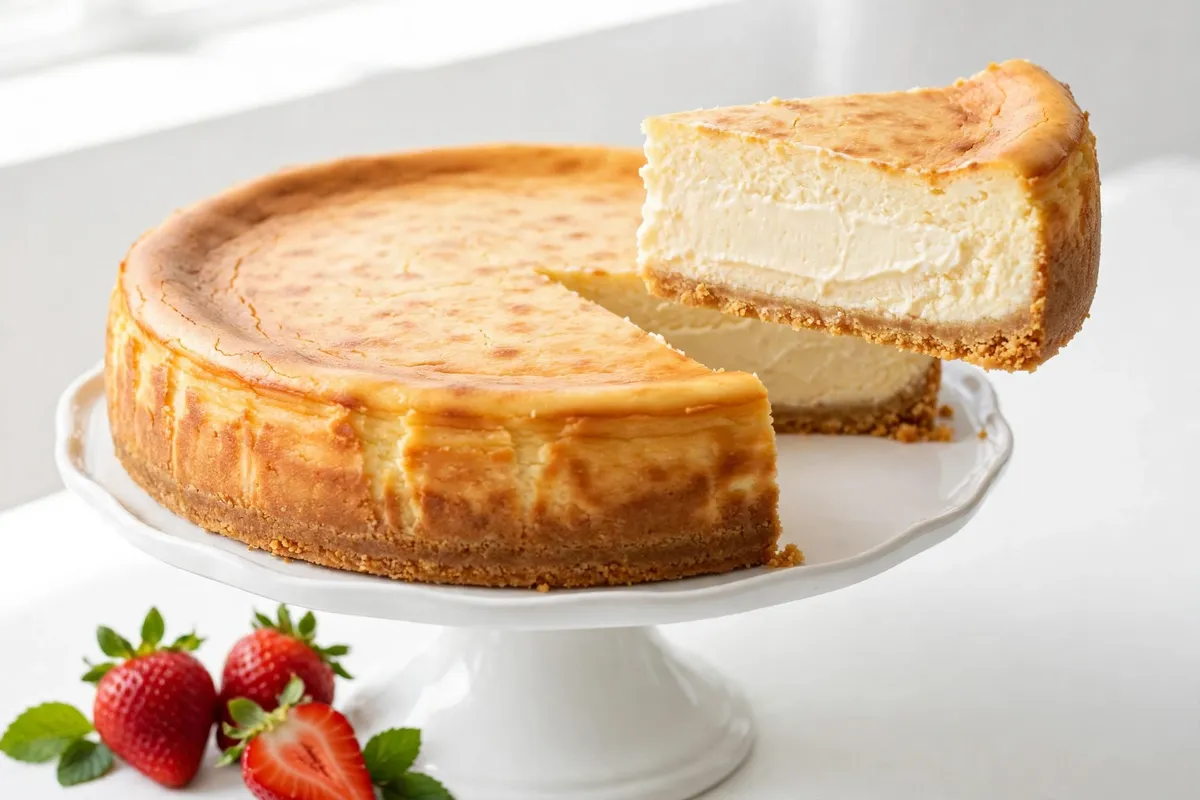
This classic New York cheesecake recipe is the tall, dense, unapologetically rich cake the New York delis made famous: a buttery graham cracker crust, a silky cream cheese filling with just enough sour cream tang, and a slow bake that leaves it firm enough to slice clean and creamy enough to melt on the tongue. Best of all, there is no water bath — a low, slow bake and a gentle cool in the turned-off oven give you a crack-free top with none of the fuss.
What makes a New York cheesecake?
A New York cheesecake is baked, not set with gelatin, and it is defined by its richness: four full blocks of cream cheese, a generous spoonful of sour cream for tang, and a tall, dense crumb that slices into firm, clean wedges instead of soft mousse-like ones. Unlike lighter cheesecakes, there is no whipped cream folded in and no gelatin holding it together — the eggs and the slow bake do all the work. It is also one of the best make-ahead desserts for a holiday table: bake it the day before, let it chill overnight, and it frees your oven completely on Christmas Day.
Ingredients
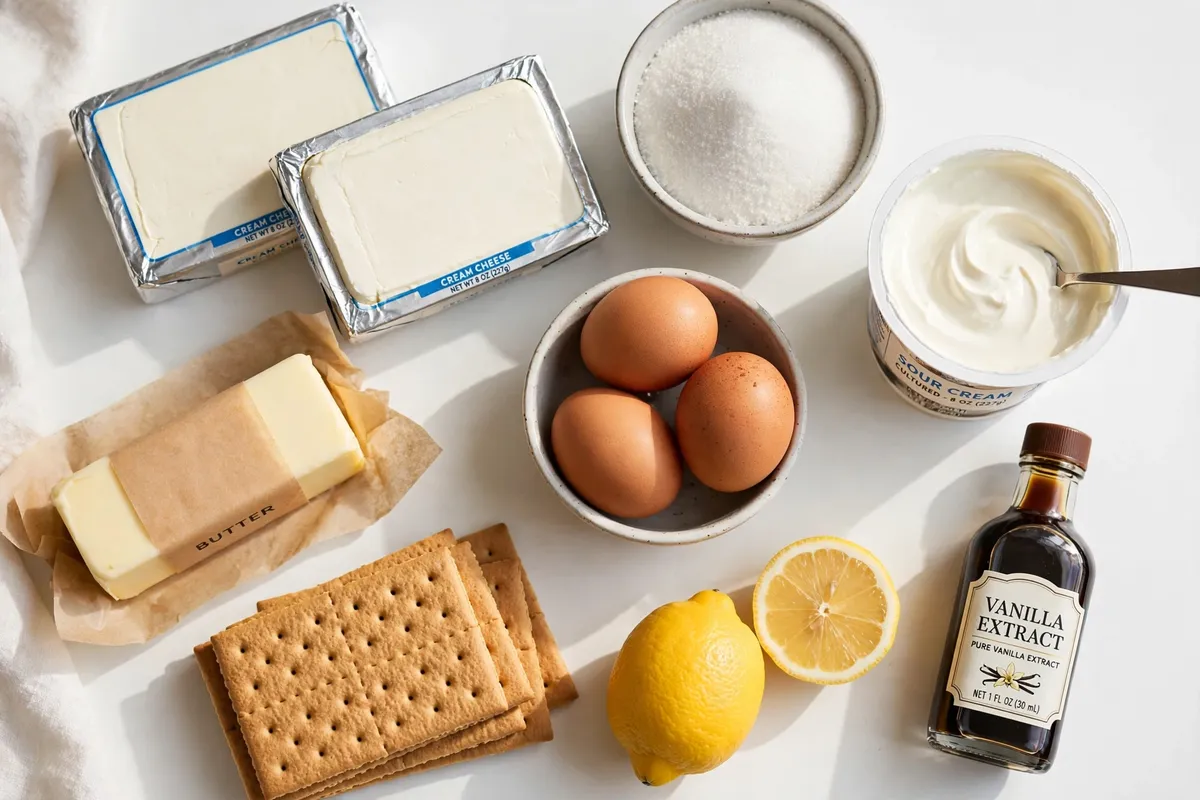
- 1½ cups (150g) graham cracker crumbs, about 10 full sheets
- ¼ cup (50g) granulated sugar, for the crust
- 5 tbsp (70g) unsalted butter, melted
- Pinch of salt
- 4 blocks (32 oz / 900g) full-fat cream cheese, at room temperature
- 1 cup (200g) granulated sugar
- 1 cup (240g) full-fat sour cream, at room temperature
- 1 tsp pure vanilla extract
- 2 tsp fresh lemon juice
- ¼ tsp salt
- 3 large eggs, at room temperature
How to make New York cheesecake
Make the graham cracker crust
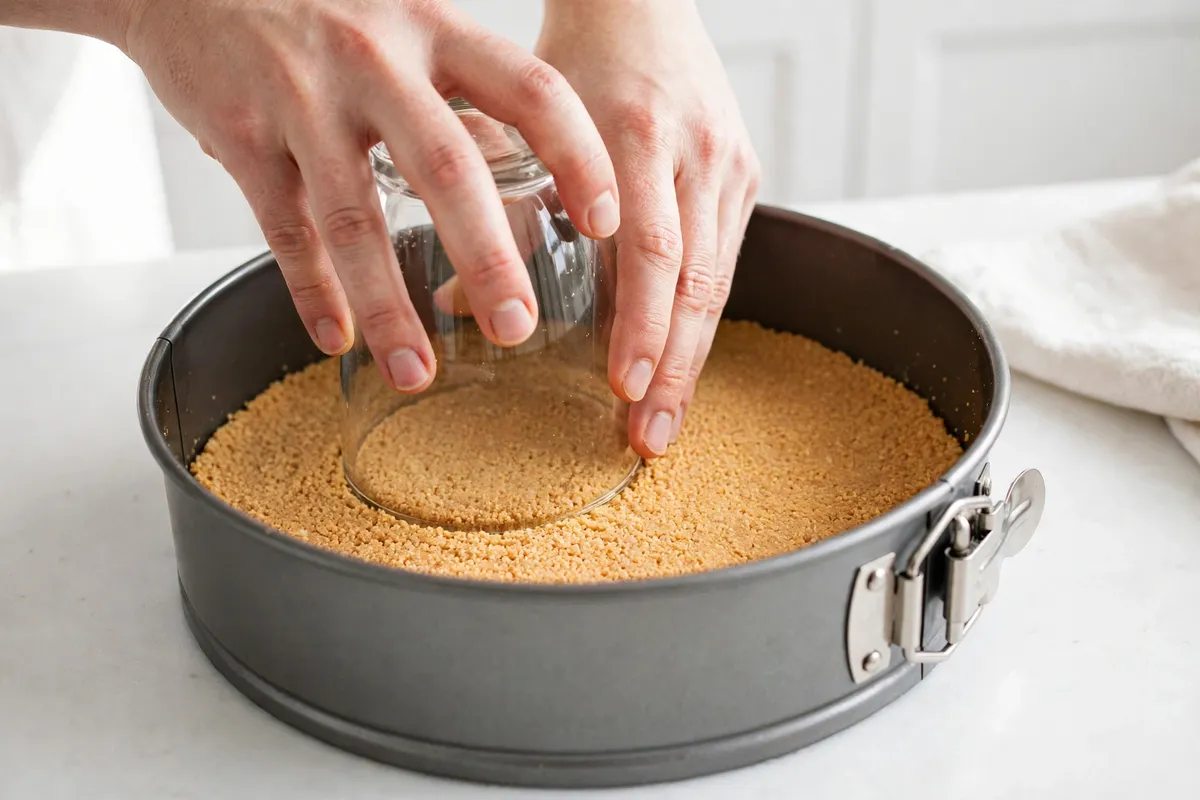
Preheat the oven to 325°F (165°C). Stir the graham cracker crumbs, sugar and melted butter together until the mixture looks like wet sand. Press it firmly and evenly into the bottom of a greased 9-inch springform pan and bake for 10 minutes, until lightly toasted and set. Let it cool while you make the filling.
Beat the filling until silky
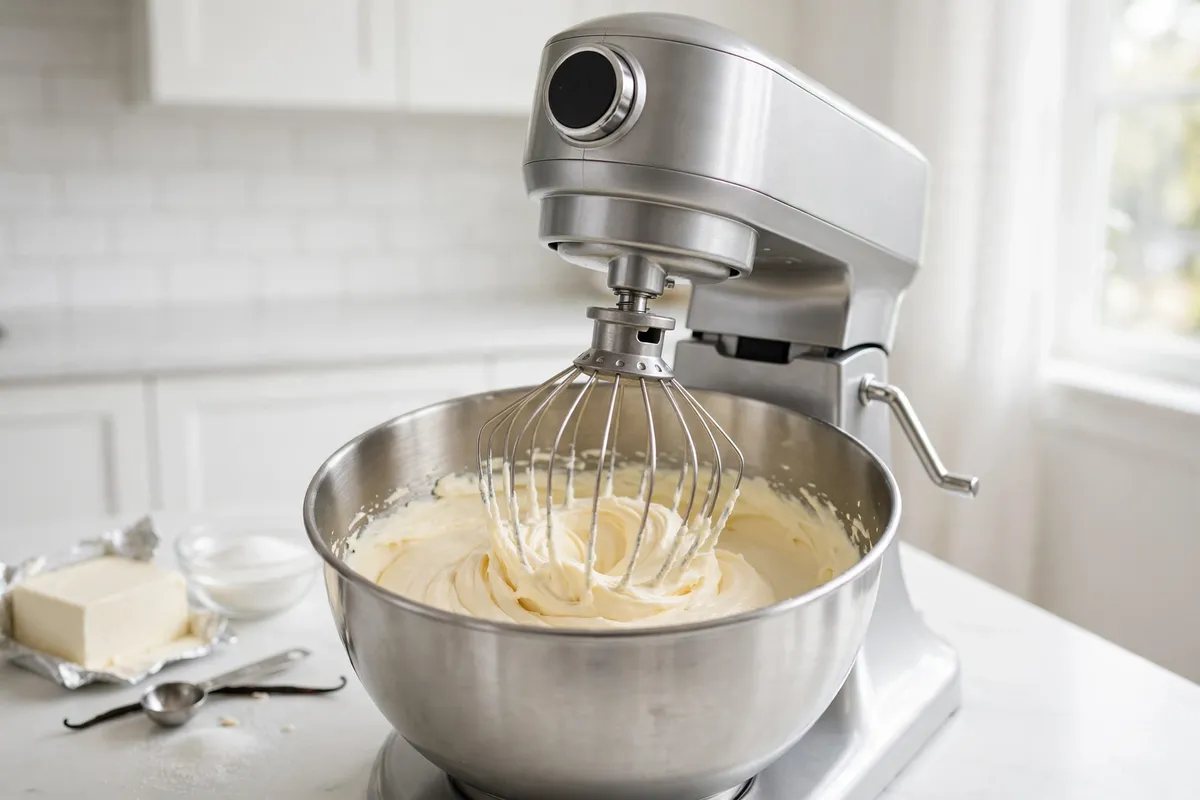
Beat the room-temperature cream cheese and sugar on medium speed for about 2 minutes, until completely smooth and creamy. Beat in the sour cream, vanilla extract, lemon juice and salt until just combined. Add the eggs one at a time, mixing on low speed just until each one disappears — do not overbeat once the eggs are in.
Pour and bake low and slow
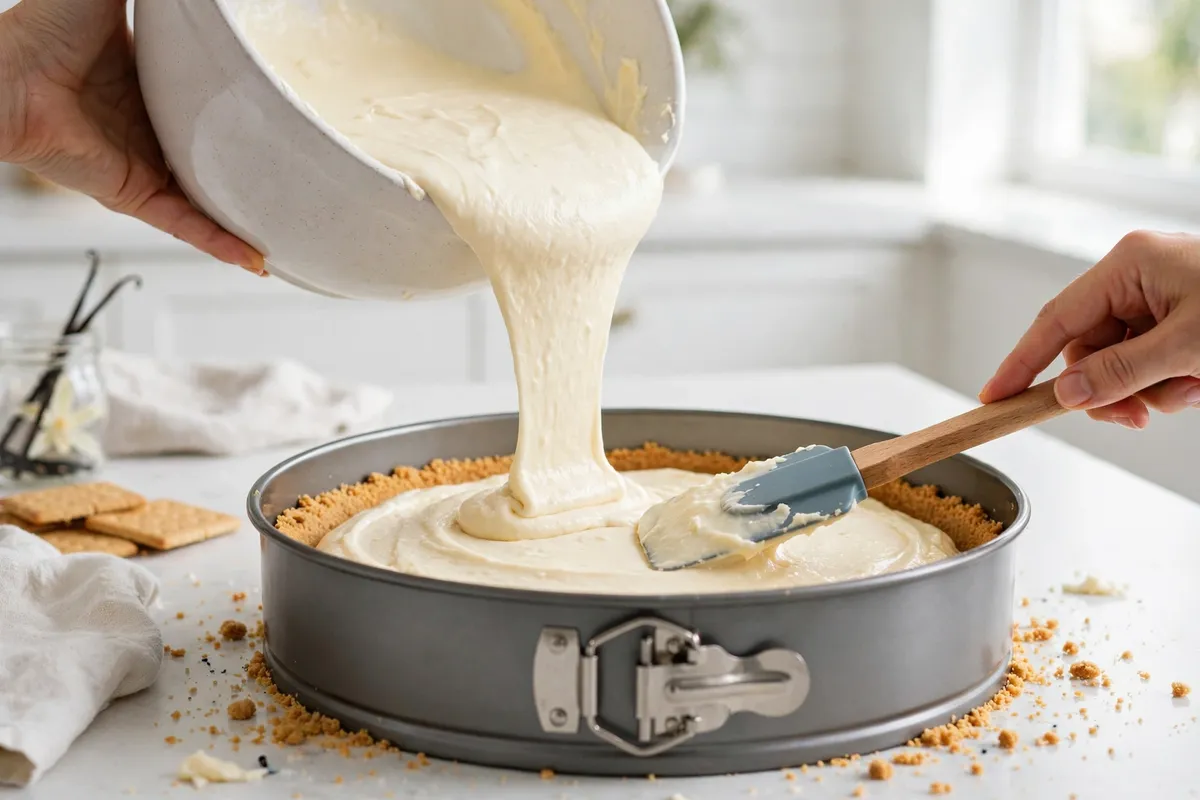
Pour the filling over the cooled crust and smooth the top. Tap the pan firmly on the counter a few times to pop any air bubbles. Bake at 325°F (165°C) for 60–75 minutes, until the edges are set and the centre barely wobbles when you nudge the pan — it should jiggle like soft jelly, not ripple like liquid.
Cool slowly in the oven
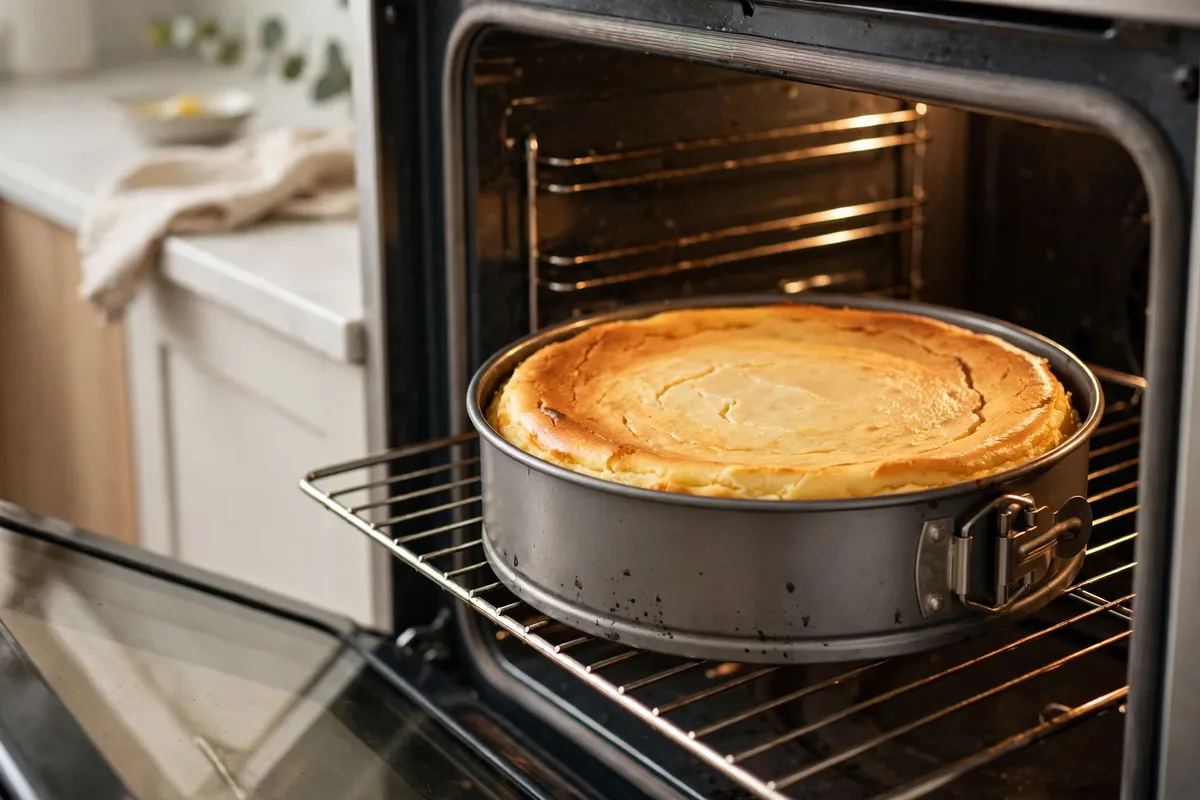
Turn the oven off, crack the door open a couple of inches and leave the cheesecake inside for 1 hour. This slow cool is what keeps the top crack-free — no water bath needed. Run a thin knife around the edge of the pan, then let the cheesecake cool to room temperature.
Chill overnight and slice cold
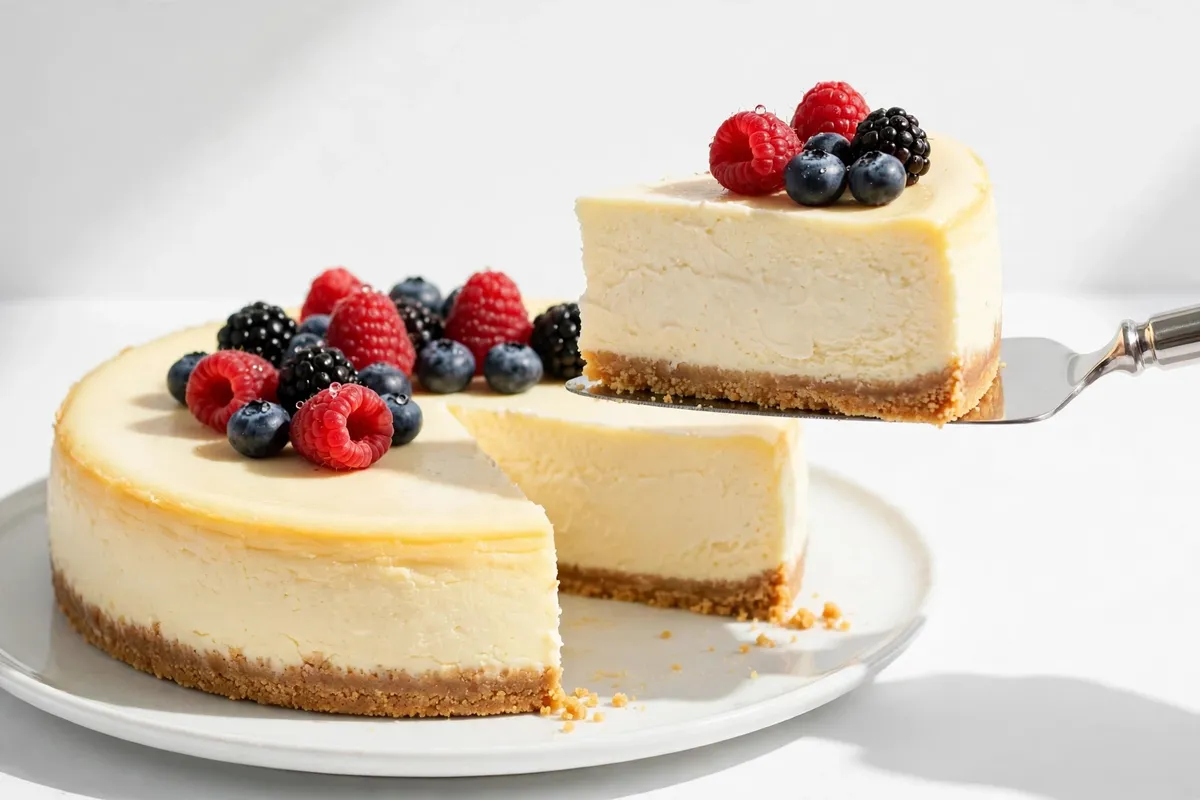
Cover the cheesecake and refrigerate for at least 4 hours, overnight if you can — the flavour and texture are far better the next day. Slice cold with a long, thin knife dipped in hot water and wiped dry between cuts for clean, tall wedges.
Tips for the best New York cheesecake
- Use room-temperature ingredients. Cold cream cheese resists blending, so you end up beating the batter longer to get it smooth — and that extra beating is exactly what causes cracks. Set the cream cheese, sour cream and eggs out at least 30 minutes before you start.
- Add the eggs last, and mix gently. You can beat the cream cheese and sugar as much as you like, but once the eggs go in, mix on low speed just until each one disappears. Air beaten into the eggs expands in the oven and collapses as the cake cools, tearing the surface open.
- Trust the wobble. A cheesecake that looks fully set in the oven is already overbaked. Pull it out when the centre still jiggles like soft jelly — carryover heat and the slow cool will finish setting it, and the texture stays creamy instead of rubbery.
- No graham crackers? In the UK and Australia, swap the crumbs for 250g of digestive biscuits with the same amount of butter and skip the crust sugar. The flavour is slightly maltier and works beautifully with the tangy filling.
How to store New York cheesecake
Refrigerate leftover cheesecake covered or in an airtight container — it keeps for up to 5 days and the flavour actually improves after a day or two. For longer storage, freeze the whole cake or individual slices, wrapped tightly in plastic wrap and foil, for up to 2–3 months; thaw overnight in the fridge. Add fresh fruit, whipped cream or any topping only after thawing, so it stays fresh.
New York Cheesecake FAQs
Do I need a water bath for New York cheesecake?
No. A water bath helps, but this cheesecake recipe skips it on purpose. Baking low and slow at 325°F (165°C) and cooling the cake gradually in the turned-off oven gives you the same even bake and crack-free top, without wrapping a springform pan in foil and hoping it does not leak. If your oven runs hot, place a pan of hot water on the rack below the cheesecake for extra humidity.
Why did my cheesecake crack?
Cracking almost always comes down to three things: overbaking, overbeating the eggs, or cooling too fast. Overbaking dries the filling out until it splits; beating the eggs too much traps air that puffs up in the oven and collapses as it cools; and moving a hot cheesecake straight to a cold counter makes it contract unevenly. Bake only until the centre barely wobbles, mix the eggs in last on low speed, and cool the cake slowly in the oven with the door ajar.
How do you know when cheesecake is done?
Nudge the pan gently: the outer 2–3 inches should look set and still, while the centre wobbles like soft jelly. That wobble sets perfectly as the cheesecake cools — if you wait until the centre looks fully firm, it is already overbaked. For certainty, an instant-read thermometer in the centre should read 150–155°F (65–68°C).
Can you freeze cheesecake?
Yes — cheesecake freezes beautifully for up to 2–3 months. Chill it completely first, then wrap the whole cake (or individual slices) tightly in plastic wrap and foil, or place slices in an airtight container. Thaw overnight in the fridge. Freeze it plain and add fresh fruit or toppings only after thawing, so they stay fresh.
Your week of dinners, planned.
Build a free 7-day meal plan and download it as a beautiful image.