Chapli Kabab
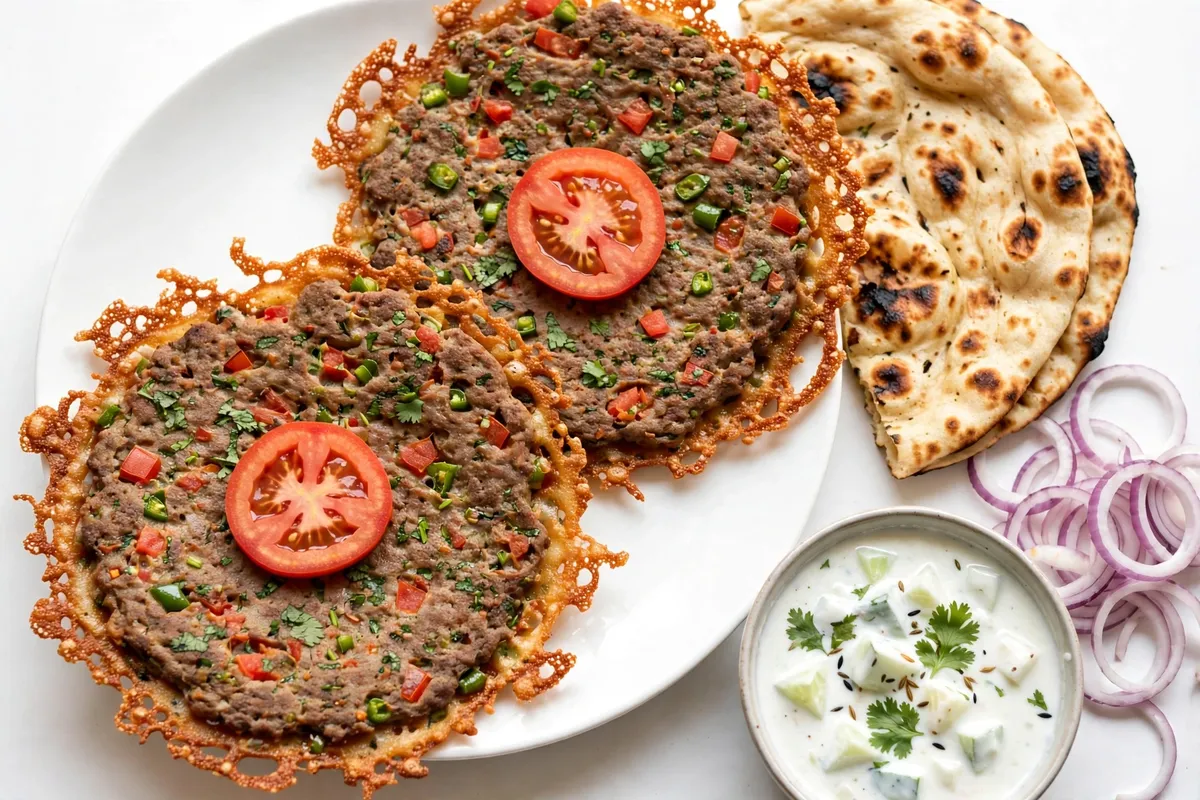
Chapli kabab is the signature kebab of Peshawar: wide, flat beef patties flecked with tomato, crushed coriander seed and dried pomegranate, shallow-fried in hot fat until the edges turn crisp and lacy and the centre stays juicy. The name comes from a Pashto word meaning flat — and flat is the point. Thin, wide, crackling at the edges, eaten with naan and raita.
Ingredients
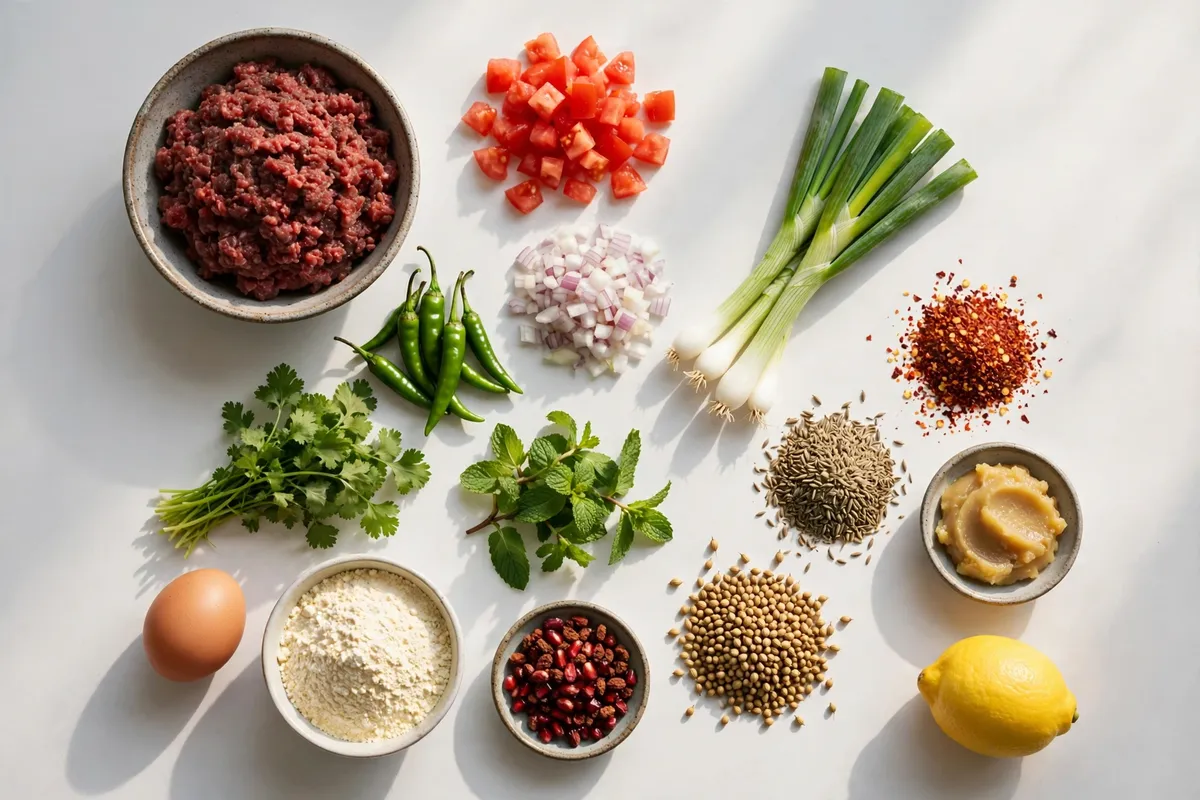
- 1 lb (500g) beef mince, 20% fat
- 1 onion, finely chopped and squeezed dry
- 2 tomatoes, deseeded and finely diced
- 2 spring onions, finely chopped
- 3 green chillies, finely chopped
- ½ cup chopped coriander leaves
- ¼ cup chopped mint leaves
- 1 tbsp ginger-garlic paste
- 1 egg, beaten
- 2 tbsp maize flour (makai atta), toasted
- 2 tbsp coriander seeds
- 1 tbsp dried pomegranate seeds (anardana)
- 1 tsp cumin seeds
- 1 tsp red chilli flakes
- 1 tsp salt, plus more to taste
- ½ tsp black pepper
- 2 tomato slices, to top
- Ghee or neutral oil, for shallow frying
- Naan, raita, sliced onions and lemon wedges, to serve
How to make chapli kabab
Toast and crush the spices
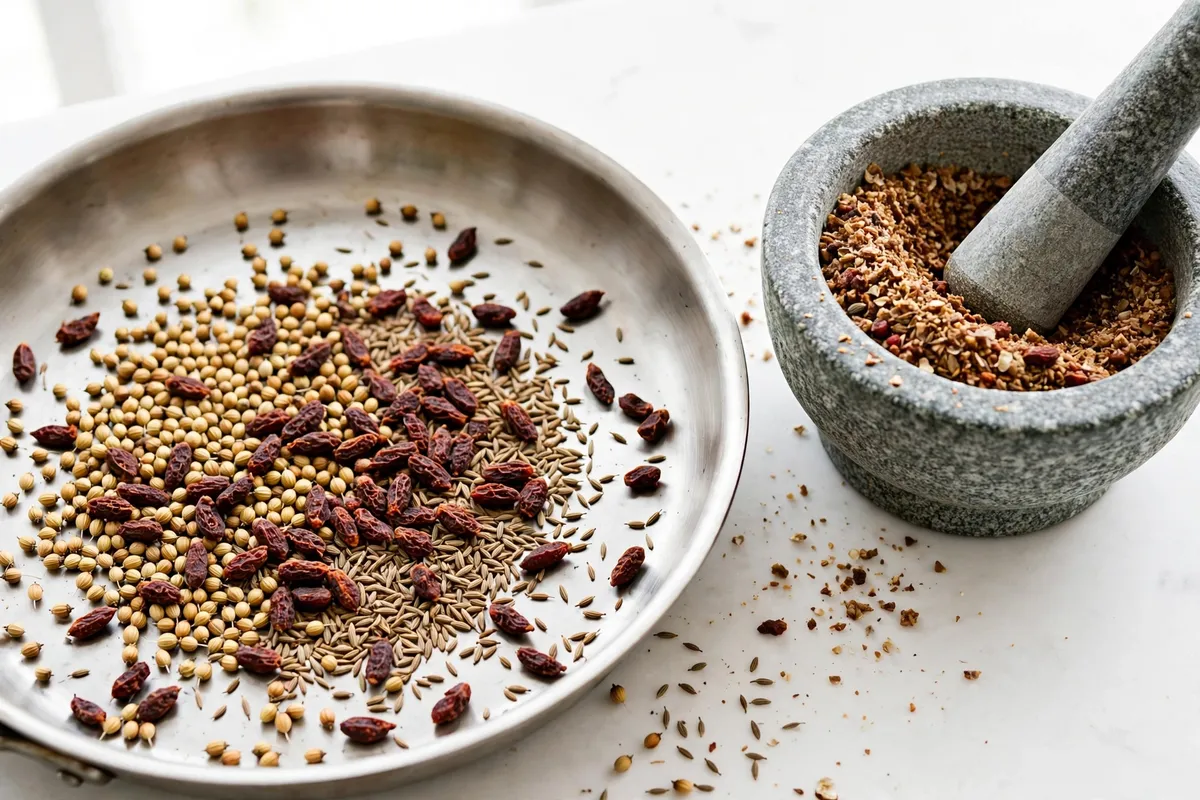
Put the coriander seeds, cumin seeds and anardana in a dry pan over medium-low heat and toast for 2–3 minutes, shaking often, until fragrant and a shade darker. Tip onto a plate to cool, then pound or pulse to a coarse, gritty mix — not a fine powder. The crunch of whole crushed coriander is the signature of a chapli kabab. Toast the maize flour in the same dry pan for 3–4 minutes until it smells nutty, and set aside to cool.
Mix and knead the mince
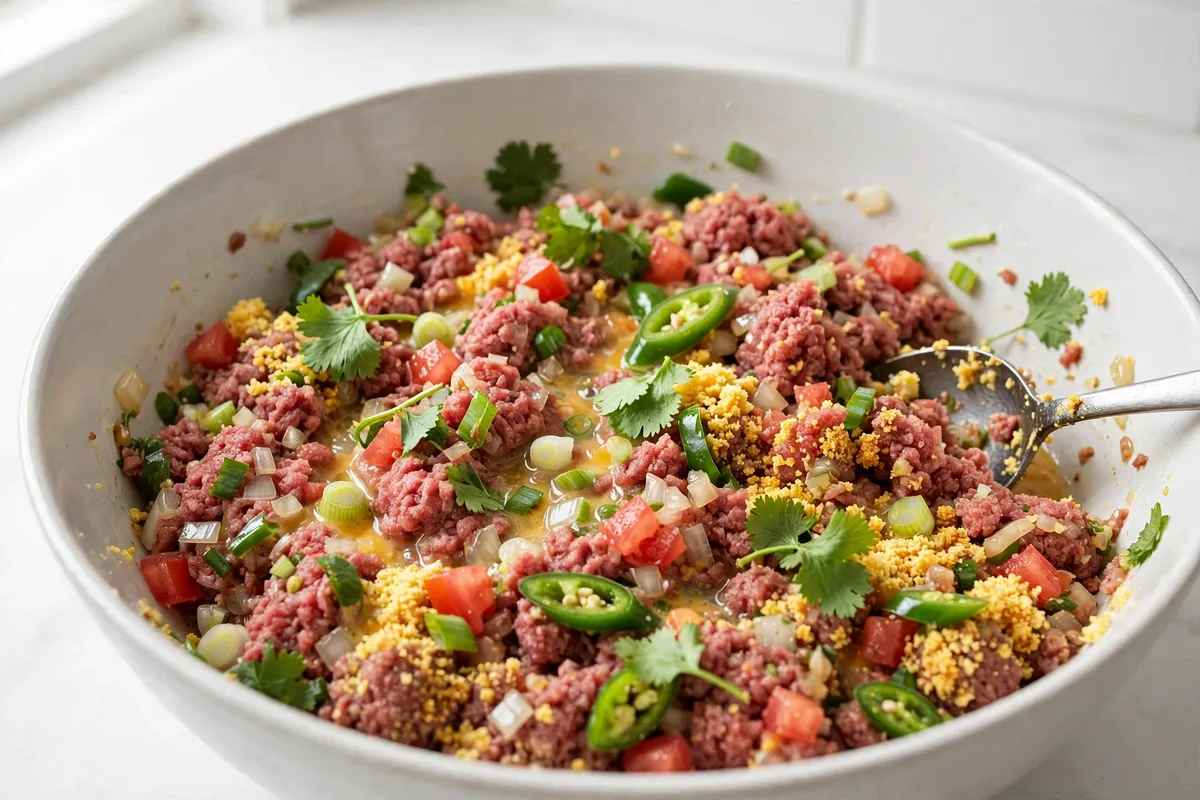
Chop the onion very finely, wrap it in a clean cloth and squeeze out all the juice. Deseed and dice the tomatoes and let them drain in a sieve — wet vegetables are the main reason chapli kababs fall apart. In a large bowl, combine the cold beef mince with the crushed spices, toasted maize flour, squeezed onion, drained tomato, spring onion, green chillies, coriander, mint, ginger-garlic paste, egg, chilli flakes, salt and pepper. Knead for 5 minutes until smooth and sticky, then cover and chill for at least 30 minutes.
Shape wide patties
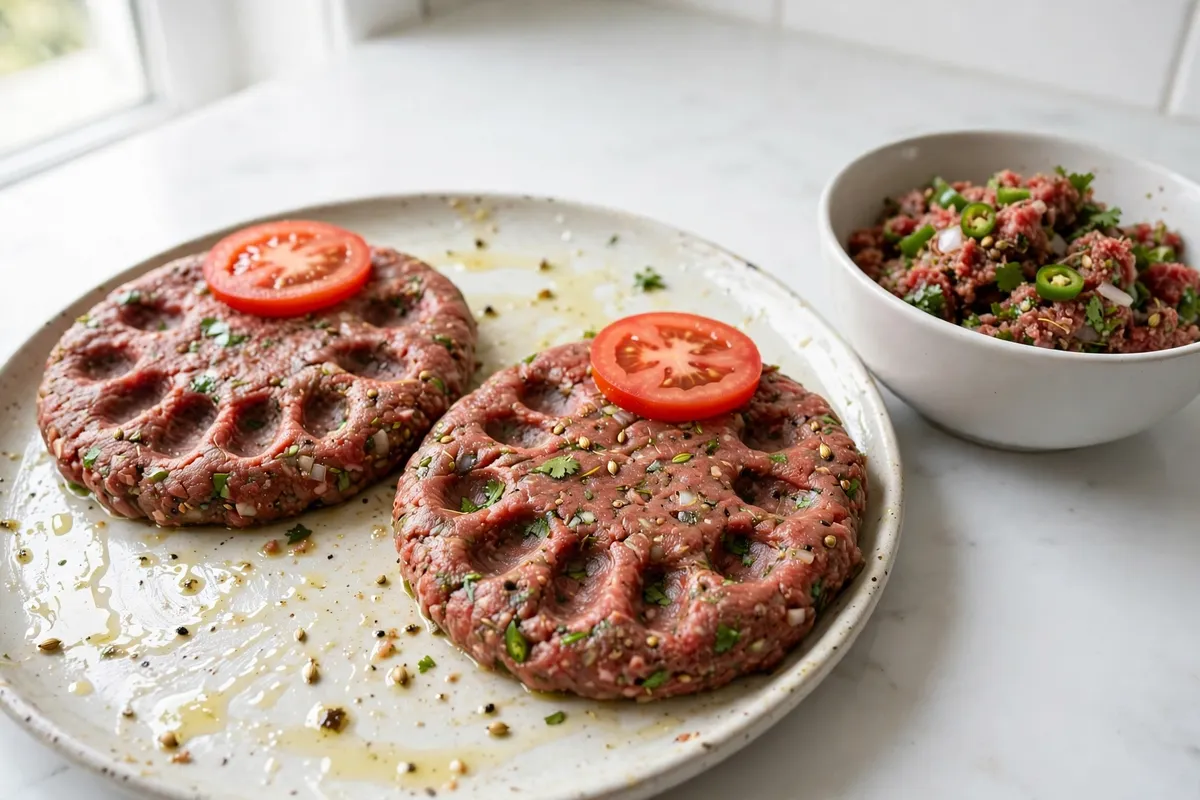
Divide the chilled mixture into 8 portions of about 100g each. With wet hands, flatten each portion into a thin, wide round about 1 cm thick — chapli kababs are famously flat, the name is linked to a Pashto word meaning flat. Press finger indentations and a small dimple in the centre so they cook evenly, and press a tomato slice onto the top of each one. Keep the shaped kababs cold until the pan is ready.
Shallow-fry
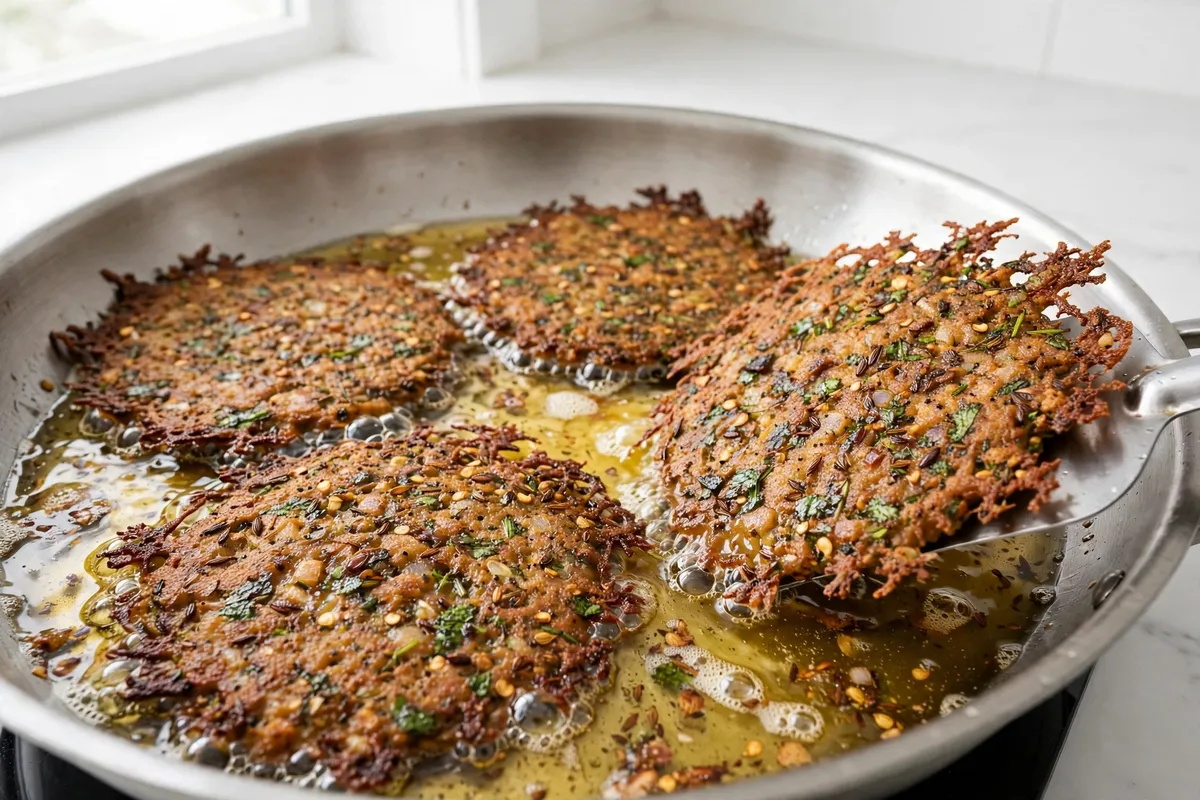
Heat a generous layer of ghee or oil in a heavy pan or tawa over medium-high heat until very hot. Slide in the kababs — 2 or 3 at a time so the pan stays hot — and fry for 3–4 minutes per side, flipping only once, until deep brown with crisp, lacy edges and a juicy centre. The fat should sizzle aggressively around the edges; that is what makes the lace. Drain briefly on kitchen paper.
Serve with naan and raita
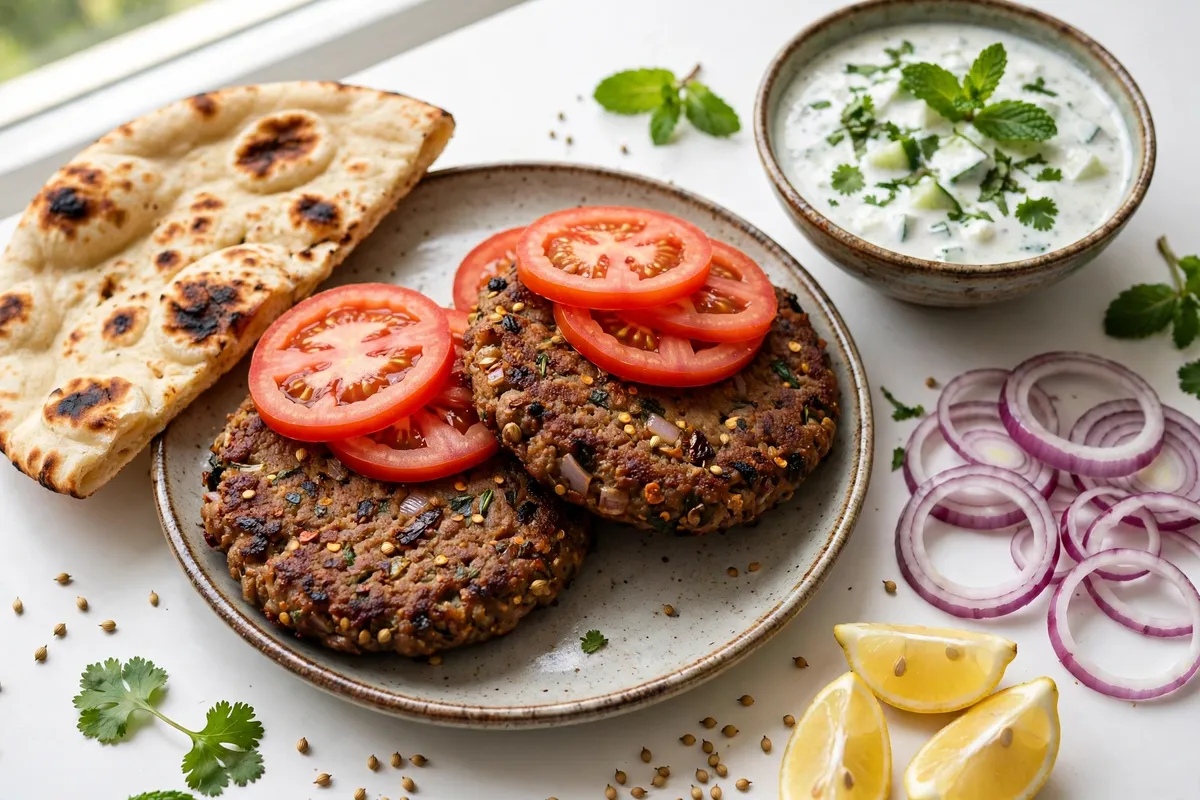
Serve the chapli kababs hot, straight from the pan, with warm naan, mint raita, sliced red onions and lemon wedges. In Peshawar they are eaten with the hands, torn naan scooping up the kabab — no cutlery, no ceremony, just a very good kebab.
Tips for the best chapli kabab
- Use fatty mince. Twenty percent fat is not a suggestion — lean mince makes dry, crumbly kababs that fall apart. The fat binds the patty, keeps it juicy, and renders out to crisp the edges.
- Squeeze everything dry. Onion juice and tomato seeds are the enemy. Squeeze the onion in a cloth, deseed the tomatoes and let them drain. Every drop of water you remove is a kabab that holds together better.
- Keep the mince cold. Warm fat smears and the mixture turns slack. Leave the mince in the fridge until you mix it, chill the mixed bowl for 30 minutes, and shape with wet, cool hands.
- Do not flip more than once. Let the first side set and brown properly before turning. Fiddling with a half-set kabab is how it breaks — one confident flip with a wide spatula is all it needs.
How to store chapli kabab
Uncooked shaped patties keep for 1 day in the fridge or up to 3 months in the freezer (freeze on a tray first, then bag with baking paper between layers; fry from frozen, a few minutes longer per side). Cooked kababs keep for 2–3 days in the fridge; reheat in a hot pan or air fryer to bring back the crisp edges — they will not be quite as lacy as fresh, but they are still very good.
Chapli Kabab FAQs
Why do chapli kababs fall apart?
The mix is too wet. Onion and tomato release a lot of juice, so the onion must be chopped finely and squeezed dry in a cloth, and the tomatoes deseeded and drained. Then the toasted maize flour and egg bind what is left, and chilling the mixture for 30 minutes firms it up. Cold mince, dry vegetables, hot fat — get those three right and the kababs hold.
What is anardana in chapli kabab?
Anardana is dried pomegranate seeds, ground or crushed — they give chapli kabab its distinctive tangy, slightly sour crunch. It is sold in Indian and Pakistani grocers, sometimes as anardana powder. If you cannot find it, use 1 tablespoon of pomegranate molasses or a squeeze of lemon juice for the tang, though you will miss the crunch.
Can I bake chapli kababs instead of frying?
You can, but they will not be chapli kababs — the crisp lacy edges only come from shallow-frying in hot fat. Baked at 425°F (220°C) for 15–18 minutes on a well-oiled tray, flipping once, they come out as good flat kebabs, just without the lace. An air fryer at 400°F (200°C) for 10–12 minutes, brushed with oil, gets closer to the fried result.
What do you serve with chapli kabab?
Warm naan, mint or cucumber raita, sliced red onions and lemon wedges — that is the Peshawari plate. A simple kachumber salad of tomato, onion and cucumber works too. Chapli kababs are also excellent tucked into a bun or a paratha roll with chutney for a street-style sandwich.
Your week of dinners, planned.
Build a free 7-day meal plan and download it as a beautiful image.